An Artist’s Portrait
Over the last year I participated in the “Buy Your First Artwork” program run by Empower Art Foundation, made for young people interested in art who aspire to be collectors, curators or artists. I wrote a reflection on it in a separate post
The program ended with an essay competition that I’m very proud to announce I won!
So here is my essay which is an interview with an amazing Polish painter Grzegorz Pieniak (original version available here):
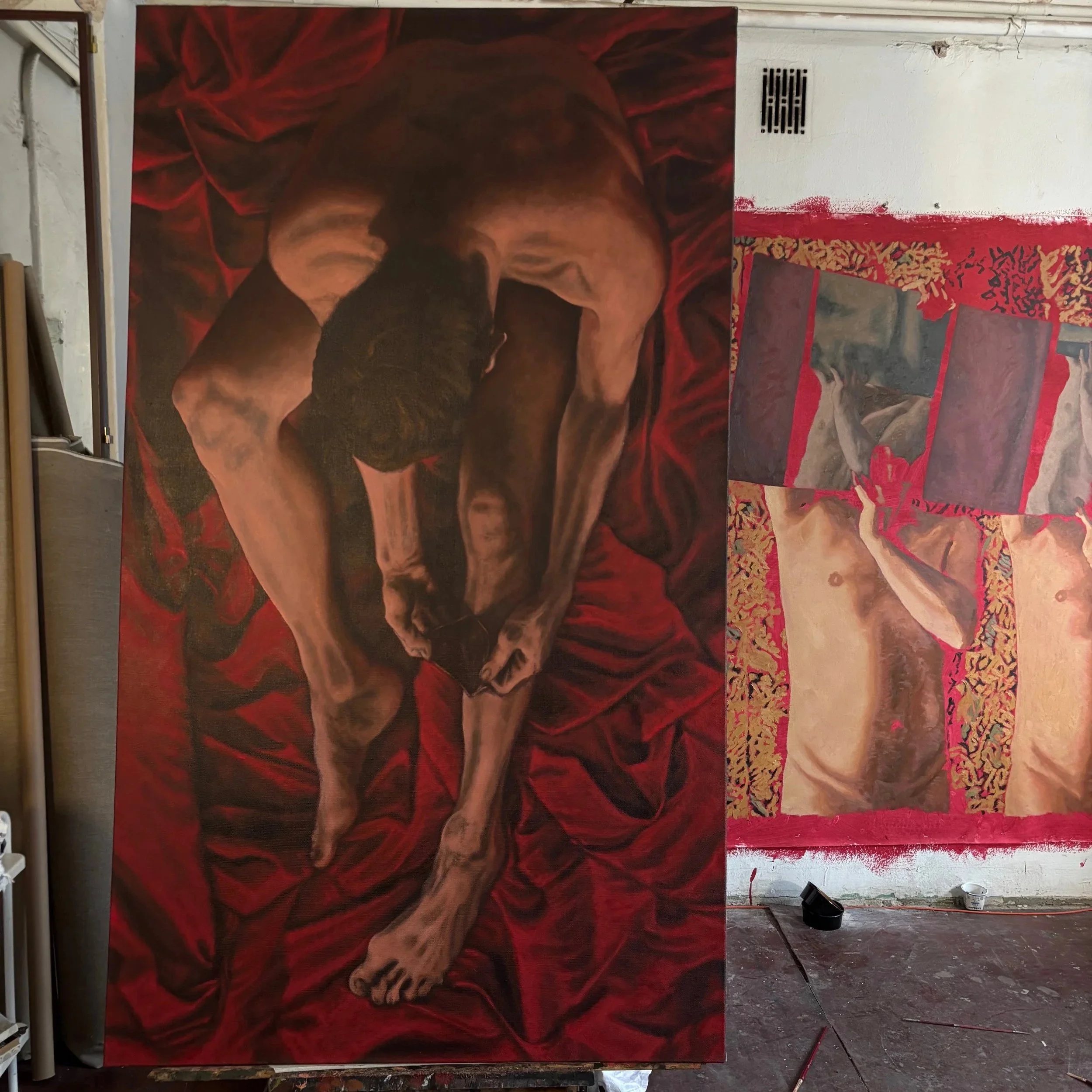
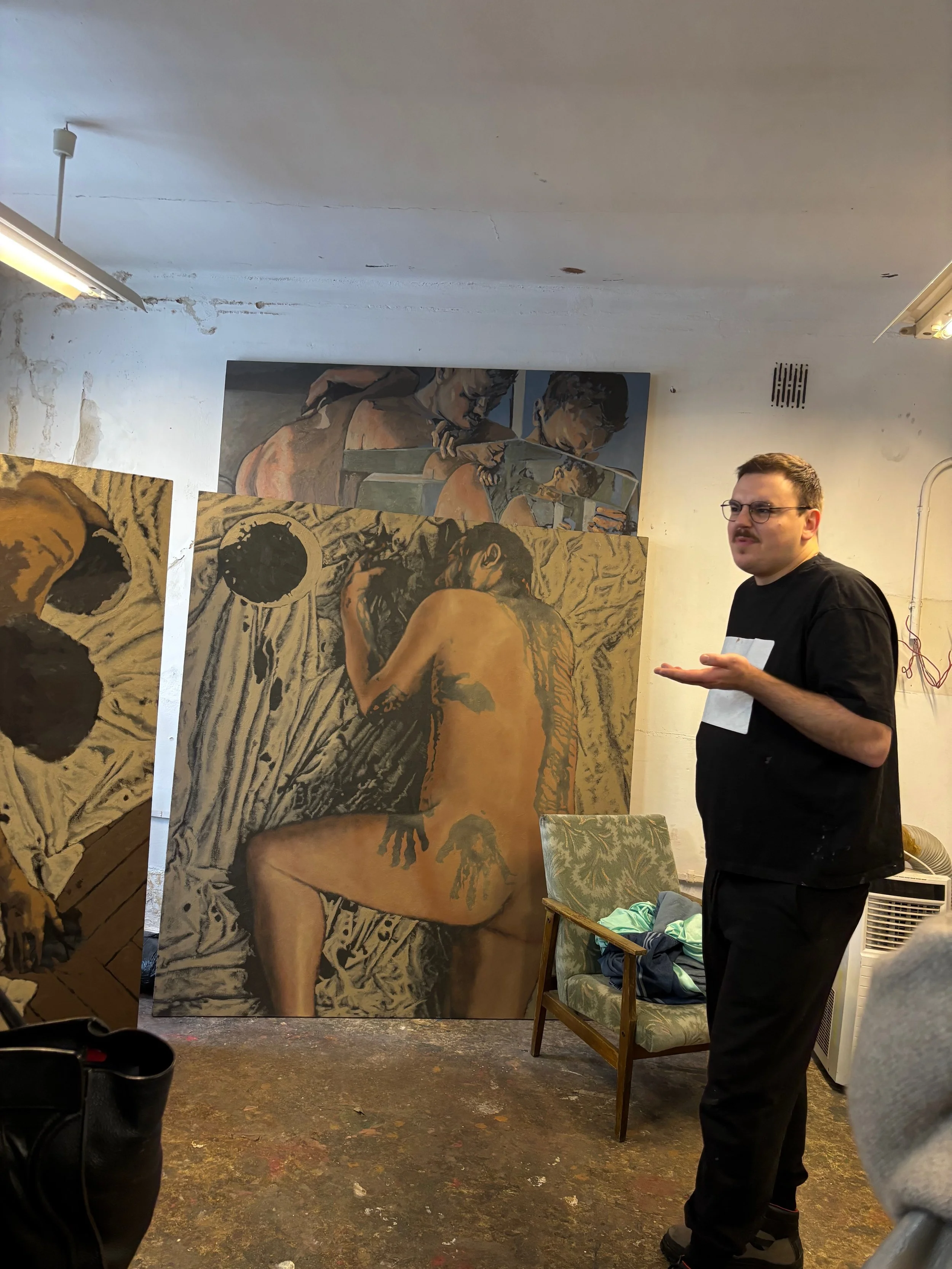
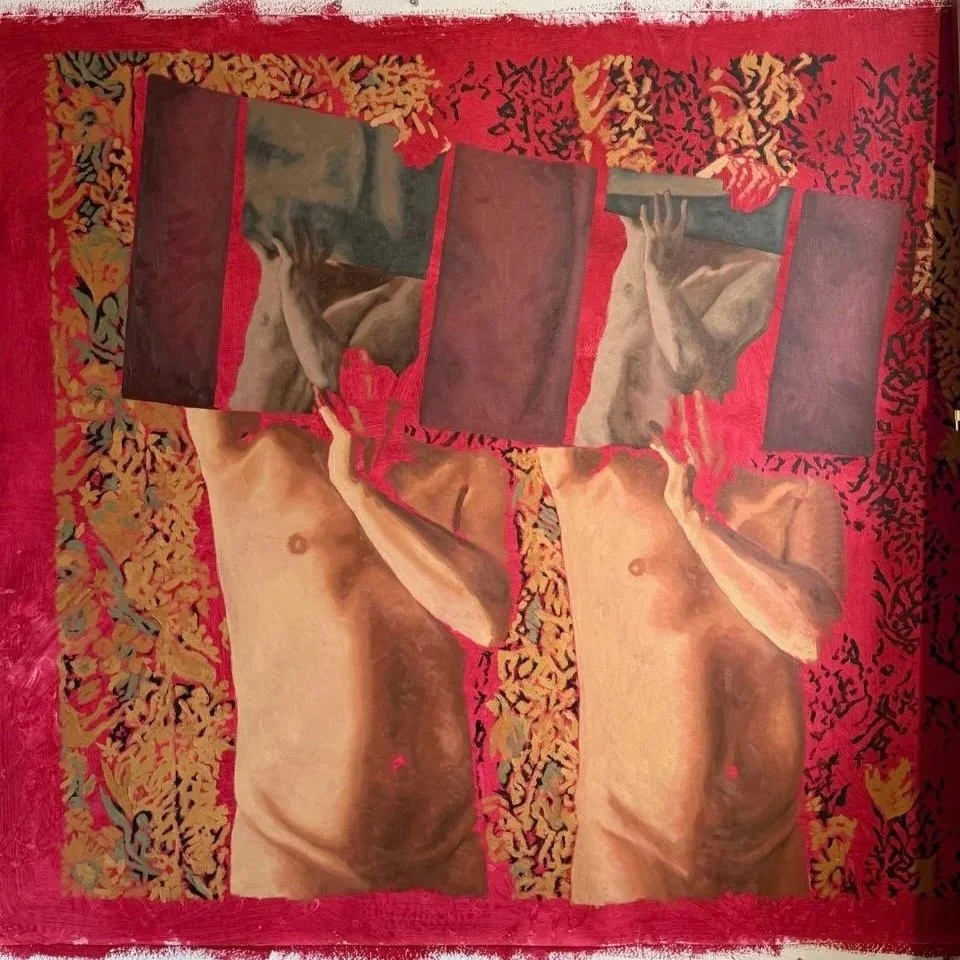
The perception of artists in society has vastly changed over time, we now like to separate creative and artisanal work, but it hasn’t always been like that. In Ancient times artists were labourers, who were rarely recognized or respected for their work. In the view of Plato the role of art was to imitate nature and re-present its beauty, hence the concept of mimesis (“imitation” in Greek). Even then it was believed that the act of creation is something reserved for the gods and therefore what humans are able to produce is merely an imitation of the ultimate ideal, far removed from reality.
The Middle Ages saw a great development in various artistic techniques although artists were still perceived as artisans, their work had no difference to carpenters or wood carvers. They were valued members of society, not because of their creative work, but because of the skill they possessed, in fact creativity was neither expected nor valued.
A turn in perception of the role of artists came in the Renaissance, where the introduction of new techniques made artists believe that their profession deserves a higher status due to the intellectual work needed on top of skill. It was also a time when creativity and invention started to become valued and patrons were seeking creators based on their individual style or way of expression. Furthermore, this gave rise to self portraits, which expressed a sense of personal pride and self-worth that reflected the changing status of the artist. Fame, genius and creativity are elements that became part of the definition of artists due to the Renaissance self-discovery and largely influence our modern perception of creators.
Another time period worth mentioning is Romanticism, which contrasted against the rationalism of the Enlightenment present throughout most of the Renaissance. Romantic artists and writers embraced emotion, imagination and individuality, drawing inspiration from the sublime beauty and power of nature. The artist was understood as a tormented individual and an emphasis was put upon imagination as a gateway to transcendent experience and spiritual truth. Artists, and especially poets, gained a god-like status and became the leaders of free, individual expression.
In modern times our definition of an artist strongly relies on formal criteria such as: getting a diploma from an art school, striving for institutional and international exhibitions and presence in important private collections. And while the art market has always been a major factor in the artistic field, because it allowed creators to live off of their work and share their experiences with a broader audience I wonder has it not become too oppressive, pushing artists into a wild chase for success and fame, losing the central ideas that were celebrated for thousands of years: creativity, individuality, expression?
In order to validate my thoughts I conducted an interview with Grzegorz Pieniak, who is an established Polish painter. He definitely fits into what is now understood as “success” having studied at ASP (although without finishing it), having various Polish and international exhibitions and being present in private collections, but what I am most interested in is his opinion, his view on the art market and his definition of success. I’ve asked him to be my respondent, because I personally really strongly resonate with his art and find his artistic journey really inspiring, in awe of my own artistic aspirations.
Sources: 1)MasterClass, "Poetry 101: What Is Mimesis? Mimesis Definition with Examples 2) Monica Bowen, "The Status and Social Climate of Ancient Artists," Alberti's Window (blog), January 13, 2015, 3) Holly Daffurn, "Times Have Changed: The Evolving Role of an Artist," Artweb Blog, September 18, 2020 4) "The Role of the Artist in the Renaissance," Art 109: Renaissance to Modern (course website, Westchester Community College) 5) "Who Were the Romantic Artists?," Thames & Hudson, June 11, 2026 6) "Romanticism," Encyclopædia Britannica, Zoja: Could you tell me briefly about your artistic path, how you started, what it looked like?
Grzegorz: I started fairly conventionally, because I showed a talent for art from childhood. Maybe not so much talent as the urge to do it. Painting, moulding things out of clay, that appealed to me from an early age. I always did it. Then, after primary school, I went to the art secondary school in Olsztyn. And that's where I started to seriously hone my craft.
Zoja: So your family had time to get used to the idea that it was going to be an artistic path?
Grzegorz: Yes, though they didn't accept it. My family never had anything to do with art, so for them it was a bit strange and they tried to talk me out of the idea, so that I'd be a normal person, with a normal job and a normal life. Whatever they meant by that. But I didn't give in. After secondary school I went to the Academy of Fine Arts, though I actually learned more at secondary school than at the Academy.
Zoja: Interesting, because with pretty much every other field of study, university is considered the foundation, the most important step. Whereas on the artistic path they tell you at university that everything is wrong, start again and later those rejected paintings sell for thousands.
Grzegorz: Well, we had that problem too. If someone was very good, they'd be brought down a peg. I don't know whether they were jealous, or whether it was about space in the market, which seems terribly stupid, because the market is actually quite big, though it was smaller back then. There was a guy in my year who was very good and they kept giving him Cs, while there were plenty of people who did very little, did it badly and were somehow favoured. So it was a very strange atmosphere.
Zoja: Could you briefly talk about your exhibitions you remember, where they were, how they came about?
Grzegorz: For a very long time I didn't do any exhibitions, apart from a few student ones, but those were the kind that only students came to…
Zoja: Was that a choice, or just how it worked out?
Grzegorz: At the beginning there were no offers, because that's another big drawback of the Academy: it doesn't introduce artists to the market. It's an academic world, of professors and assistants living in a bubble. While I was studying there I had no idea any other circuit existed. It was only two or three years after finishing (or quasi-finishing, since I never did my diploma), when I started entering the market and my friends started entering it, that I found out such a thing even existed.
Zoja: That it was possible to have exhibitions at all?
Grzegorz: Yes. And that it all somehow works. It was a good moment, because the market for young art (which sounds bad, because "young art" has taken on a slightly pejorative ring thanks to the young art auctions at Desa) was really taking off then. A lot of my friends from the Academy went on to have enormous careers. I spent that time sitting in a drawer, so to speak, because I decided I didn't feel ready for it.
Zoja: Were you working somewhere else entirely then, or were you still trying to make art your main source of income?
Grzegorz: I worked various odd jobs. I was a lumberjack, felling trees in the forest; I was a floor sander laying floors; then a waiter and a cloakroom attendant. Completely random things. But I was trying to get to the point where I could do nothing but paint.
At some point I quit every job I had, which coincided with the pandemic. I simply started painting and going hungry. For two or three years I barely subsisted, but I was so stubborn about it that I told myself: I'm not going to any job, it's a waste of my time. That was the peak moment, when I decided not to do my diploma, that I was familiar enough with my own painting that I didn't want to meet anyone's expectations, I just wanted to focus on my creative work. And I did. For two or three years times were lean, extremely lean. But then, I think, Instagram helped me a lot; it helped a lot of my friends build careers too, including international ones.
That tool appeared and back then, six years ago, it was working really well in the art world. Instagram itself would sometimes pull this trick where someone's painting landed in the "explore" tab and suddenly had 20,000 views and galleries from New York or London were getting in touch. It didn't work that dramatically for me, but it worked enough that for the first time I could support myself through painting and sell something regularly. That was a good time.
And then I had my first exhibition at the Dzielna Foundation. The venue no longer exists, but it was fairly important at the time. It was a show with Zuzanna Janin, an already established artist. That first exhibition gave me a real boost. Suddenly everyone was going "wow, who are you, why haven't you been around before?" and my response was: well, I was here, you just didn't come to me.
After that show, life in the market really got going. Then came WGW [Warsaw Gallery Weekend] and that was the breakthrough moment. I think I can call it a big success, because a huge number of people came. I was in the gallery for seven days, essentially running a continuous opening, giving five or six tours a day, to crowds. Afterwards I fell into some kind of depression. For about three months I lay in bed doing nothing but playing video games, which I'd never done before in my life. For me a week's break from painting is the end of the world and here I was so wrung out…
Zoja: And generally speaking, do you like showing your art to an audience, having people look at it and analyse it?
Grzegorz: I like it, of course I do. At the beginning it was quite stressful, because I'm (maybe it doesn't show) fairly shy, somewhere deep down. But I learned that it's interesting. Despite the stress and the fear of public speaking, which was a big problem for me, I stepped out of my comfort zone and discovered it has another, pleasant side: that people genuinely appreciate what I do, that they look at it in person, that I get to interact with them. At WGW a few people simply cried during the tours. They came up and said it mattered to them, that it correlated with their own story. Because it was also a very personal exhibition. So I think it's a very nice feeling.
Zoja: Your paintings are very personal, so when you sell one, do you feel like you're parting with a piece of yourself? Or is it completely detached?
Grzegorz: Not really. I'm connected to them only while I'm painting them, only during the process. Once I've finished, I sort of don't want to see them any more. There are a few paintings that mean something to me, literally three, that I won't part with because they were turning points, but those are older works. As for the rest… I'm glad that, money and fame aside, it's a kind of motivation for me that someone wants to have this at home or in their office and spend time with it. That surprises me, because these paintings aren't sunsets on a beach. They often deal with the less bright sides of life.
Zoja: Do you think it's worth looking at other people's art, as an artist? Because I've heard about artists who don't want to look at any other art at all.
Grzegorz: It varies for me, it depends. I don't actually know on what. Some days it helps me. I look at older art in particular, because in my view art died at a certain point. There are few contemporary artists who draw me in, who inspire me.
Zoja: So you draw your inspiration mostly from older painting?
Grzegorz: Yes, definitely. I used to look at a lot and take from it; now I look at much less, which is a new method I've worked out. I noticed that if I look at a lot of something, it gets into my head subconsciously and then comes out in my paintings, even after a while, unintentionally. And then I think: hey, I don't want this, please, get out of my head. So I try to take long breaks, even a few months and not look at anything: no openings, no art books, no Instagram with paintings on it. And that's good.
Zoja: Do you ever draw inspiration from less obvious sources, like cultural practices or pop culture?
Grzegorz: Not really. I have a problem with the contemporary world and with pop culture in general. To me it's anti-culture. I'm some kind of decrepit old man.
I'm moved by things that are fairly elusive and in contemporary art there is, in my view, far too much literalness. Too much of that dumping everything out: "oh, now I can, so I'll throw it all out with no metaphor whatsoever". My assumption is that art is in itself a kind of transformation. It can work with subtle metaphors, subtle symbols and that has more value for me, because it acts more on subconscious mechanisms. It isn't spelled out: "something happened in my life, so I'll paint that it happened, cheers". I don't value that route. I'd rather it were closer to poetry than to a one-to-one report.
Zoja: And do you treat painting itself purely as a process, or does it also help you work through things? I assume you must love painting, since you chose it.
Grzegorz: Oh, I love it. It's probably the great love of my life, apart from my husband. Painting is fantastic. I love it more and more, because I'm learning all the time, gaining experience all the time, my skill keeps growing. I try not to end up like most contemporary artists, who found their formula back at university, the market absorbed it and they'll paint that way for the rest of their lives. That's not me, because after a month I'd be bored, I'd stop painting and give the whole thing up.
Zoja: I was just about to ask whether you have your own technique. Do you like changing it and do you see a lot changing in your painting?
Grzegorz: Definitely. Sometimes I go round museums just to watch the technique of the old masters. I often used to make copies of paintings, starting back in secondary school. My first oil paintings were copies of Chełmoński and they came out great and before that I'd only painted in acrylic.
I borrow bits and pieces of how form is built up, because painting is a bit like illusionism. If you look closely at old paintings from various periods, you think: ah, he's a clever one. Bruegel, for instance, often doesn't paint his architecture; he uses the ground, the first layer of paint, makes grooves in it with the bristles of the brush and then, once it's dry, applies a semi-liquid dark paint, wipes it off with a rag and it stays in the grooves. It looks as if it were drawn, but it's really just a movement of the brush.
Those are nice tricks you can pick up. And I build my technique out of little details like that, spotted mainly in the old masters.
Zoja: That's an interesting approach, because these days I have the impression there's a lot of experimenting for the sake of inventing something new, something that hasn't been done before.
Grzegorz: But it's all been done. You can print paintings by AI on printers. That'll be new, but will it be better? I doubt it. Why look for something new by force? Using old techniques, I as an individual won't produce a perfect copy anyway; it's simply filtered through me, so in itself it's already something new. I don't fight it, because what would be the point.
Zoja: When you paint a new painting, do you have a vision in your head straight away of what you want to do, or does something inspire you and only then do you start painting?
Grzegorz: I usually approach the canvas with a finished image in my head, though not one-to-one, because I often get these visions, as if I were some kind of medium.
I had one recently during a massage. I'm lying on the table and a finished painting is projected at the back of my head. And I think: God, I have to paint this. It's often like that: complete paintings simply appear to me, which is very strange, because my eyes are open and yet I can see them.
Zoja: And how do you compare that initial vision with what finally comes out?
Grzegorz: It varies. Sometimes there's disappointment, because in your head it looks like a particular image and it's hard to reproduce: firstly painting is difficult and secondly I have no reference, because the reference is in my head. I can recreate a situation, but it will never be one-to-one. Usually, though, I'm satisfied by the conception itself, by the subject. I once painted a cycle with Marsyas; they were self-portraits in which I flay myself and have open wounds that I open further still. That one also appeared to me, at a concert by a very well-known pianist. I had a vision apropos of Ribera's Apollo Flaying Marsyas: that I'd like to do it to myself, so that I'd be both the Marsyas and the Apollo flaying himself. I couldn't quite capture it in a single painting, so I painted five and it became a mini-cycle and looking at all those paintings together, that was exactly what I meant.
Zoja: So the whole process of making the work is very important to you and gives you a lot in itself?
Grzegorz: Definitely. It's become an almost physiological need for me. If I don't paint for a week now, I'm in a bad way, I'm going through withdrawal and I have to get back to the studio. That's why I don't take long holidays: two or three days in another city are enough, I'm rested, full of ideas again and I think: right, I'm going back.
Is it workaholism? A bit, though it used to be more pathological, because I could paint for sixteen hours pretty much every day and take painkillers so the exhaustion wouldn't hurt. Then came the nervous breakdowns from fatigue, the anxiety states. But I've settled into it somehow; I still work a lot, but I also rest a lot. I know myself, I know what's good for me, so it's going well.
Zoja: And do you engage socially through your art, or want to?
Grzegorz: It's hard for me to say, because I'm so closed off within the process itself, it's so intimate, that I'm not thinking about the viewer or the market or anything at all; I'm in a kind of trance.
Obviously, when I make exhibitions they usually touch on some important or socially difficult subject, so making them matters to me in that sense: maybe it changes something in the world, maybe it does something to someone. That makes me happy. But I'm a long way from social activism; I'm more fermented inside myself.
Zoja: Could you tell me a bit about your relationships with collectors and galleries? I've heard very different stories. How do you see it?
Grzegorz: Well, they're difficult relationships, especially in Poland, because the market is fairly small, everyone knows everyone and that creates a lot of conflict and unpleasant situations. I came into contact with that at the very beginning and I don't agree to that kind of thing: to fuck-ups with money, non-payment, lateness, people trying to mess you around. That made me very, very angry. I didn't think that people who work in culture and art and who, as I once imagined, have some higher sensitivity, some sense that certain things just aren't done, some morality… it turns out they don't. And it's hard.
So I withdrew from that world a great deal. I unfollowed every contemporary gallery in Poland on Instagram, I try not to go to openings at commercial galleries. I'd heard so much and been through so much myself that I decided: no thank you. So I took matters into my own hands. I don't work with any gallery; I have my own agent, whom I hired at the beginning of this year and that was a bullseye. We like each other, we trust each other, she devotes a lot of attention to me and my career, she handles everything.
We're carrying out my dream plan: no gallery in Poland, just a manager who deals with various things here, on the ground, for me. Because for the past four years I was my own manager, gallery, accountant and lawyer on top of that and I'd like to focus on painting rather than on wrangling over getting paid or over missed deadlines.
Zoja: Another artist we visited during the programme told us that if it were possible not to participate in the art market, he wouldn't, but it's the only way to make a living from painting, so he has to. From what you're saying, it sounds like you hold a similar view?
Grzegorz: Yes and I think most people do too, apart from those right at the very top, because they're looked after; a great deal of money is made on them. For those a little lower down, it looks different.
It's a tough environment.
Zoja: And what about work ethic and professionalism in the Polish art world, in institutions, in galleries?
Grzegorz: In the West it is somewhat better; from what friends tell me, the work ethic is better.
Zoja: At least it seems that artists there are highly valued.
Grzegorz: Yes. Whereas in Poland it's still lacking a bit, but it's developing. I hope it keeps developing. For now it's hard and I really hate it when things aren't done. When I do something, it's done. And everyone around me is trying to do something and it's never done. That irritates me, because these really aren't difficult things.
Zoja: What counts as success for you? Because what you usually hear is that you absolutely have to chase enormous commercial "success", where you work as if in a factory and just paint, paint, paint, paint.
Grzegorz: For me it was the opposite, because I always had it at the back of my mind to avoid exactly that. Even the fact that I started earning from painting, that it became my main source of income, was hard for me. It's a psychologically difficult mechanism, because painting had always been a form of entertainment for me, almost play, but also an emotional release. I was free in it, I didn't have it at the back of my mind that I had to earn from it, that it would sell or not. And when I started earning, I felt that freedom being taken away, that I was constantly exposed to judgement: from the people buying, from the people looking and from myself. I try to keep some hygiene about it and to fight against "will this sell" creeping in while I'm painting. But I think it creeps in a little for every artist who has started earning from their paintings. It's very difficult and I really don't like it.
Zoja: From the outside it seems fairly hypocritical that art, which ought to be deeply personal, suddenly becomes a factory, because everyone demands paintings by specific deadlines, for the next fair, the next exhibition and everything is made so that it will sell rather than out of a creative need.
Grzegorz: Yes, it turns into production rather than making art, doesn't it? Several people close to me have had very big careers and I've seen it from the inside and it doesn't look good.
I also delayed entering the market a bit, so that I'd be older, more sorted out in my head, so that success wouldn't go to my head, so that I wouldn't get sucked into that capitalist juggernaut: "here's a fair, here's an exhibition, so paint forty paintings a month piecework, never mind how, the main thing is to keep it going."
Fortunately that passed me by. I don't know, maybe it's because galleries didn't want to take me on those terms, since my painting is fairly varied and evolves quickly; the paintings I made a year ago are quite different from the ones I'm making now and a typical commercial gallery likes to have a finished product, artists doing the same thing for years, so they can sell it. I don't know if that's "style", because style sounds good, but it's simply doing the same thing over and over in order to sell. And that's sad, because it turns culture, art, into a picture shop and I don't think it should be that way. I think I'm probably a good example that the two can be combined: I have success in sales and in exhibitions, I live off it at a pretty decent level and at the same time I don't do it by force or wholesale; I simply paint and when someone comes along, then I make an exhibition.
Zoja: And what's your dream path? Are your ambitions abroad, or in Poland?
Grzegorz: I think I'm already on that ideal path. My expectations aren't excessive. It's already a success for me that I have a studio, that I can paint and don't have to do other things to earn a living.
I'm thrilled that I have a great life, that I paint when I want, get up when I want, that I'm a reasonably free man, insofar as one can be in this world and these times, so yes, I'm thrilled about it. At the same time, my manager Marta and I are working on exhibitions abroad, which are actually happening. I can't say anything specific yet, but some serious things are shaping up and I'm a little apprehensive. You have to grow, just slowly, because too fast isn't good either.
Zoja: And at the stage you're at now, do you feel any pressure (from the market, from family, from friends) to achieve that commercial success after all: presence at every fair, institutional exhibitions and so on?
Grzegorz: No, I don't think so. Neither from outside nor from myself. What matters most to me is the process. It's really the only constant in my life, because a great deal has changed in it (a bit less now), but I was a madman tossed about by strange fortunes. And painting was, from childhood, the fixed point I always came back to. It's good to have an anchor like that in life and I don't want to spoil it by pursuing "success" over dead bodies. Besides, I'm psychologically built in such a strange way that I have a kind of block: if I try to do something by force and too much of it, I can't, I see it's bad and I stop. I have a natural brake, so that's great.
Zoja: People love looking for signs in art, deeper meanings, traces of the author's experience. Do you ascribe such meanings to your paintings? And does it bother you when people do it, especially when they get it wrong?
Grzegorz: No, I'm fairly open to the viewer's interpretation and these paintings are also fairly universal, though it's always me, sometimes multiplied, in strange arrangements. My friends and I were saying recently that what's good in art is when it isn't contrived, when there's no "I'll paint something here because it's a symbol of something". With me it tends to work the other way: I see various things myself, afterwards. I put on an exhibition and someone says: "look, there's this here, don't you think it means something in the context of what you were talking about?" And I think: oh fuck, really? I painted something without thinking it was supposed to mean anything and from a distance in time it turns out that it does, sometimes in a very simple, psychoanalytic sense. And to me that's a sign that I touched some subconscious layer of myself, that it wasn't rational, that something flowed out of me beyond rational understanding.
Zoja: In my view that means it really is personal art, rather than deliberately arranged around how it will be viewed. I'm about to start my final year of secondary school, so I'm preparing to choose my path and looking at my dream career in fashion, I have the impression it's becoming more and more commercial, that very little room is left for creative freedom and that success depends on connections and on whether somebody likes you rather than on the quality of the work. And that how many likes your Instagram post gets counts for more than whether what you made is genuinely wonderful and personal. Is it similar in painting?
Grzegorz: Yes, unfortunately, that flattening of everything, that capitalist approach. Capitalism used to live its own life, within trade, within business. First it began to move into music, then into arts like painting and theatre. I think we're witnessing it slowly devouring the last bastion of humanity.
Zoja: How much do you think you simply have to be lucky to achieve success, however you define it, and how much of it is work or talent?
Grzegorz: It varies; everyone's story is individual. I can say how it went for me: I do have a bit of luck in life, there's something watching over me. But most of it is simply very hard work and dedication to what you do. That sounds bad; I don't feel I'm sacrificing anything at all, because I like doing it, I do it out of desire rather than compulsion. I come to the studio and think: how great, I'm about to paint, this is good. Obviously it can also be hard and overstimulating. Recently I was painting a canvas two by two and a half metres, it was thirty-three degrees in the studio and on top of that I have a broken finger on my right hand, so it was far from comfortable working conditions, but I painted it and it even turned out well.
Zoja: If you had to say what motivates you to work and what painting itself gives you, looking back over time?
Grzegorz: Different things on different levels, but mainly it gives me an emotional release. When I paint I switch into this strange mode where I can do anything; it's so transgressive that the cultural frames fall away. That vision that I can paint anything, because it's plugged into an artistic gesture, means that various cultural veils (the things that cause an inner conflict in probably everyone) can suddenly be thrown off in the process. I'm naked in it, metaphorically and sometimes literally too. That's probably the best part. And, to put it more shallowly, it's a dopamine hit: when you make something with your hands and it works out and you think "oh God, that's beautiful", you think "I want more, I want more". And that's great, I really like it.
Zoja: I have the impression that this is what's wonderful about art as a career, compared with being a lawyer or a doctor, that the fulfilment is on such a personal level.
Grzegorz:Yes, which is why I keep telling myself:
"God, I chose the best path I could have."
I know a lot of people in law or medicine who achieve great success and are fulfilled in career terms, but it comes at the cost of having to decompress in other areas. Whereas for me the decompression itself is the work I earn from.
So: win, win, win.
Zoja: I'm at that stage now. What was it like for you, getting your environment and your family to accept such an unconventional path? Because I hear a lot of "you won't be able to support yourself, you'll starve to death".
Grzegorz: I heard that too, from family, friends, people I'd just met. Someone would ask: "so what are you studying?" I'd say: "painting". And they'd say: "and what will you earn from, what will you live on?"
Zoja: I often hear: "but what do you want to do with that?"
Grzegorz: Well, I always answered: "fucking paint". What do you do after painting? Bake bread? Unfortunately, if you choose a path like this you need a lot of courage in you and you have to reckon with the fact that it isn't always rosy. At the age I am now, I don't know whether I'd make that decision again, because when you're younger… I'm not very old either, but after thirty everything starts falling apart: your hands, your cholesterol, disaster.
It was hugely demanding when you have no money for food for a couple of years and I come from a very poor family, so I had no support from anyone, only a little from friends.
That can grind you down mentally. You're in your third year, you can see your painting is promising, but nobody is going to buy it for millions and you're aware of that. The most important thing at moments like that is not to give up and to get through that stage, which unfortunately sometimes lasts a long time. Afterwards things settle.
Maybe I'm an idealist, but I believe that if someone does something sincerely, is excited by it, puts themselves into it and is consistent, they will always find a smaller or larger audience. The whole world doesn't have to adore you straight away. Some artists found, over their entire lives, a single ultra-rich dealer who financed them to the end. And so what? And that's great, they were happy.
Zoja: You said that in your school days you never paid attention to how the work turned out, only to how you felt while making it and that's a very similar approach to what my school is trying to achieve. Except that with us you don't make the work first; first you have a so-called inquiry question, something like "how do you express sadness using dark colours and the motif of a butterfly?" and only then do you make the piece.
Grzegorz: And that's precisely the bad approach in contemporary art that I personally hate. It kicks the person making the work in the face right at the start, because you're supposed to fit yourself into a frame. That frame is ostensibly the removal of a frame, but it's still a frame. The worst part is that it's verbalised, rationalised, defined. And in my view good art, poetry, music, painting isn't a matter of an idea or a frame, but of entering a state of flow, a slightly altered state of consciousness. All the great artists talk about it. There are outstanding musicians who sometimes don't even play correctly and are still virtuosos, because they enter that role; you can see in their faces that they're in another world, completely absent. And then they do things that give you goosebumps all over. And does he have a programme? Did he write on a piece of paper beforehand: "I'll use D minor, it'll be sad"?
Zoja: I'm seeing an enormous trend for feminist art now: as soon as a woman paints, the first question is whether it's feminist art and the analysis is immediately made through the lens of feminism. And I have the impression it's often forced.
Grzegorz:These discourses appear, they're in demand at a given moment and then they stop being so. That's how it is, unfortunately. People like simple solutions they can get their heads around. Art goes a little beyond them. People try to take that away from it and it won't end well for them.
Zoja: In that context, art history as iconography is interesting, relating symbols to the author's biography and milieu. I wonder how that will work with contemporary art; presumably it'll be harder to analyse that way?
Grzegorz: That's true. We live in times of very fast, universal exchange. I'm curious how it will be classified in fifty years. It used to be easier: there was a style and it lasted quite a long time: a hundred, a hundred and fifty, even five hundred years and it was easy to grasp. And now there are a great many well-known artists doing very different things. It's interesting. Unless the world ends and we all die in twenty years, that's a solution too.
Zoja: Last question: do you have a client who really supports you, who buys work often or simply loves your art?
Grzegorz: Yes, I have a French-German-English aristocrat; I think we're actually going to do an exhibition together in London. He's great. He came to my studio recently and before that he'd bought about six paintings entirely over the internet. He came, saw what they look like in person and went "wow, great, I'll take this one, this one and this one" and bought another six. I like people like that, it's concrete. And that attitude towards the artist: he knows about painting too; I tell him some technical details and he goes "oh yes, painters in London hunt for that paint". So you can really see a serious interest. Whereas Polish collectors tend to go: "oh really? and what's this?" It's a matter of upbringing, of cultural education, which in Poland in the eighties, the nineties and even now is in a poor state, so those people are usually rather under-educated.
Zoja: I've wondered whether it would be possible (legally it isn't) for there to be some requirement that collectors have at least basic knowledge about art.
Grzegorz: Well, in Poland they usually have only money. And usually not that much of it, either.
Zoja: For artists it's their whole life, their emotions, not just a picture to hang on the wall.
Grzegorz: Yes, yes. I mean, there are people who make up for a lack of familiarity and knowledge with sensitivity and that's good too. But there are also impertinent ones, where you can see they collect for the fame. Or they trade in it and that's the worst. Because not only is it personally upsetting that someone is simply buying you because you "go for" such and such an amount and they think they'll make money, it also creates problems, because the artist then has to control the secondary market.
Zoja: Is it even possible to control that?
Grzegorz: Partly yes, partly no. Sometimes clients are decent enough to come to me and say they want to sell because they're moving abroad, or they simply consult me about it and then I have some say in which auction house the painting ends up at.
Zoja: But generally you don't like it when people resell your paintings?
Grzegorz: No, because often… I was selling paintings back in my first year as a student, for peanuts. The Academy organised these art markets for students; it was nice, people bought for small sums and the students had something to live on. I sold a lot there, so there are a great many of my paintings on the market which, let's be honest, were at a much lower artistic level thirteen years ago than they are now. And people sometimes try to sell them and make money on it, only they have no knowledge of the market, of the fact that it doesn't work like that; they throw it into some silly auction and either it doesn't sell or it sells very cheaply, which lowers my rating.
Zoja: At one workshop they told us about this, mainly in the context of young art auctions: an artist was about to sign a contract with a foreign gallery and the gallery discovered she'd once sold a work for 500 złoty and said "no, sorry, we won't sign".
Grzegorz: Well yes, though once enough time has passed, everyone obviously sold paintings at some point. The important thing is that it wasn't five months earlier, because then the gallery really has no basis for setting new, humane prices.
These days, on top of everything you need in painting, you also have to understand the market, to have a head for business, which, fortunately, it turns out I have. Or you have to have a good gallery that handles it, only there are few good galleries in Poland and they don't handle it either.
What Grzegorz says at the end, that Poland still lacks galleries genuinely capable of looking after an artist, is no accident. The Polish art market is still young. That is good news and, at the same time, a considerable responsibility, because we still have influence over what it turns out to be.
In the introduction I wondered whether the market had begun to demand of artists something other than what has been most valuable in art for thousands of years: creativity, individuality, expression. The conversation with Grzegorz is proof that it doesn't have to be that way, that you can make a living from painting without giving up what is most your own in it.
Because we have a choice. We can reproduce the model in which success is measured by the number of institutional exhibitions, presence at fairs and prices rising year on year, a model in which the artist grows ever more distant from their own work, because they have to produce to deadlines, to trends, to whatever happens to be selling. But we can also do it differently.
Grzegorz's story shows that it's possible to live from painting without taking either of those two shortcuts: without chasing great commercial success and without following whatever is trendy in a given season. He chose something slower instead: craft, patience, a return to what was discovered long ago by others and yet still has something to say in his hands. It's a choice that is rarely rewarded quickly but, as he says himself, eventually finds its audience.
For there to be more stories like this, though, the market has to learn to serve artists rather than the other way round. It begins with something seemingly simple: with a collector who, before buying a painting, asks not only "do I like it" and "is it a good investment", but also "what stands behind it". Because behind every painting there is someone who put time into it and doubt and often much more than technique alone. Educating collectors is neither a luxury nor a formality; it is the condition of a market that is only now being built in the right direction. So that artists, for whom the market is a necessity rather than a luxury, are valued and respected, because, as ms. Eliza put it, "artists are the most delicate part of society; we have to take care of them."
Because the first painting we buy says not only something about what we like. It says something about the kind of market we want to build.