In light of recent AI development there have been many voices about its usage in artistic fields. Many people are very sceptic or even completely anti-AI while others try to pursue AI-aided art making. I decided to write this post to express my own and personal opinion about this based on some research I made, so don’t think of it as purely fact-based.
So among people my age I usually find rather hostile opinions with little room for debate and tags like “stop using ai” or “this account does not support ai” dominating social media. So, what I often hear is that AI takes away jobs from artists, it uses human made art and just mixes it, so its plagiarism, you are not the artist because you don’t create it or just that it kills human creativity. And while I think there is some truth behind those claims, I absolutely disagree that this is all there is to it and we should “quit ai”.
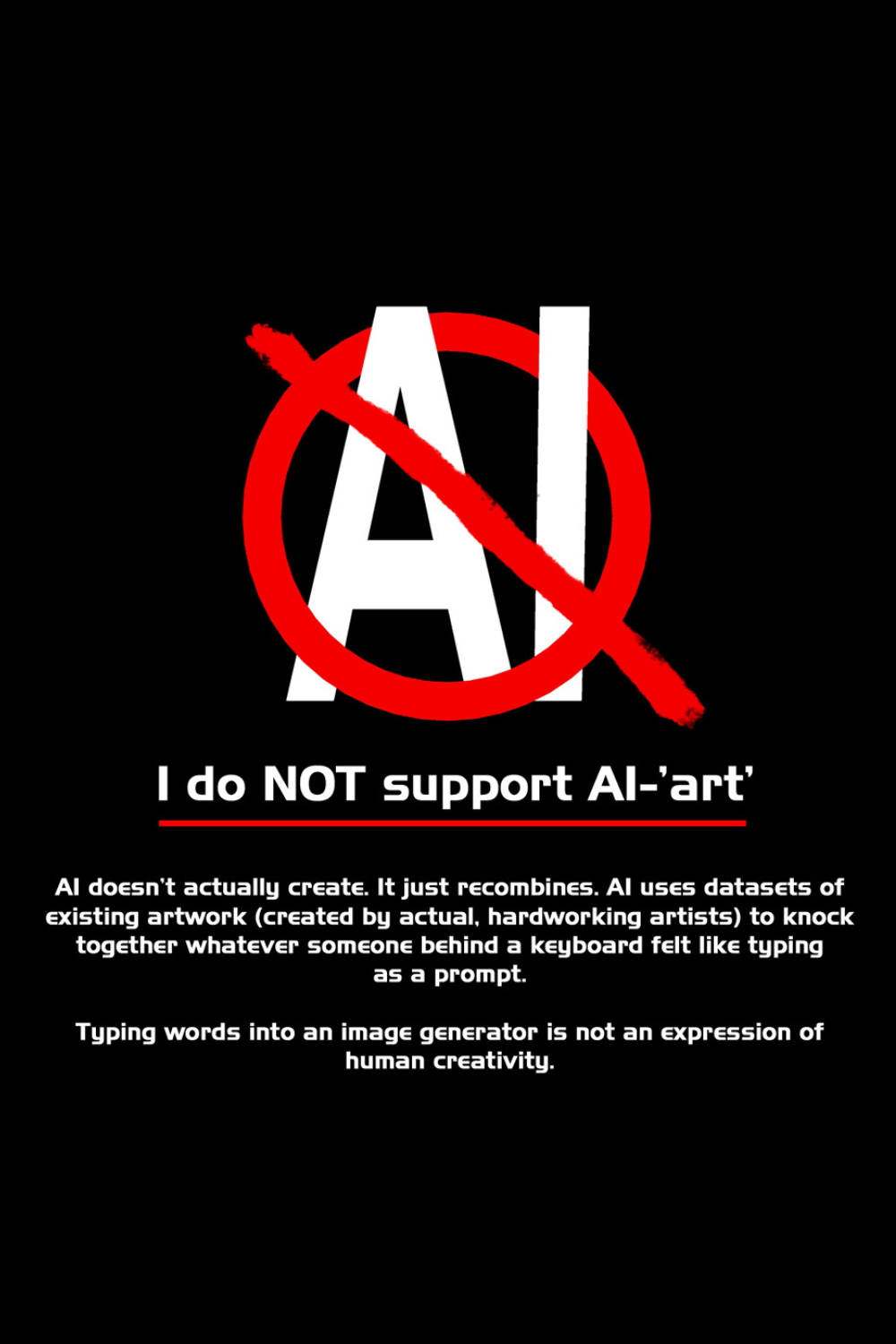
Anti-AI Arguments
“it just mixes human made art so it’s not actually creating anything”
First of all, right now (and everything connected to AI evolves over weeks) AI models are trained on a massive amount of data, more than a human could experience in a whole lifetime. And yes it is human made content, in terms of art might be paintings or drawings, BUT are humans really that different?
First rule that you learn in art class (speaking from experience) is that art never exists without context and that artists constantly take from one another, which we call: inspiration. Austin Kleon in his book “Steal Like an Artist” said something very relevant:
“nothing is original… all creative work builds on what came before.”
If we define creativity like Margaret Boden a researcher in cognitive science at the University of Sussex in the UK, as the ability to generate ideas that are new, valuable and surprising then in my opinion AI might be thought of as creative.
“it’s not the artist’s work”
You could say the same about the dadaism art. When Duchamp created his now famous fountain proposing that art is what the artist says it is, he broke the traditional concepts of beauty and perfection associated with art. Somewhat simmilarly to AI art he did not actually make the urinal. Don’t get me wrong, I do not consider every single AI generated image art, I’m simply saying that just because AI was used we cannot condemn it as something that can never be art. What is considered art is a complex philosophical question with many answers, but what I heard once from someone I think perfectly captures this struggle “art is not about understanding, it’s about feeling”.
“it causes actual artists to loose their job”
The artists everyone’s talking about I’d say are mostly graphics, photographers, VFX artists or illustrators because their work is the easiest to replace with this technology. Of course big companies can and do use AI for advertising or creating promotional materials, but it’s not that before they had artists hand painting brochures for them so it’s not like they’re firing anyone now. And besides they still need people to come up and realize ideas that are later done using AI.
It’s nothing new that AI works faster than humans, but that allows humans to create much more complex projects and learn skills quicker. In context of artists, someone who did only traditional media can now much easier learn programs for example for digital art and include it in their work.
When it comes to other art forms, the most important thing in this discussion, I think is that when we’re being drowned in a sea of AI slop the value of human made art increases, so on the contrary, instead of losing jobs artists might actually find other people who value real art and instead of making promotional graphics they’ll be creating something truly interesting. This can already be seen on Spotify, where 40% of all uploaded music is AI made, but only 0.5%* of all minutes listened are of those songs, which proves that people avoid it and appreciate human made music more.
* Corridor Crew - VFX Artists DEBUNK AI SCAMS & InfluencersCan AI really be Creative?
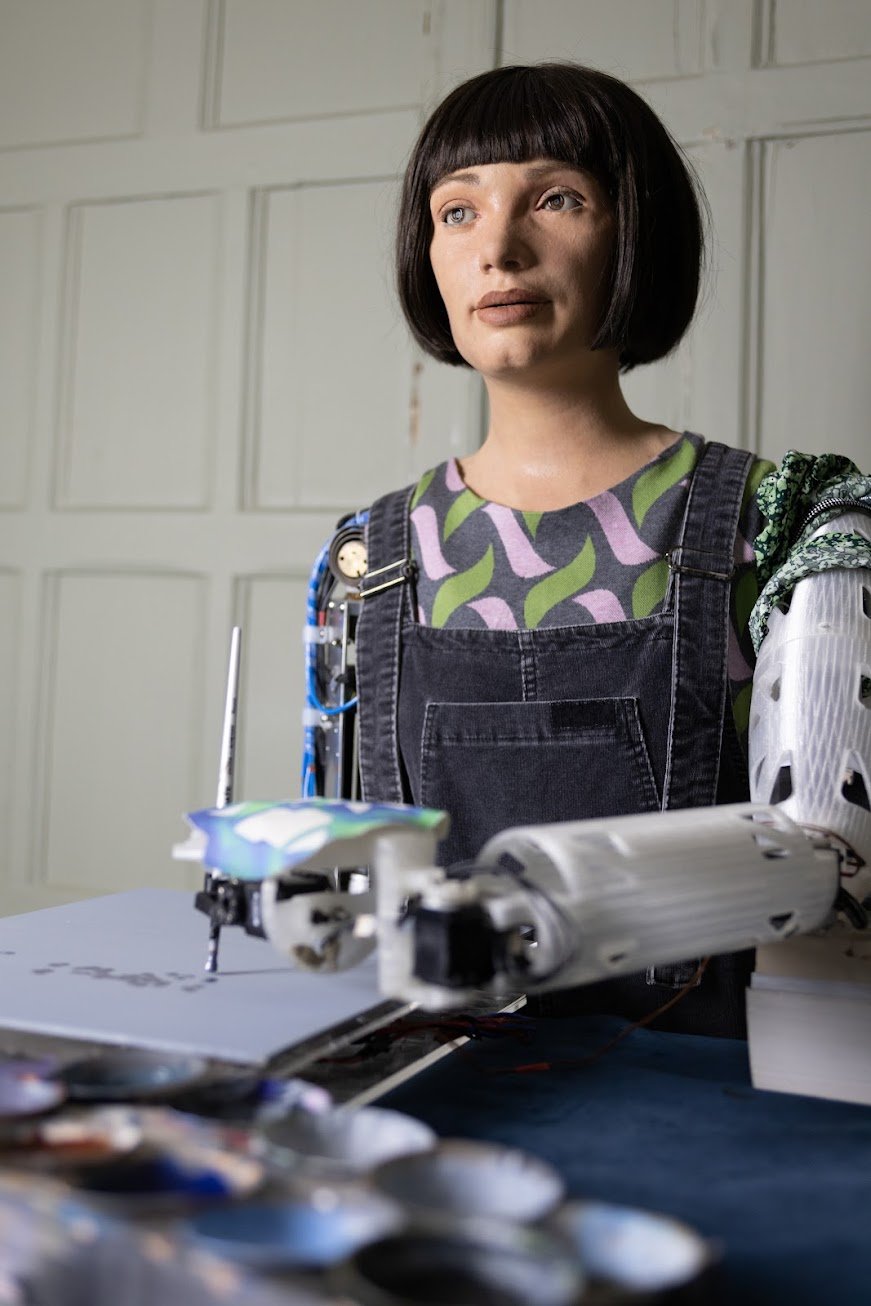
Of course that depends on what we understand by creative, which in itself is a complicated issue. I don’t think the “new surprising and of cultural value” is enough to define creativity, but that’s one of the more popular definitions. AI art already exists in various forms: artists training algorithms to make projects, robots creating art under human supervision, for example Ai-Da the world’s first ultra-realistic humanoid robot artist who did have her own international exhibitions, or the early AI programs which were mathematically calculating based on a set of given rules. All of those cases present a way humans have used AI for their practices (is Ai-Da’s art her own or her creator’s is a separate discussion), but when it comes to creativity it’s a double edged sword.
Case For
Something I consider to be the perfect definition of modern art: “it’s not about understanding, it’s about feeling”, still applies to AI art as we can feel moved by it or simply think of it as beautiful.
I’ll talk about it later, but a big advantage of AI is that it’s not limited by the things it experienced and can therefore make new and unusual connections that humans wouldn’t be able to make.
AI is a modern medium which can help explore our very complex contemporary reality, which may be hard to do using traditional media. It’s also a relatively new medium and a very quickly evolving one, so the journey of using it is just beginning.
There is a difference between AI creating art ”on its own”, Aida is probably the closest here, and a human using it as a medium to convey their message or emotion, so it completly changes the understanding of its role.
Case Against
It has no personal experiences or own emotions, which are very often a foundation for many works created by human artists. Cultural symbols, memories or values are also what has shaped art for thousands of years.
When looking at human-made art we can see the person behind it, the experiences and conditions that made them who they are. The artist’s identity is what’s important, even in art history, particularly iconography, which studies the artist’s background in order to gain insight into the meaning and possible intent of their creations.
It doesn’t really “think” for itself the way humans do and for now needs guidance or supervision.
One of the purpose of creating art is often to draw attention to an important social issue the artist is experiencing and as AI can create such art it’s not from their own intent nor based on emotions connected to being a witness of said events.
Currently most AI models are owned by corporations, so does AI-aided art belong to them as well?
Future of AI in art
Right now AI is not capable of creating art absolutely on its own, making it still a tool for human use. There already are a lot of artists that use it for their art making and unlike many think not by prompting “generate me a painting of cat”.
Like every tool in order to create interesting pieces you need to know how to use it, similarly, to get a sense of depth in a drawing you need skills beyond preschool doodling. The same applies to AI, if you want to create art and not just easy one-prompt images you need to know how, which means that you need to have some knowledge about how these algorithms work. Unfortunately due to a lack of knowledge and widespread AI hate, artists who use it in their practice are not well known and even experience a lot of hate themselves.
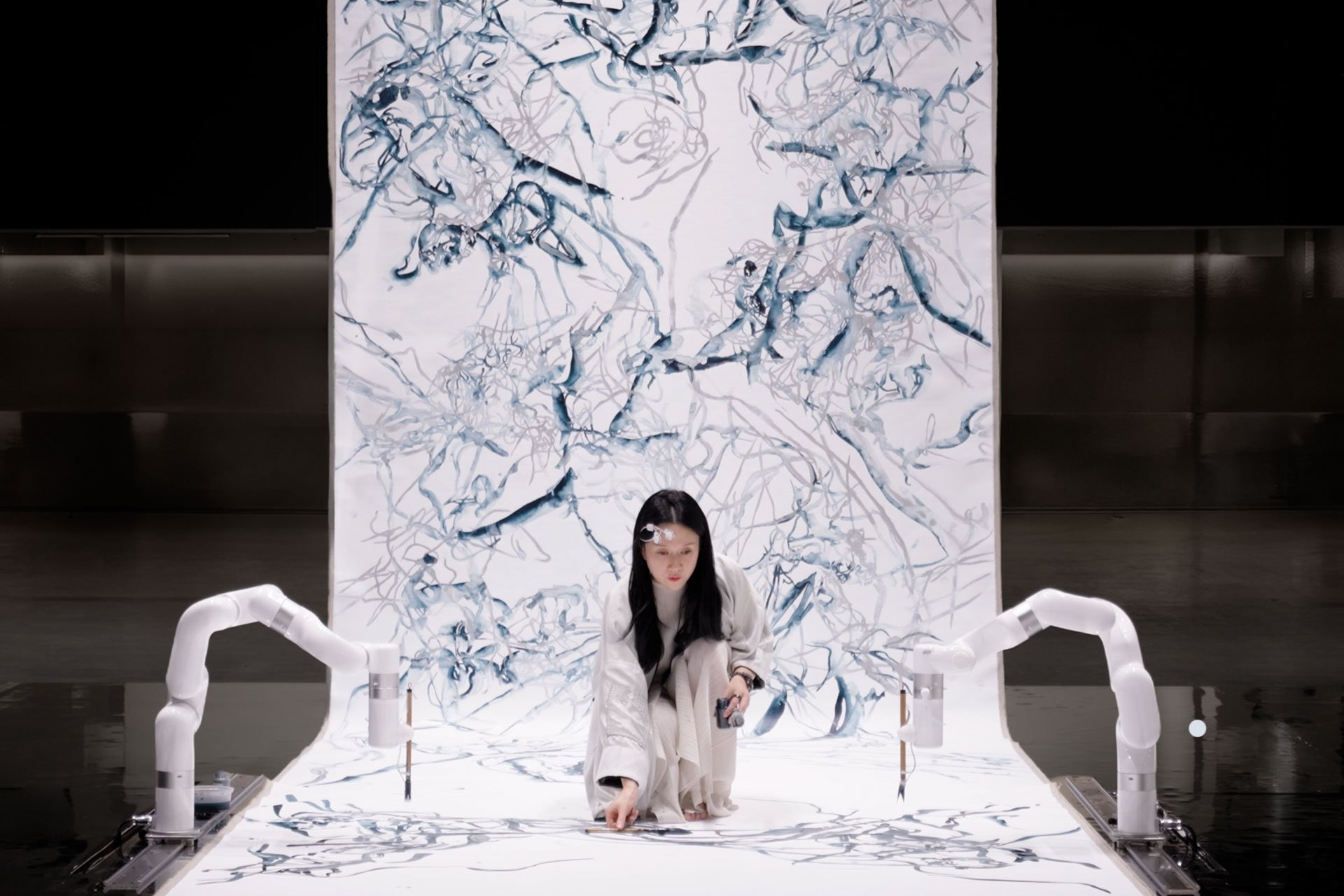
So what is the future of AI in art? Speaking short term (because I do not have the knowledge to make long term predictions) I think that after a while people will calm down and it will become a more popular medium. Of course extremists or just people with an anti attitude will remain like always but it’ll be a much smaller percentage. I’d say a similar backlash happened when phones were invented, with many saying that we would stop communicating face to face. The world will definitely change but that change is never black or white or as a matter of fact something we can easily state now. When it comes to the art market maybe artists co-working with AI will be able to gain recognition, but considering that still 82%* of sold art is traditional media (paintings, sculpture and works on paper) I don’t think it will be soon. About the usage of AI I think that saying co-working is a good term, especially to address projects like Sougwen Chung’s who trains AI on her drawings and then has it transfer what it has learnt about her style to a robotic arm that works alongside her.
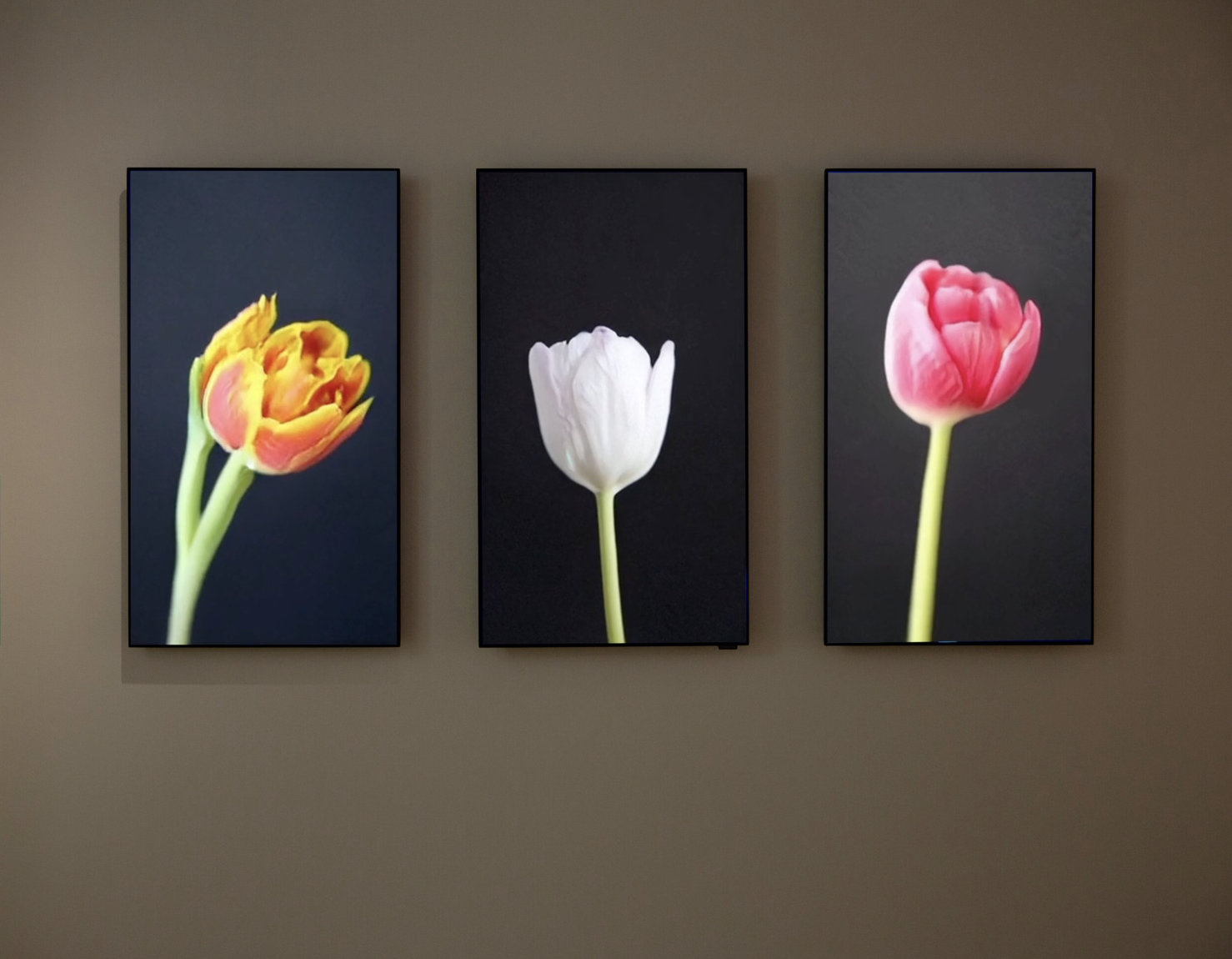
Another interesting point worth mentioning here is the opinion of one of the pioneers of AI art, Mario Klingemann, who says that human art is limited to what we see, hear, read or touch and that those experiences are hard to glitch, but use of a machine might help us make some unconventional connections. Given that the algorithms are easier to bring off course than a human brain. I personally think that this is a fascinating and truly new direction for artists to explore.
My favorite example of an extremely creative use of AI is the music video WAVE by a Japanese artist Masaki Mizuno which you can see below. For me this is the perfect example of how to co-work with an algorithm to create something truly amazing.
So, my final message is: don’t reject AI art just on the basis of the recent Instagram hate, instead try to consider how it might contribute to the development of the arts.
*Art Basel and UBS Art Market Report 2026
Sources
https://sii.pl/blog/en/a-brief-history-of-ai-powered-image-generation/
https://medium.com/@sharpcustomersuccess/can-ai-actually-create-809b2ad2ef46
https://www.bbc.com/future/article/20241018-ai-art-the-end-of-creativity-or-a-new-movement
https://www.plymouth.ac.uk/discover/is-ai-generated-art-actually-art