I gave an interview!
I gave my very first real interview to a reporter from Drzewo Franciszka!
English transcript below:
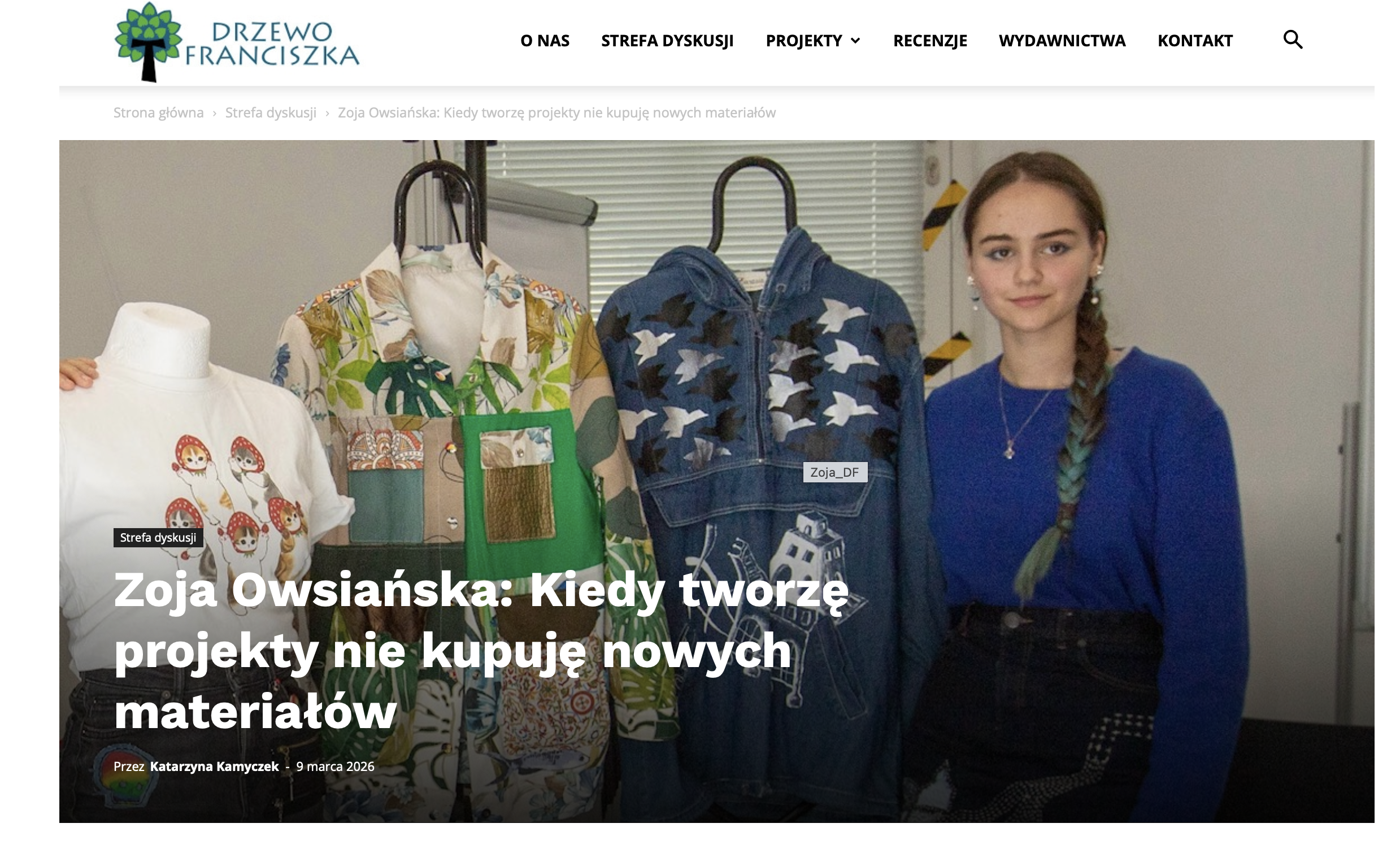
Zoja Owsiańska: When I Work on Projects, I Don't Buy New Materials
By Katarzyna Kamyczek — March 9, 2026
Zoja Owsiańska first sat down at a sewing machine at the age of seven, and today she runs her own brand, Zoella Fashion - she talks about a passion that grew into activism. In a world where trends change by the minute and Shein tempts with ultra-fast fashion, Zoja is trying to show her peers that clothes can hold more value than just "right now."
Katarzyna Kamyczek: Do you remember the moment something snapped inside you and you thought: "no more chain stores"? What moved you most — the quality, the style, or perhaps awareness of the environmental impact?
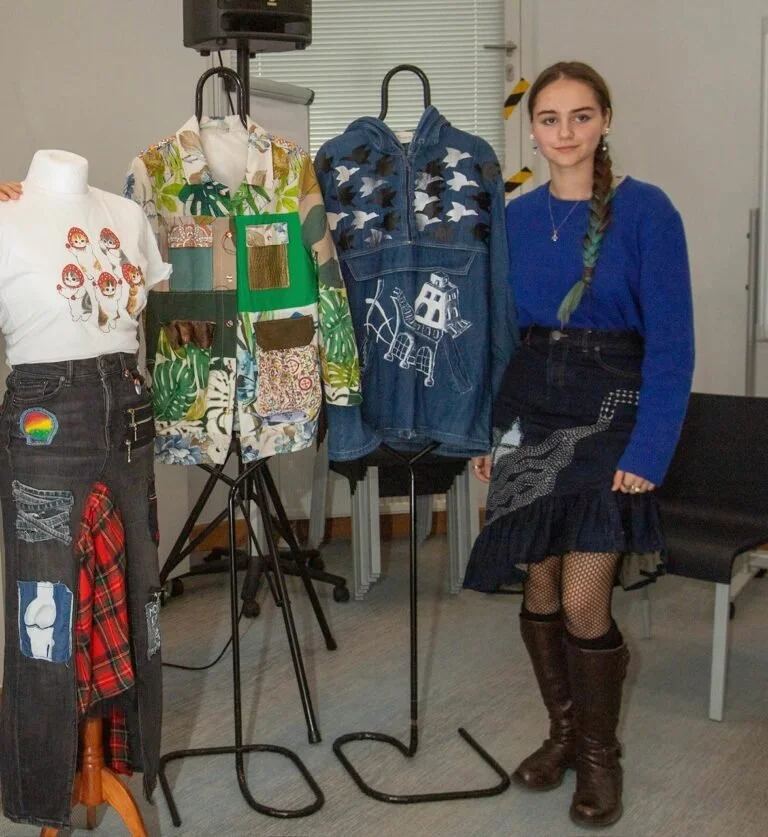
Zoja: There wasn't a single moment, but around three years ago I became interested in responsible fashion. I started reading articles and researching, gathering information about production, sales and greenwashing. I probably inherited an activist mindset from my mom, so when I "discovered" what this industry actually looks like, I decided I would never again shop at a chain store. To channel my anger and frustration, I started making posters and putting them up around school, and then I introduced a ban on buying from chain stores across my whole family. I remember wanting to grab my peers and shake them: "What are you doing, buying clothes from Shein!"
What about sewing? Do you ever look back on the first project that made you feel: "this is it"?
My adventure with sewing began when I was 7 and ended up in classes with Madame Aga. After a week-long summer course, I sewed a black skirt with ruffles for the first day of school. There were eight children in the workshop, and we chose our materials from whatever Madame Aga had on hand. I kept going back there for many years, developing my skills, until I began sewing and designing on my own.
Today you sew with a zero-waste philosophy. How do you understand that idea, and how do you translate it into everyday practice?
I want my projects to have as little negative impact on the environment as possible, because climate issues are already very advanced. If we want to stop their consequences and continue living on this planet, we have to act! When I work on projects, I almost never buy new materials. Most often I go to secondhand shops and clothing swaps, collecting garments that I later reuse. I would really love for using what we already have to become the norm. I know it's hard to achieve with fashion brands, but we truly have far too many clothes already. It's impossible to get rid of shops or events like the Met Gala, because people will always want to buy, but we can reduce their environmental impact. In the future, I'd like to work in the fashion industry and push for normalizing sustainable practices - perhaps through new techniques for creating fabrics from old clothes? I think we're only at the beginning of discovering responsible production methods, and as technology advances, new ones will emerge.
It's not easy to convince friends that a 5-złoty t-shirt isn't actually a bargain. How do you reach them?
I've noticed that different things work for different people. Emotional stories change some people's habits, while for others they're just a momentary impulse. To convince someone, I usually lay out a long list of negative consequences - from environmental impact and unethical treatment of workers to health risks from the chemicals used. Hence the title of the posters I put up around school: "Is looking trendy worth it?" When I'm talking to someone with very entrenched opinions, I dream of being able to show them the living conditions near landfills, for example in Kenya - I think that would move even the most resistant.
Do you often hear arguments like "one person can't change anything" or "nothing will happen if I buy myself a pair of shoes"? How do you respond?
Yes, I also hear: "What does it matter if I make one purchase?" or "But I bought these t-shirts from chain stores on Vinted." When it comes to reactions to my projects, I get the impression they're seen as very creative, but not as something others could replicate. I think many young people don't realize that upcycling clothes doesn't have to be difficult. I sometimes catch myself doing this too - because I've been sewing for 10 years, I tend to come up with very complicated projects instead of thinking of interesting and simple ways to upcycle.
Where does your sensitivity to ecology and ethical fashion come from?
Since childhood I was raised in an environmentally conscious environment. My mom works in the field of responsible business, so I think that had a big influence on my choices and motivations.
What materials do you love working with most?
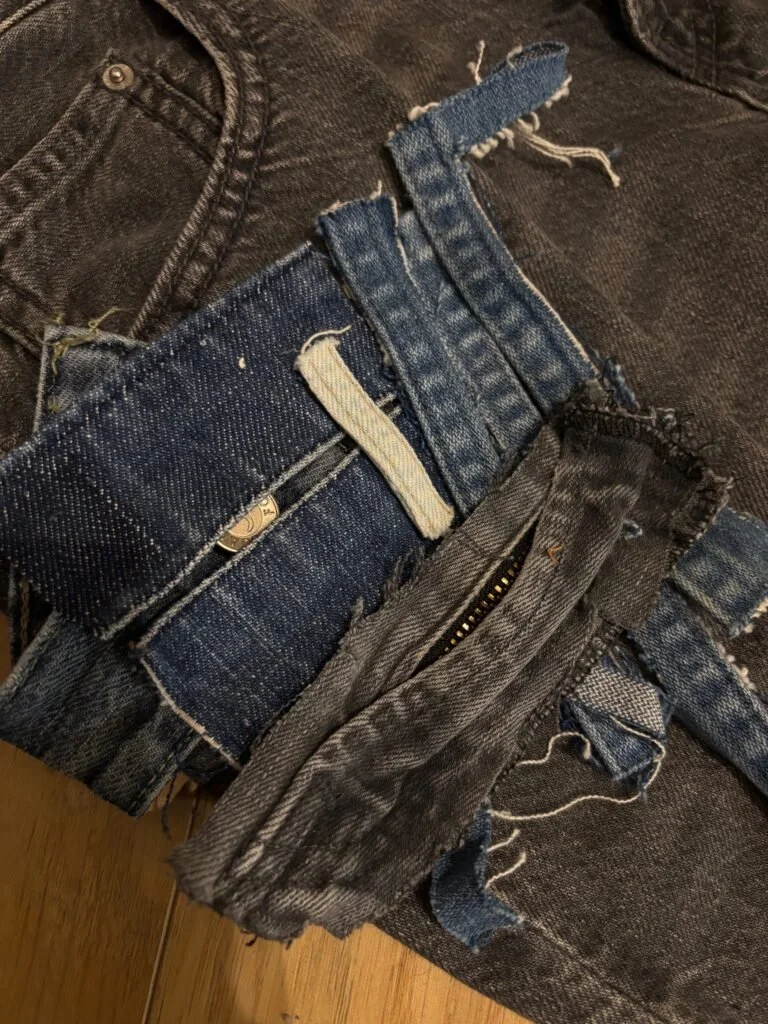
The obvious answer is natural fabrics, but what I love most is working with denim. It's durable, it has a long history, and you can make practically anything from it. Everyone has jeans, often more than one pair, which is why I love reimagining them. It doesn't take much to turn an ordinary pair of trousers into something unique. On top of that, it's very easy to find jeans in secondhand stores, so I can easily carry out all my projects.
You've mentioned being inspired by Japanese culture. What absorbs you most about it?

photo by Paulina Pikiel
I love Japanese culture, so everything inspires me, from philosophy to mythology. First, their approach to fashion is fascinating. As an island nation, they had to implement responsible resource management techniques hundreds of years ago. Clothes were hard to come by, so they were repaired and mended, which gave rise to many interesting methods. Recently I've become interested in sashiko, a technique of strengthening fabric through repeated stitching. Like many elements of that culture, it's not just a craft but also a philosophy of rhythmic sewing. The second thing is mythology, I've always loved myths. I went through phases of Egyptian, Slavic, and Celtic mythology, and now I'm into Japanese. My latest project is a costume of a Japanese demon.
How do your peers react? Do you see any change in their attitude toward fashion?
As far as my peers go, I get the sense that the people around me, as is often the case at a teenage age, blindly follow trends. I try hard to raise awareness, but I most often encounter attitudes like: "one person can't change anything," "I don't have the time or a secondhand shop nearby," or "nothing will happen if I buy myself one pair of shoes." I think many people don't realize that upcycling clothes doesn't have to be hard, and it can actually be fun.
Do you plan to develop your career abroad in the future, or would you rather build your brand in Poland?
I'd really love to study abroad, especially in Japan or Scotland, but how my life will unfold I obviously don't know yet. I'm also interested in theatre and film, so I see costume design as a potential career path. Especially after watching Paul Tazewell's work on Wicked, I think designing costumes or collections between traditional fashion and stage costume is in my future.
How do you imagine fashion in 10 years? Will a sustainable approach become the standard, or will it still be a niche for enthusiasts?
I'm heading off to university soon, and reading about various schools, I can see that today it's almost impossible to study fashion without addressing sustainability. So I see two possibilities: either designers will genuinely create collections from recycled materials, or there will be performative sustainability — like what's happening now in chain stores, new clothes made to look as though they've been reworked. However, I'm counting on the fact that, thanks to technological progress, currently experimental techniques, like the method used by Japanese designer Yuima Nakazato to repurpose polyester garments, will be common practice in 10 years.