Faceless Bride - sculpture
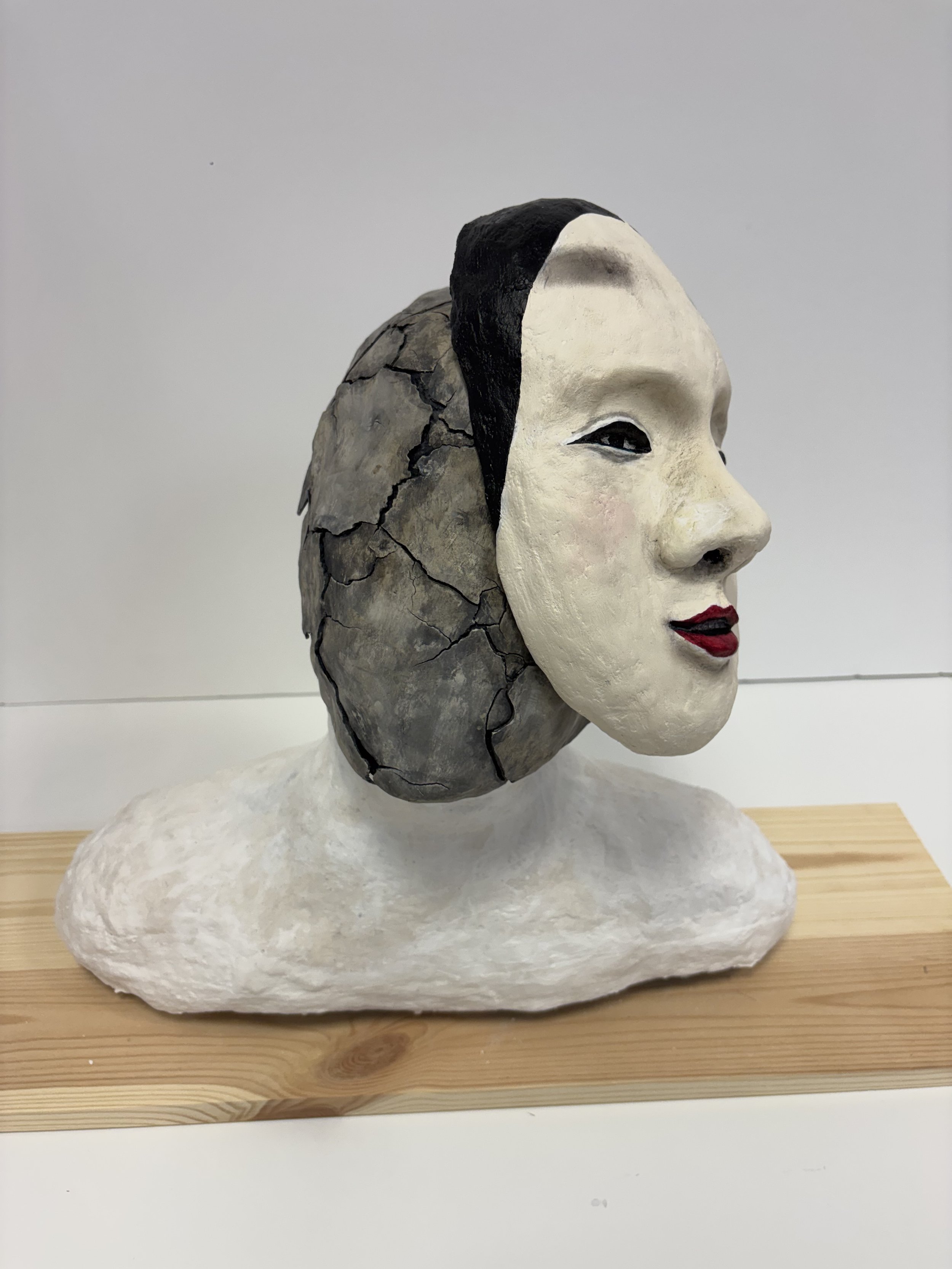
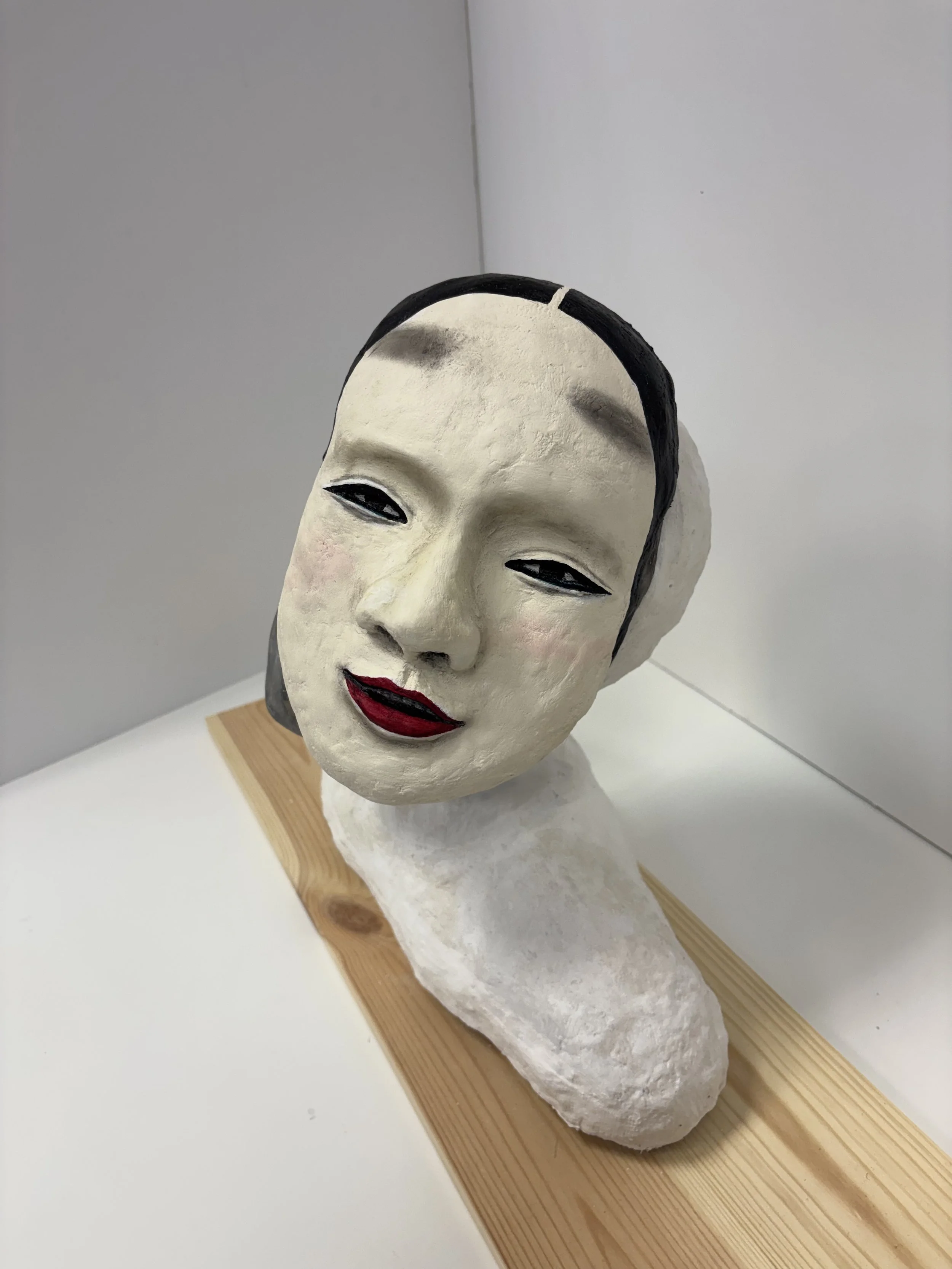
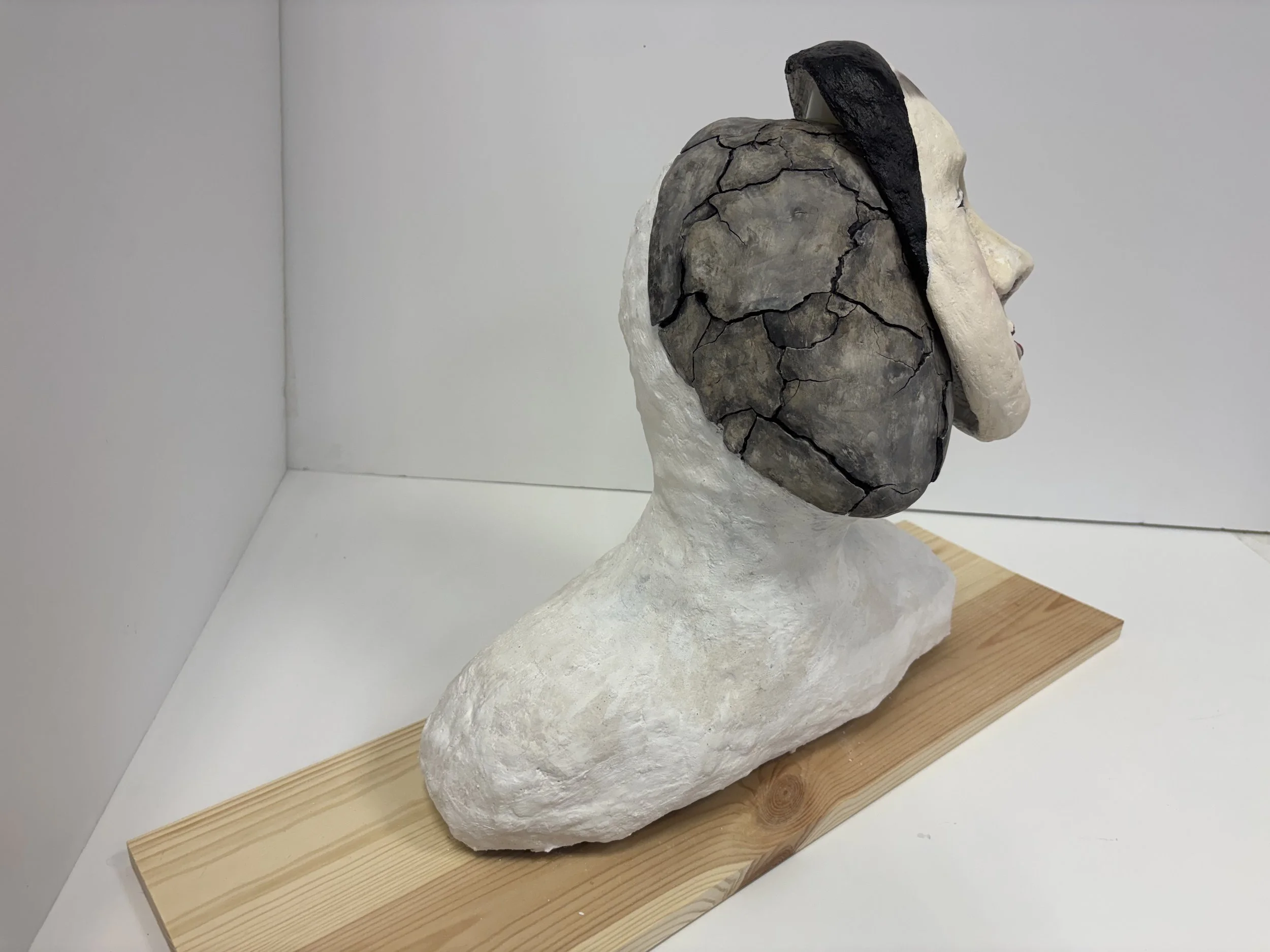
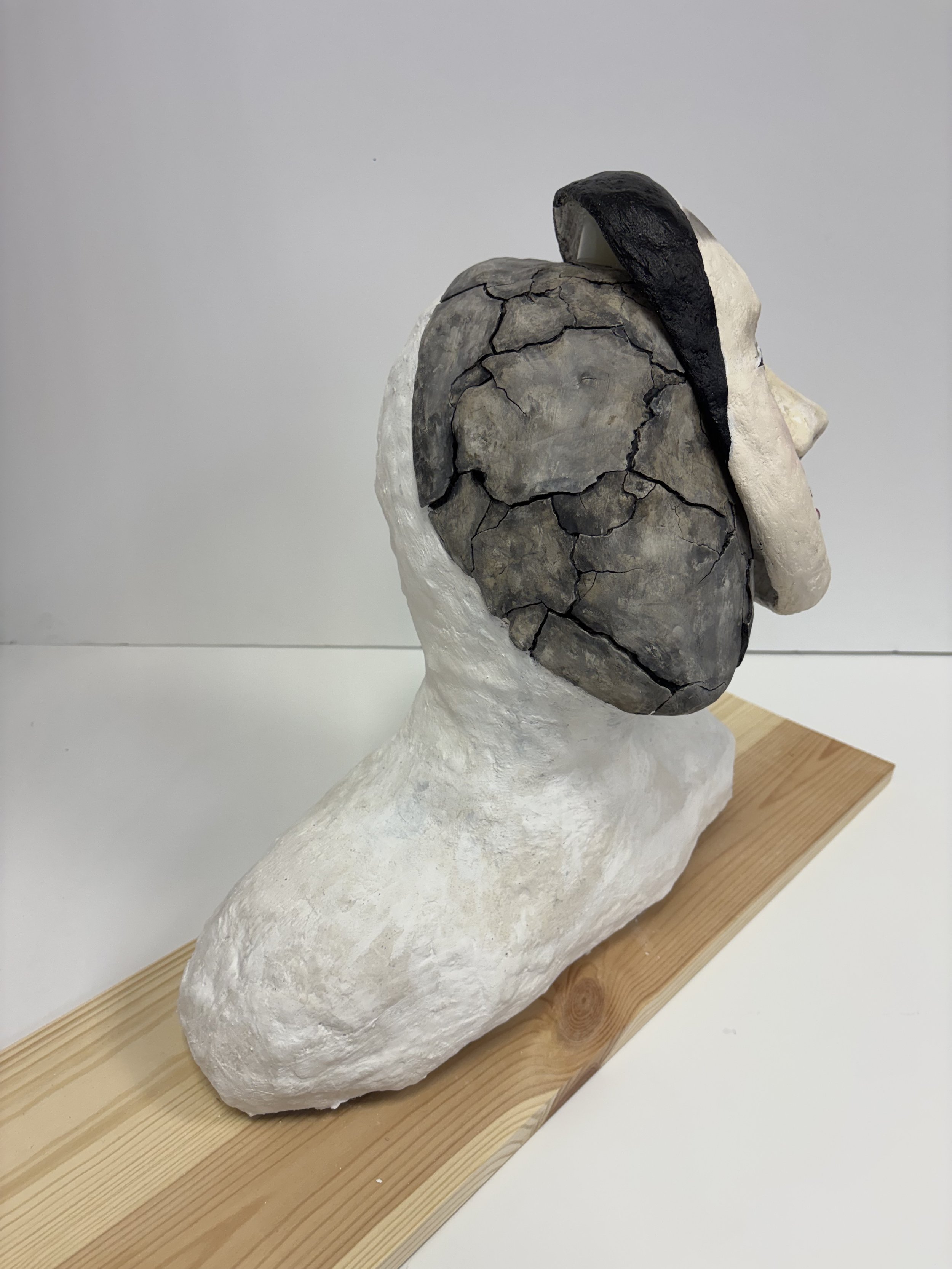
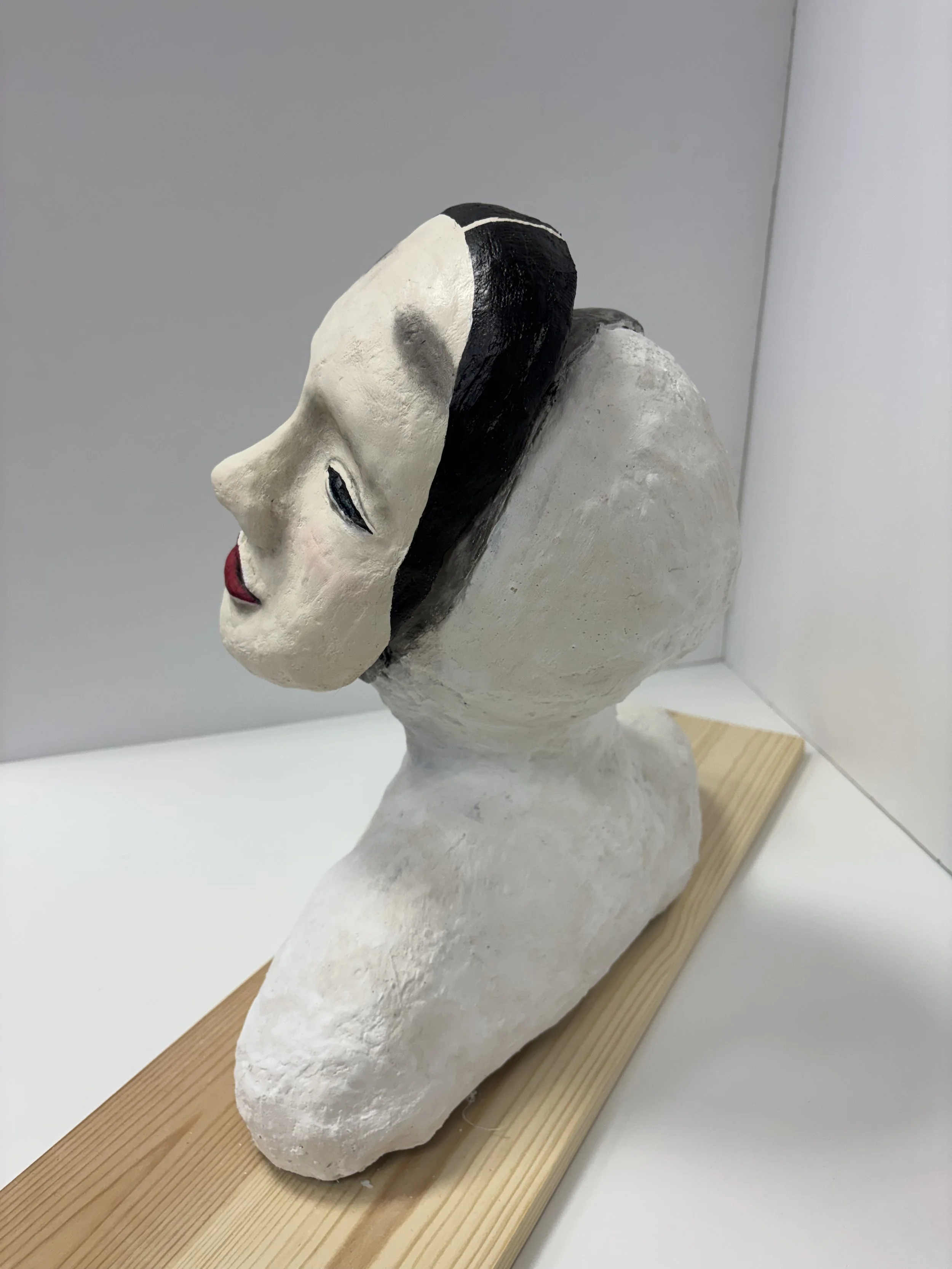
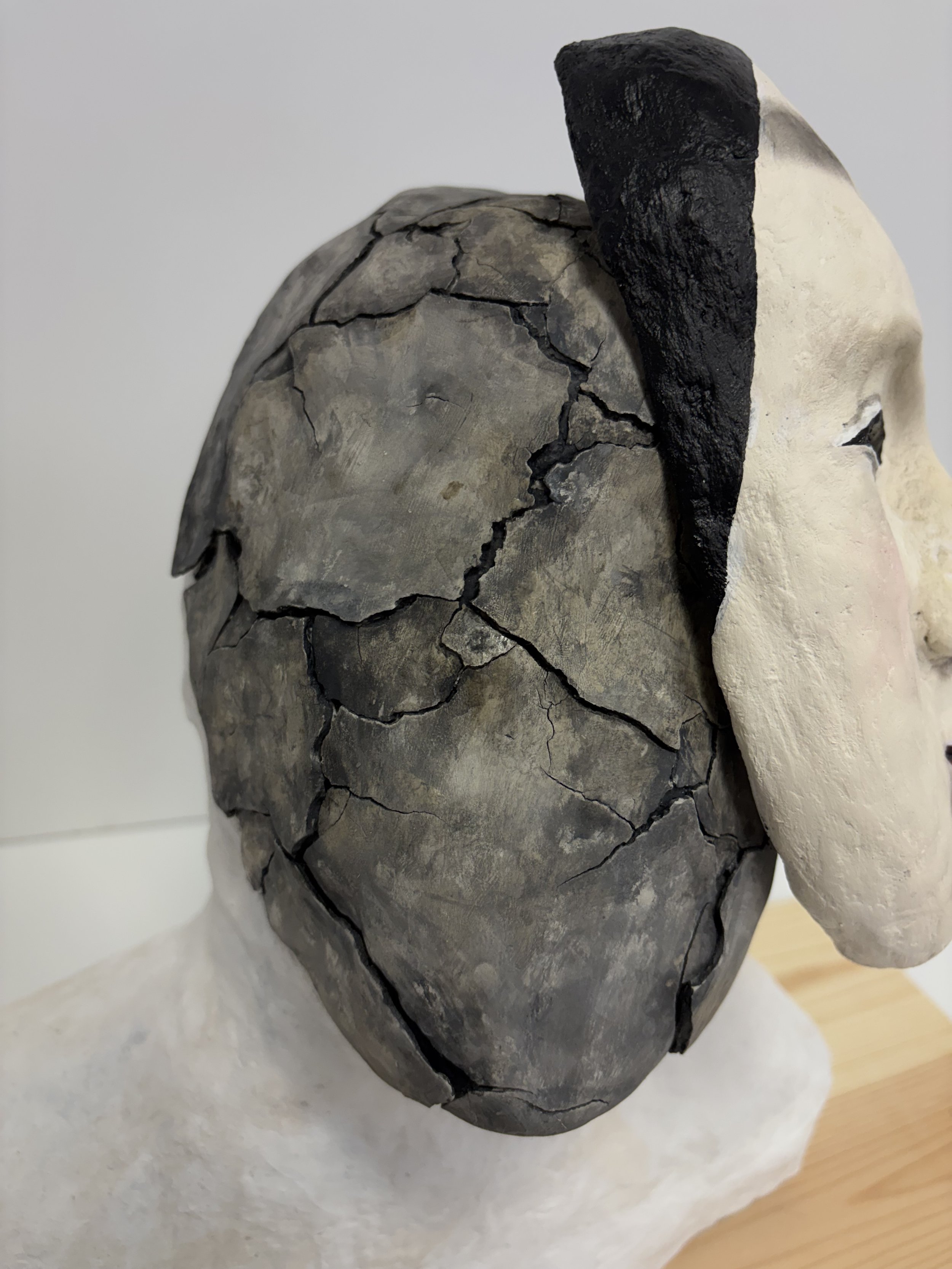
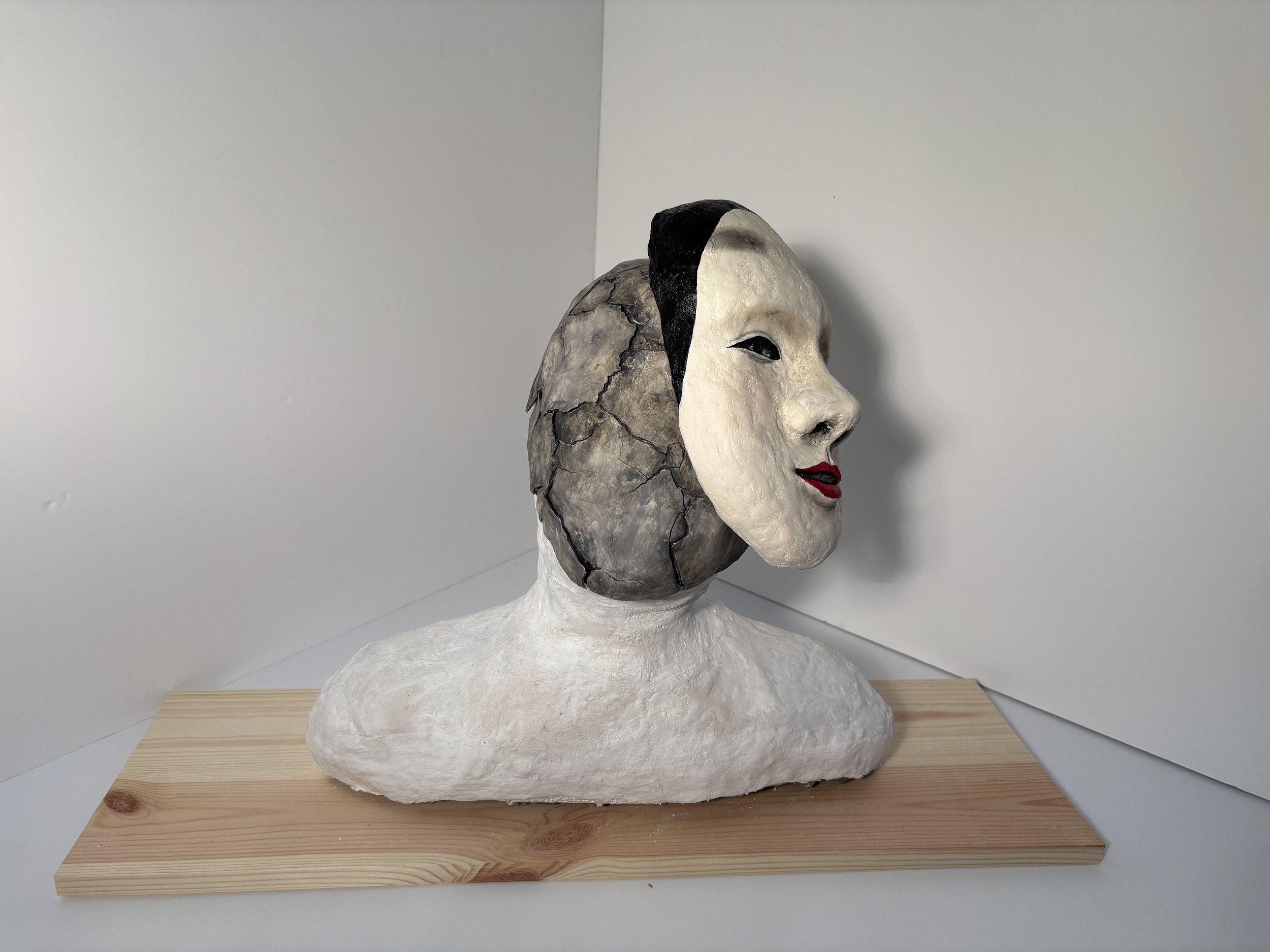
Hi, this is my mini research and process following the creation of a “Faceless Bride” sculpture.
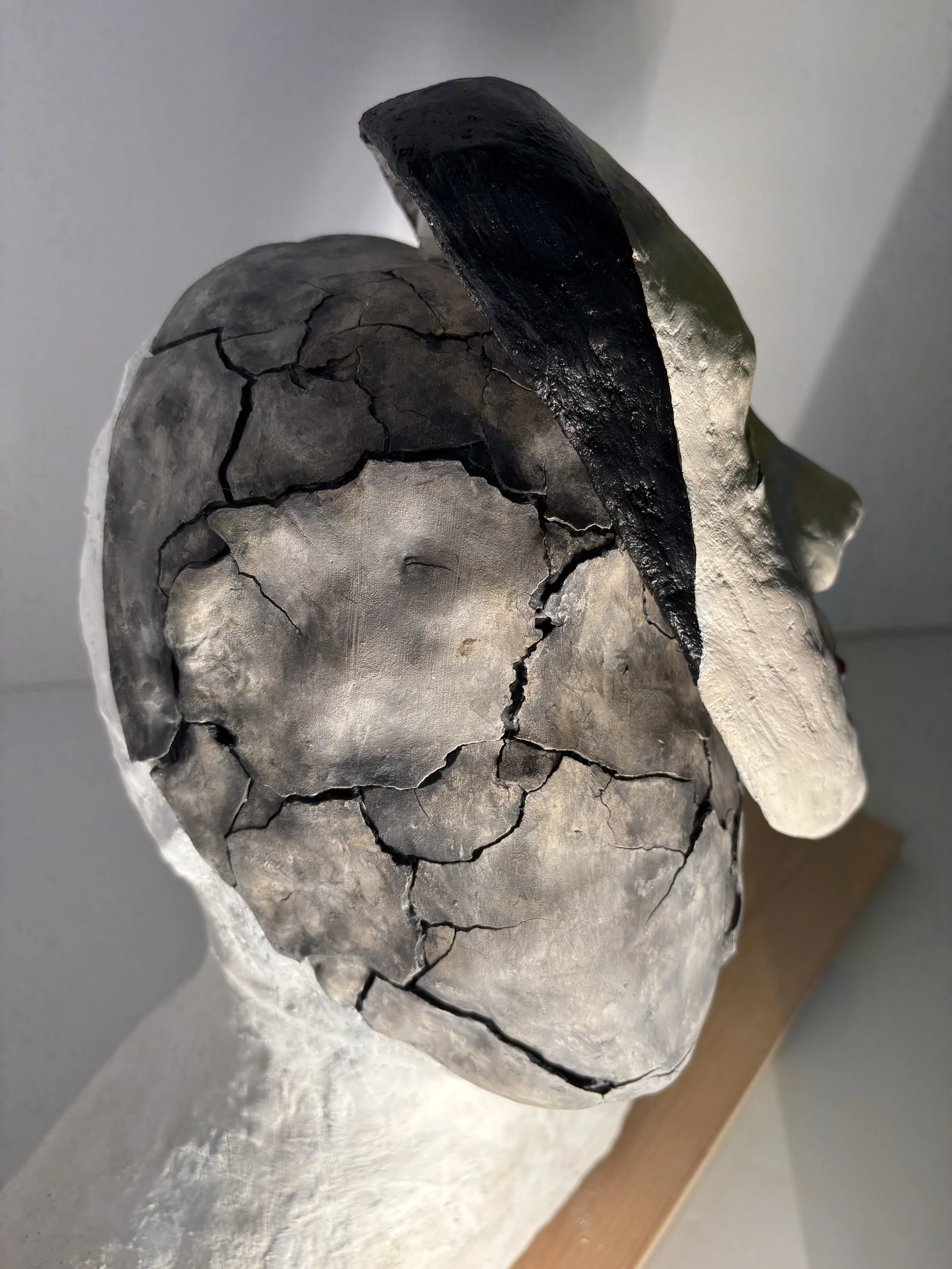
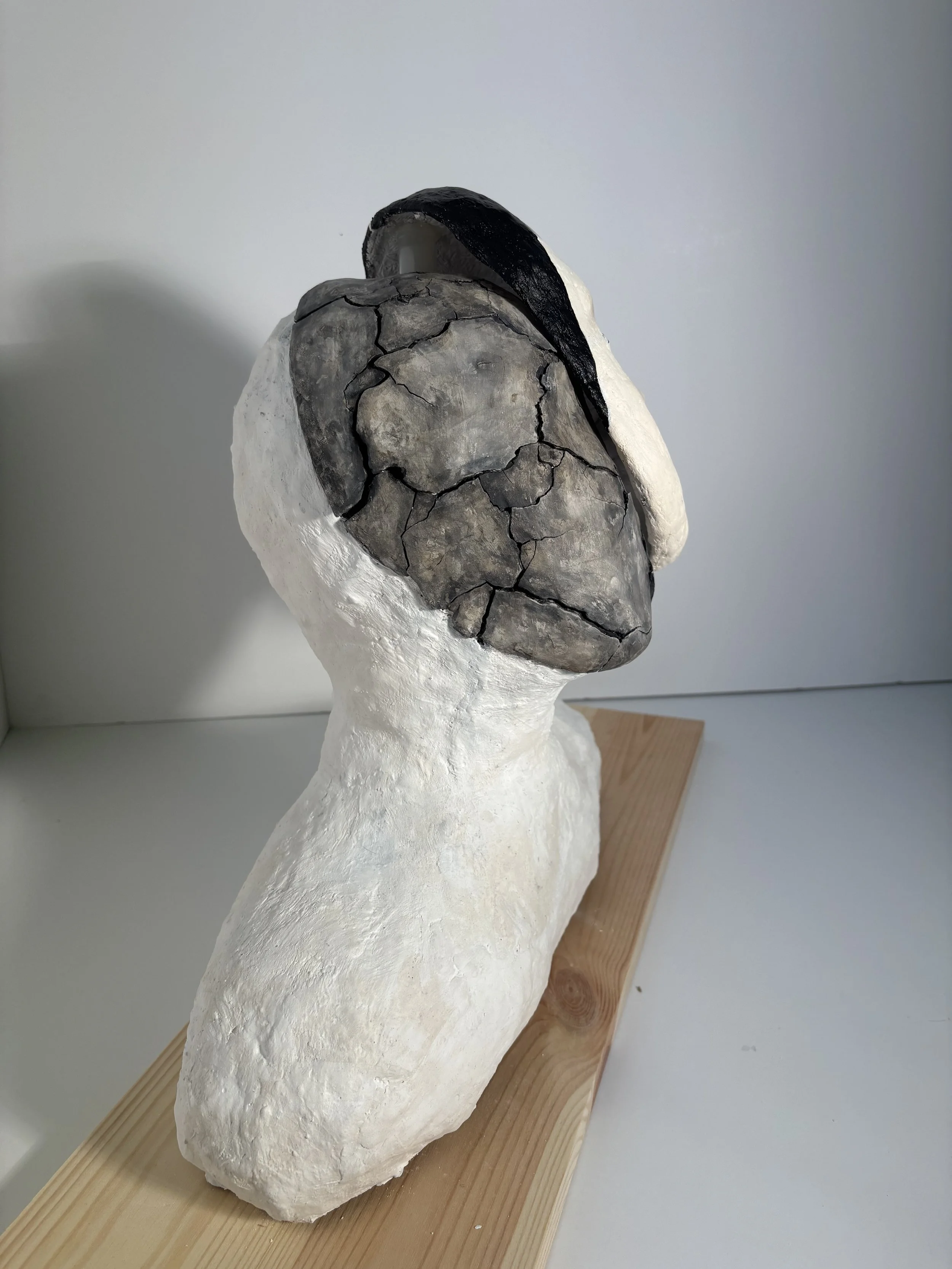
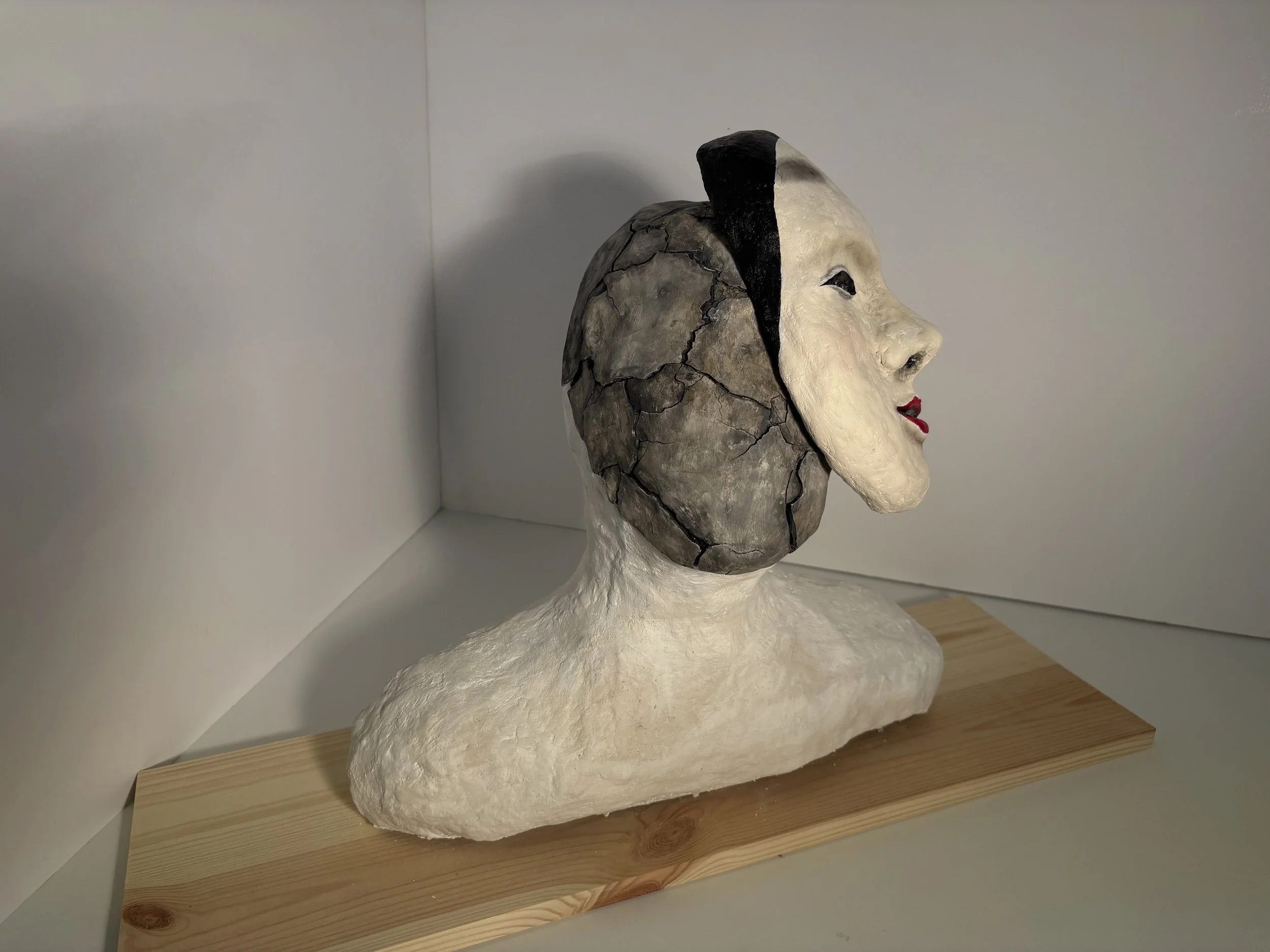
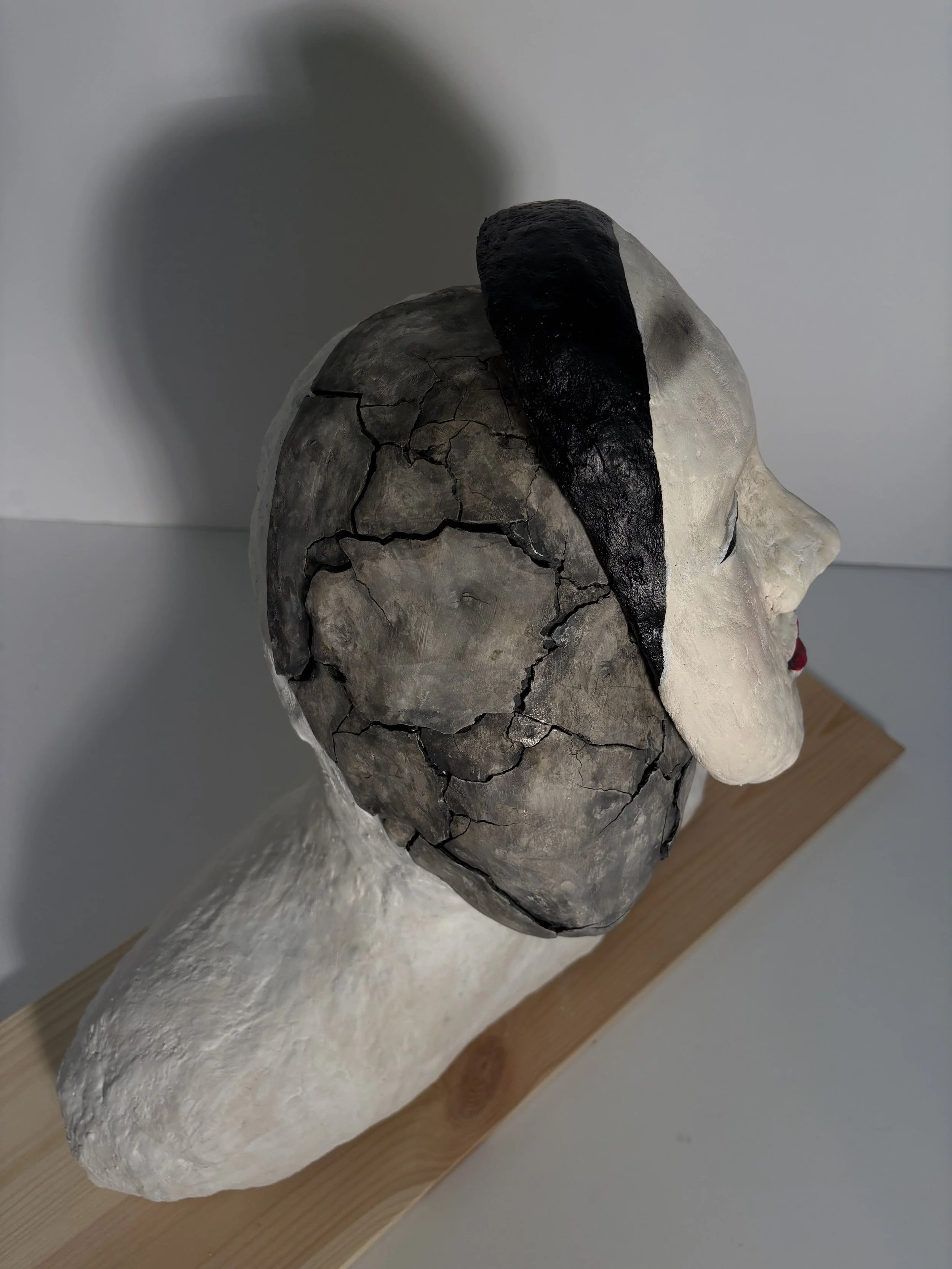
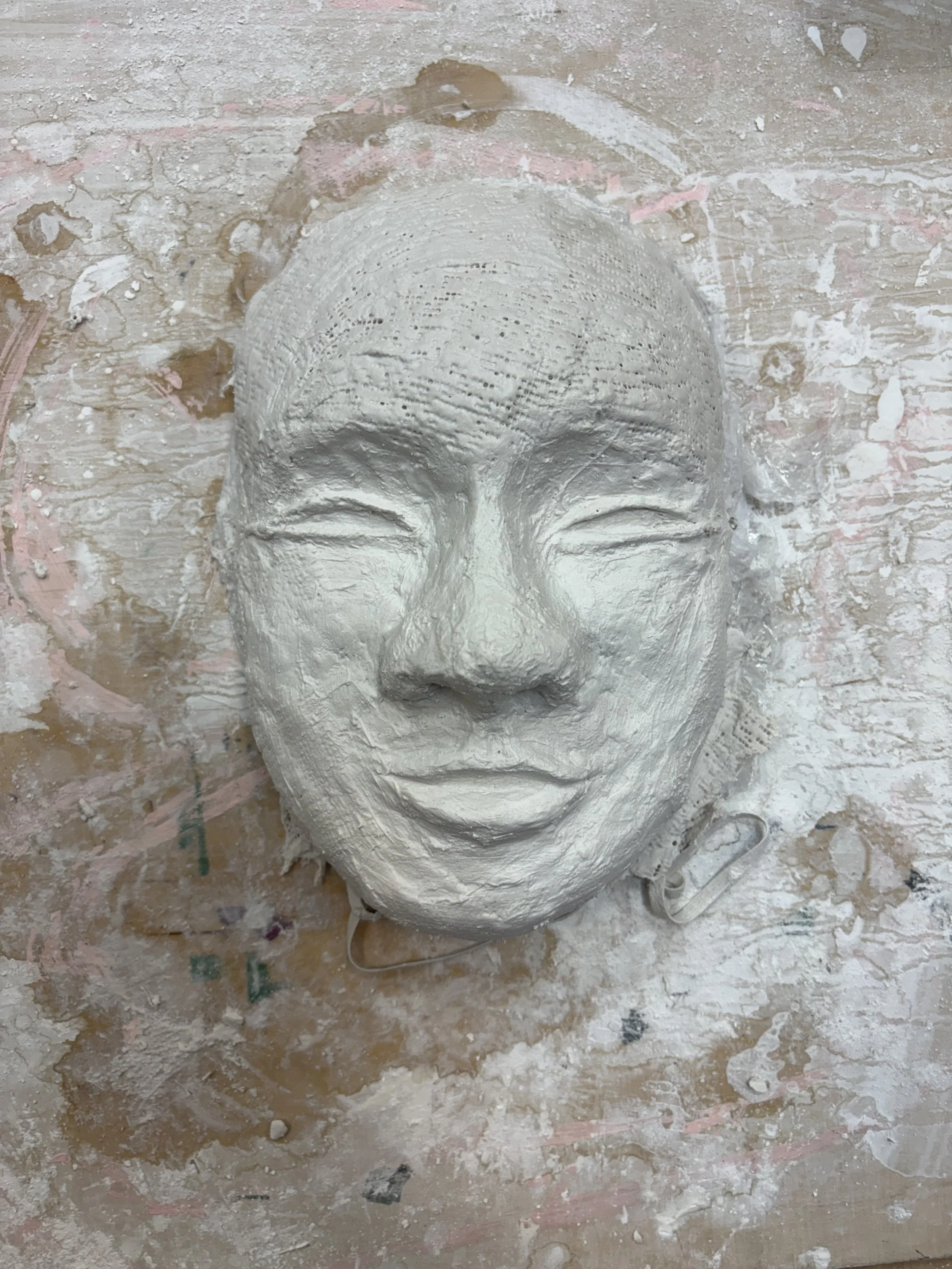
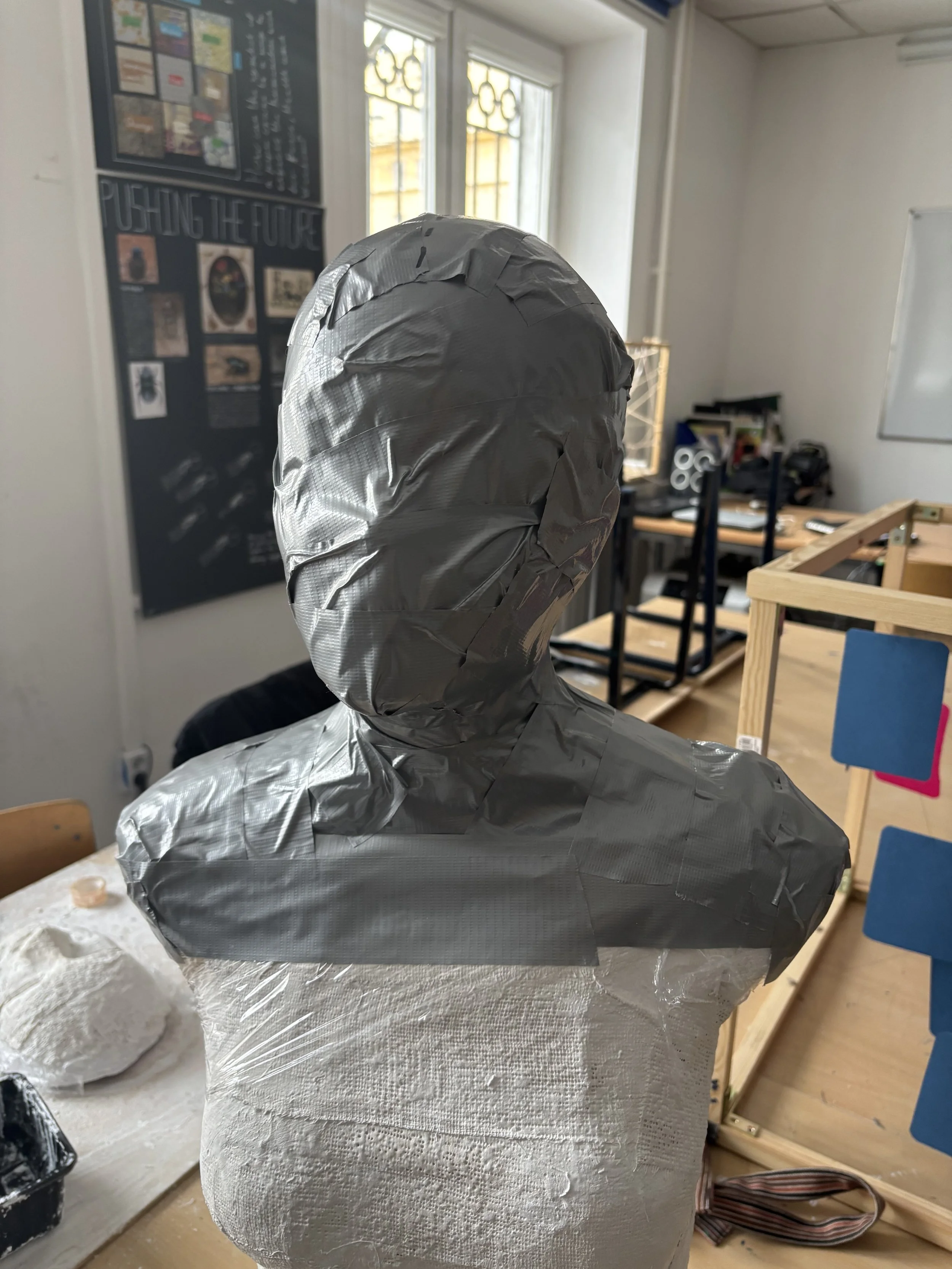
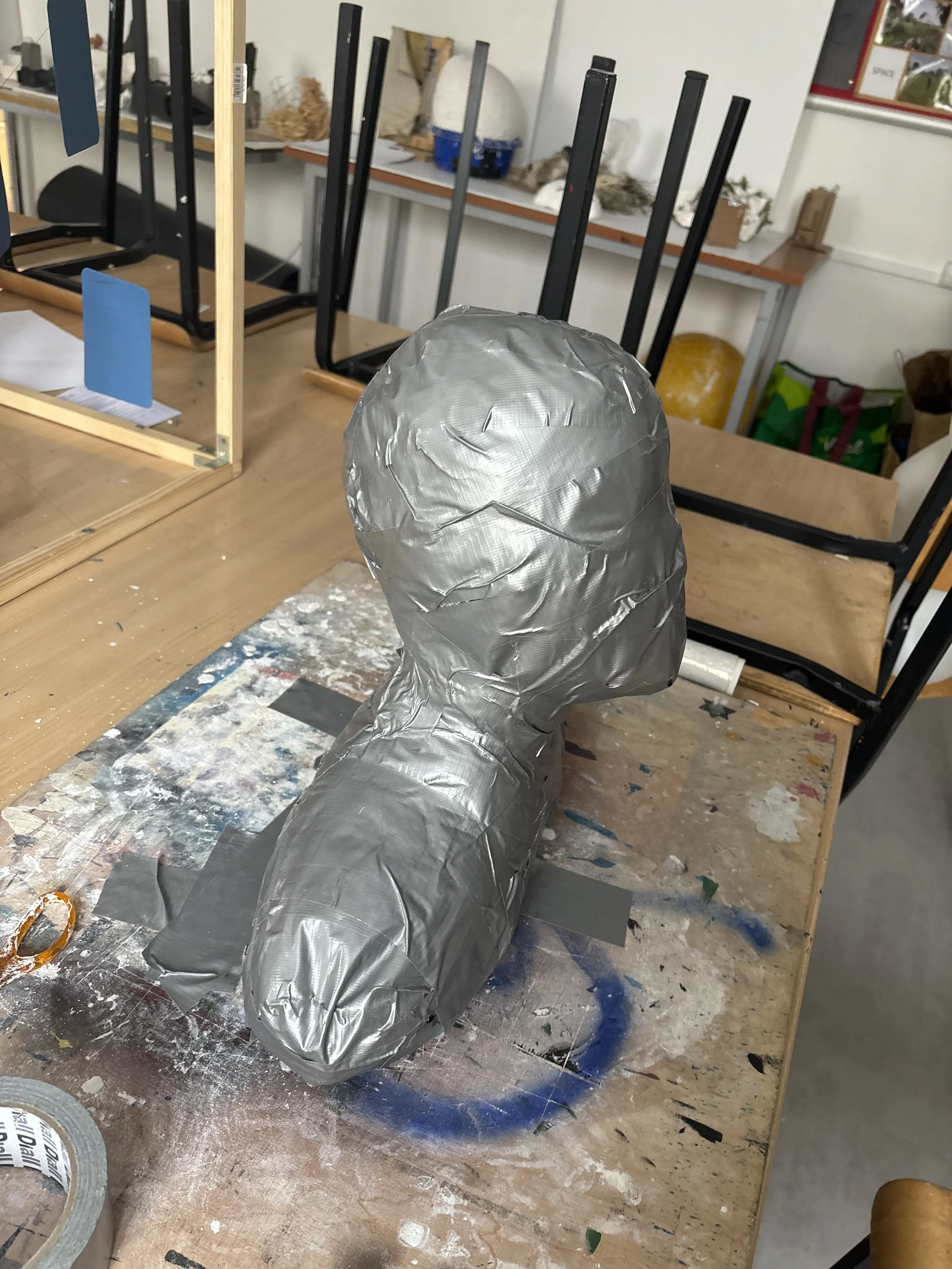
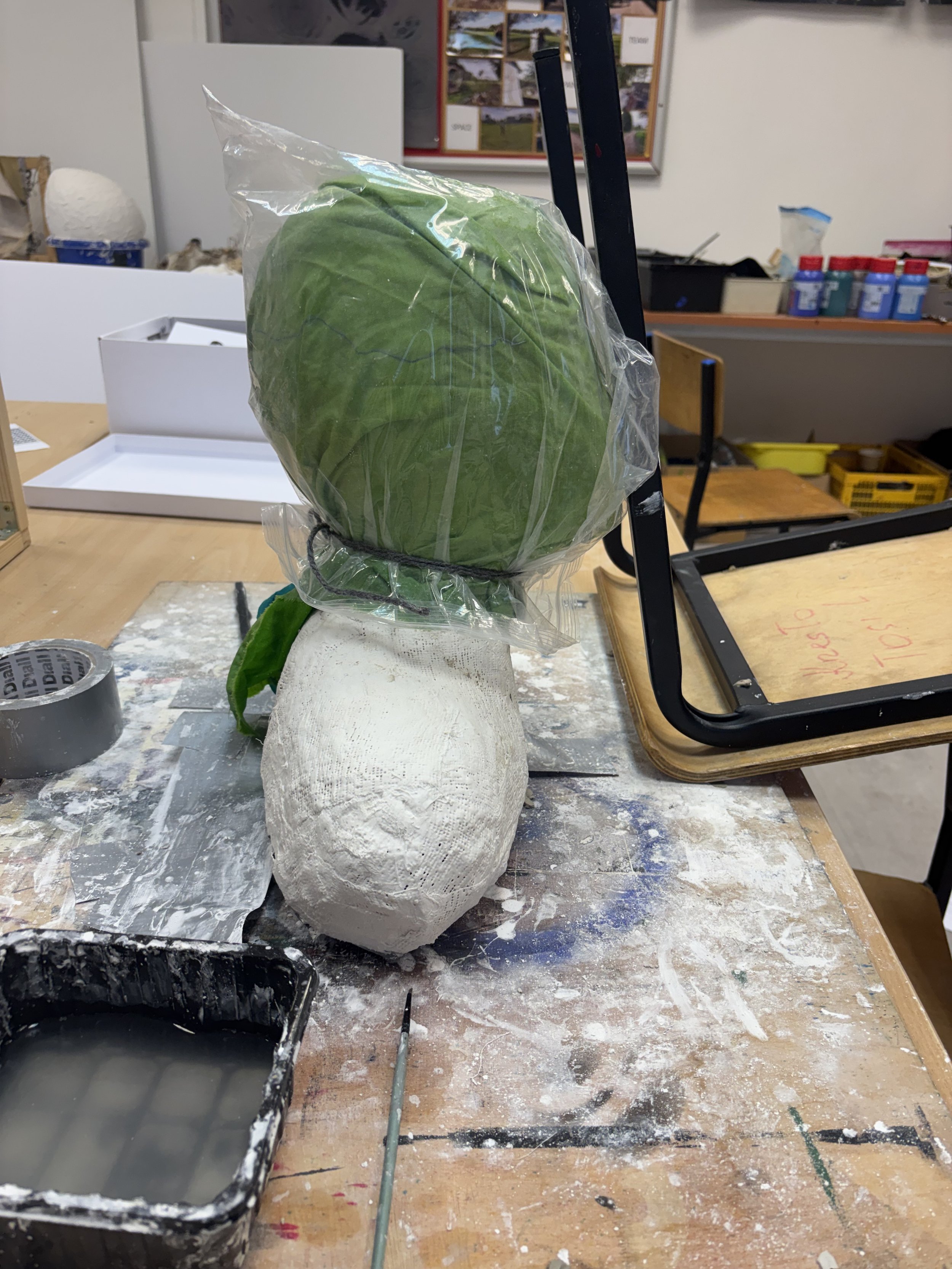
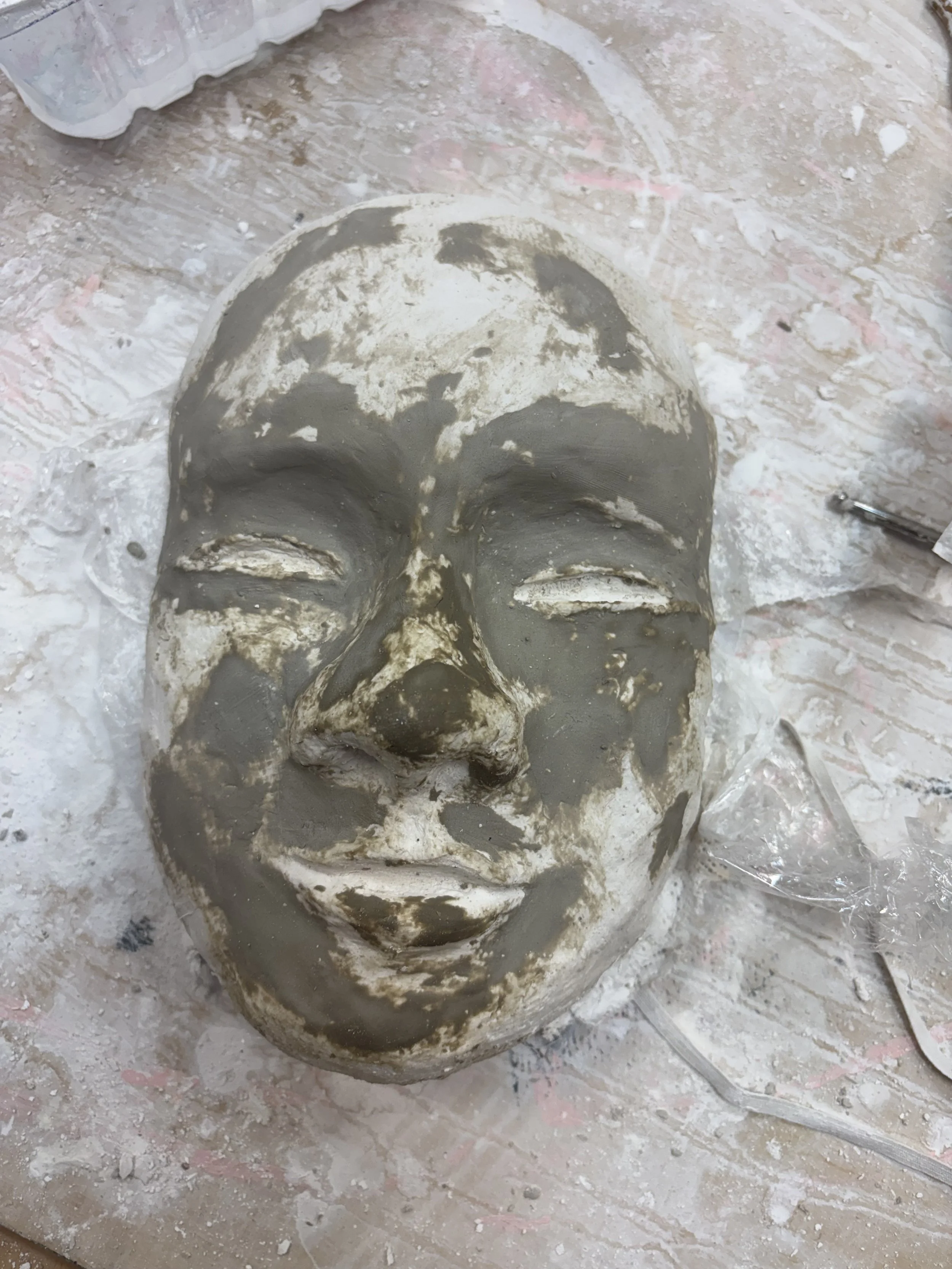
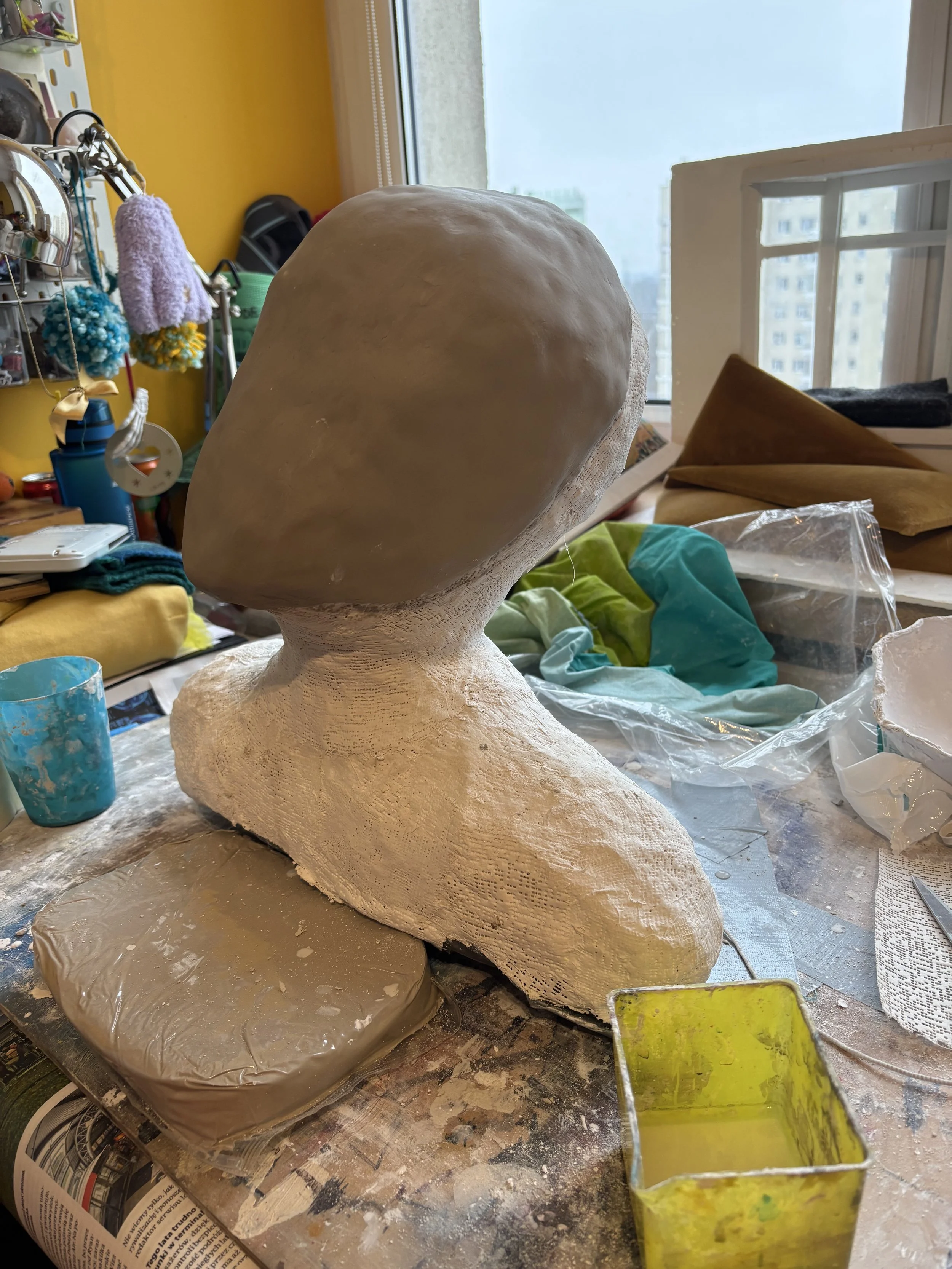
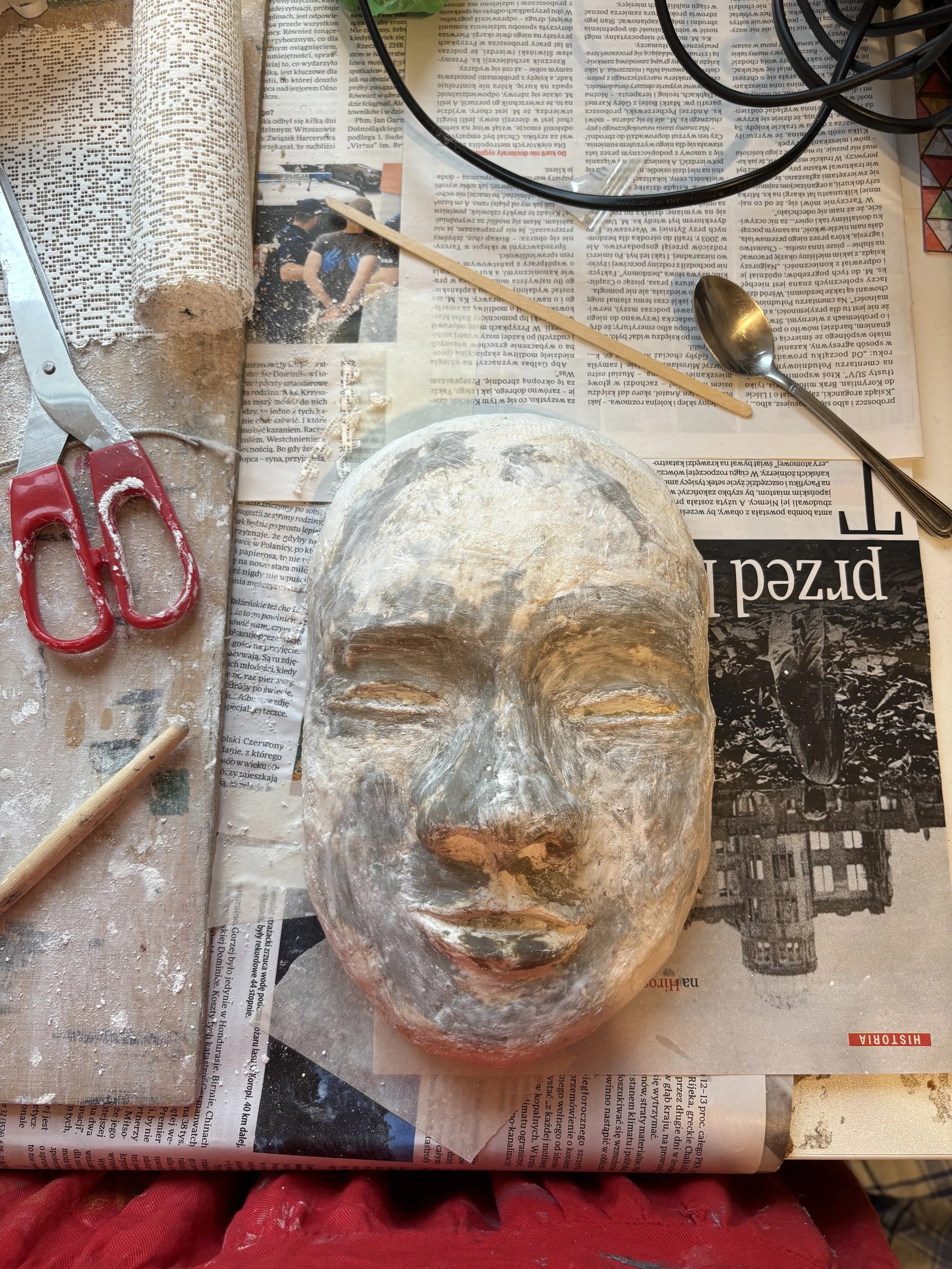
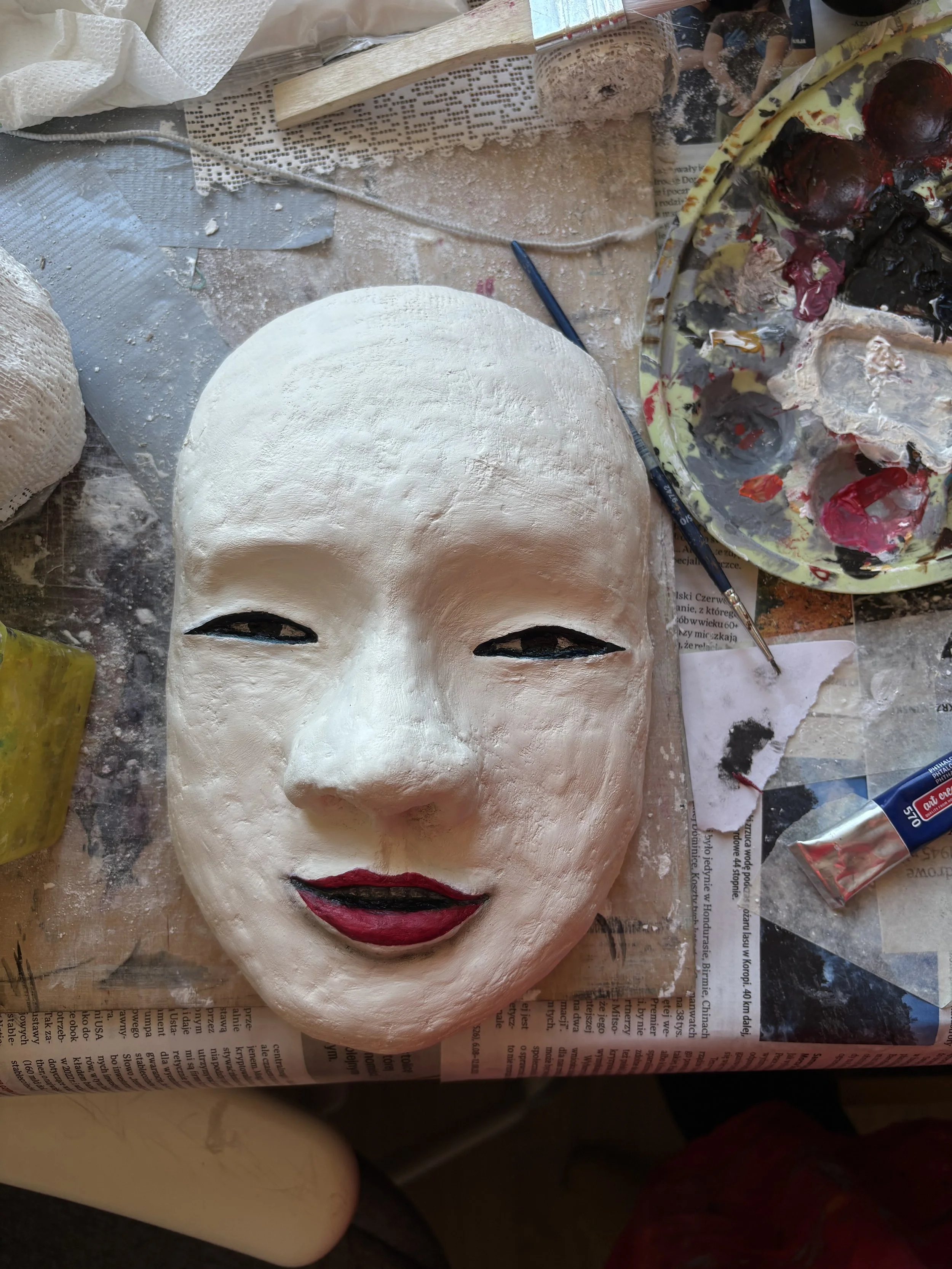
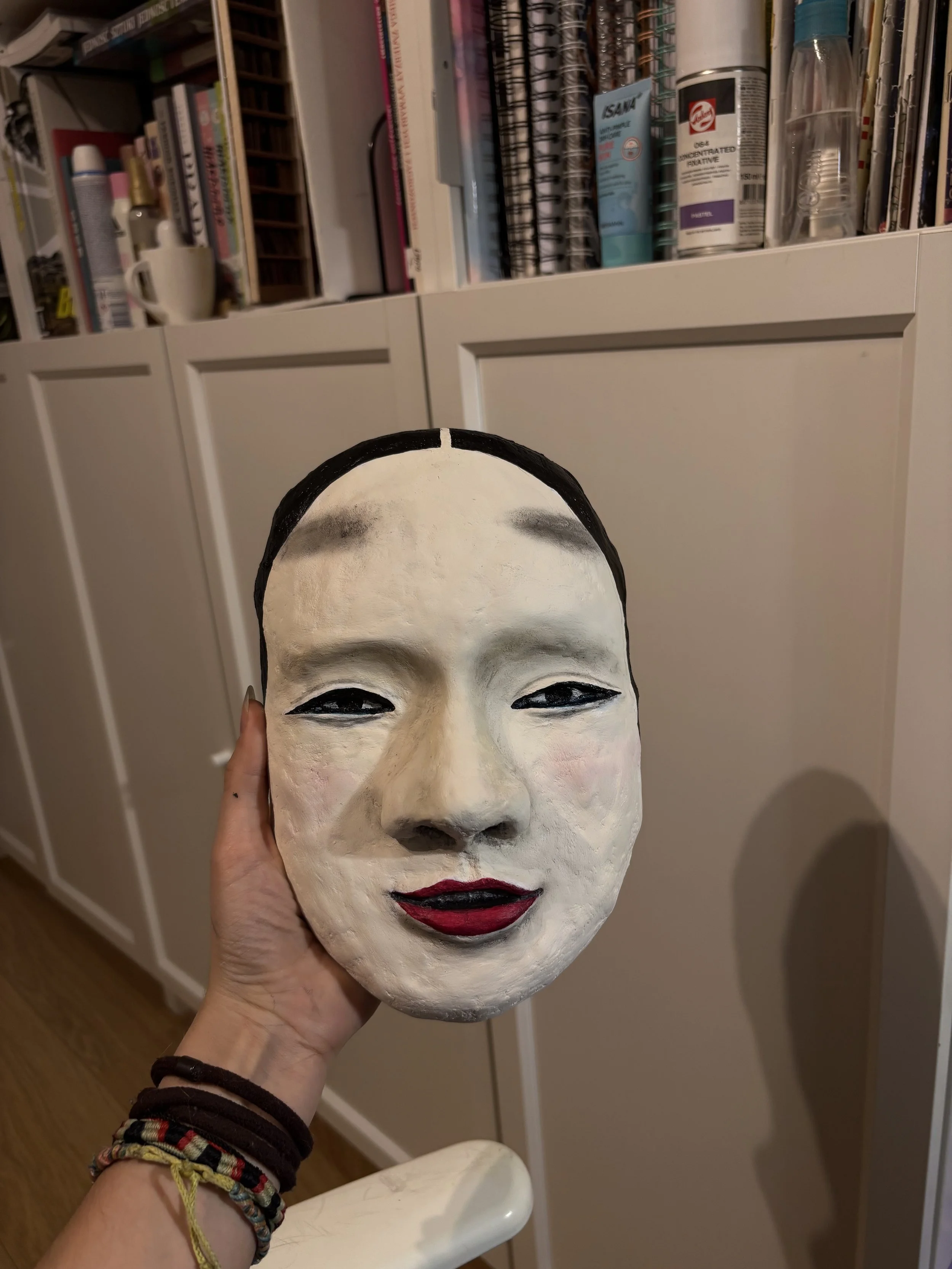
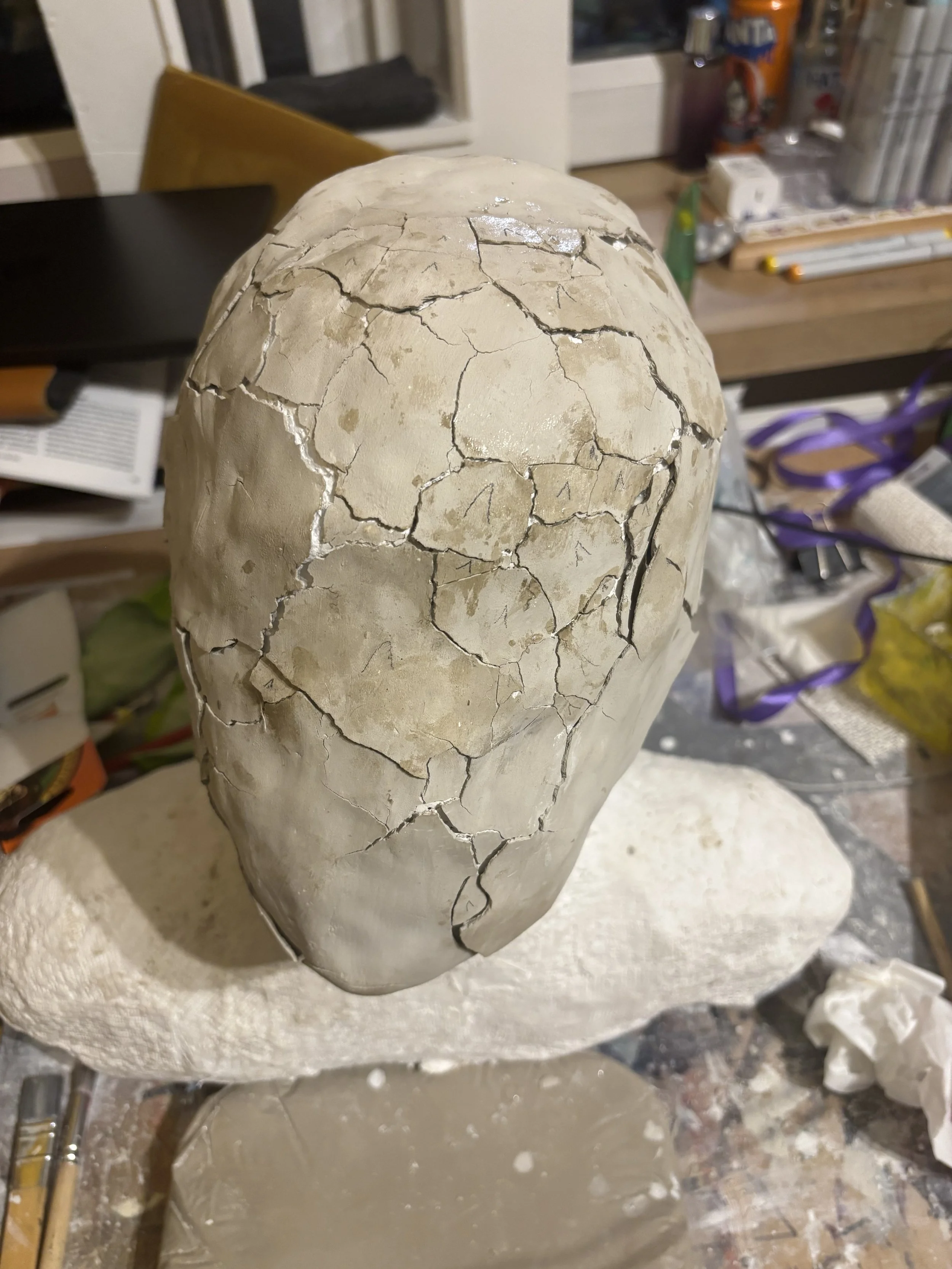
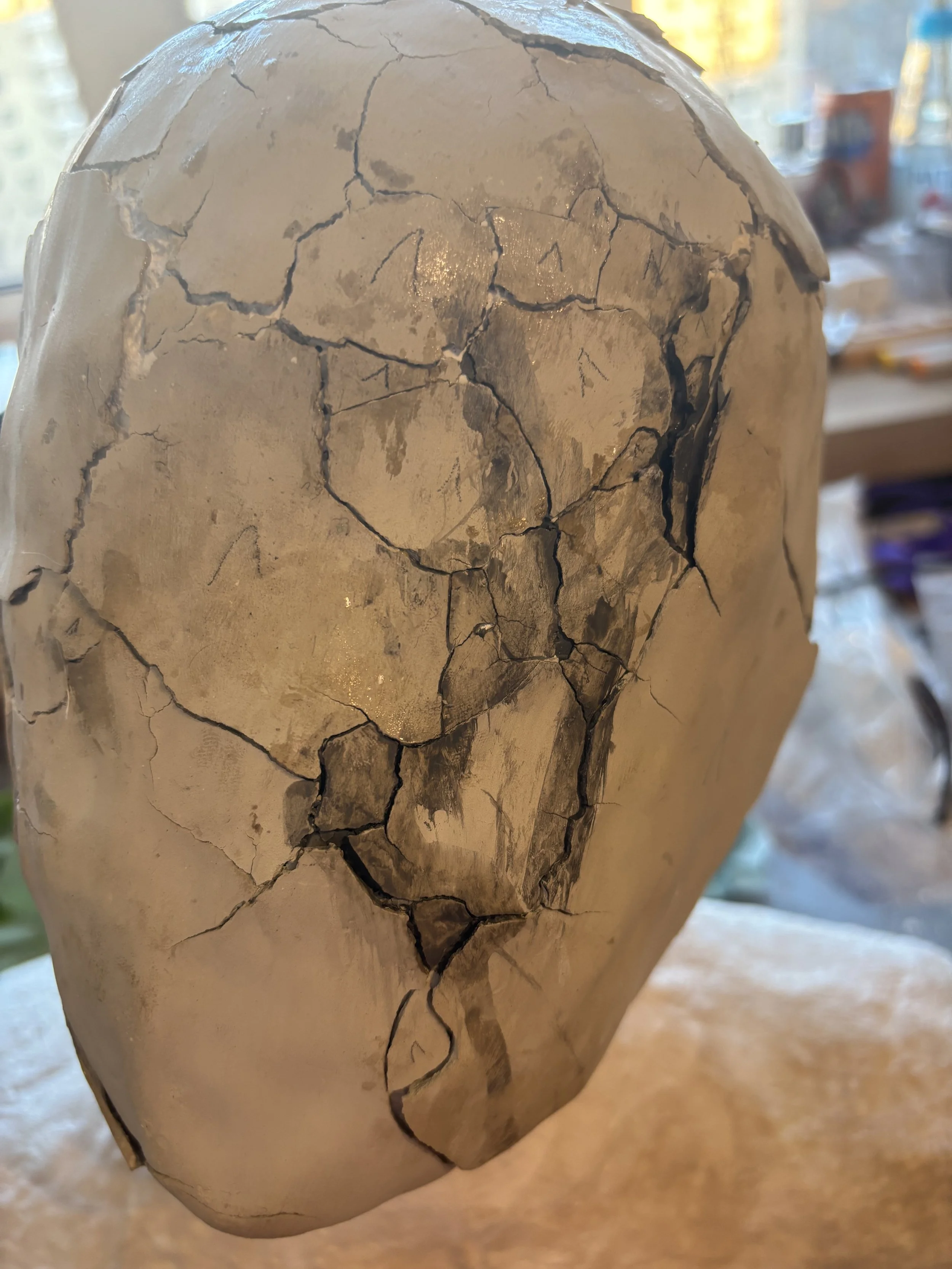
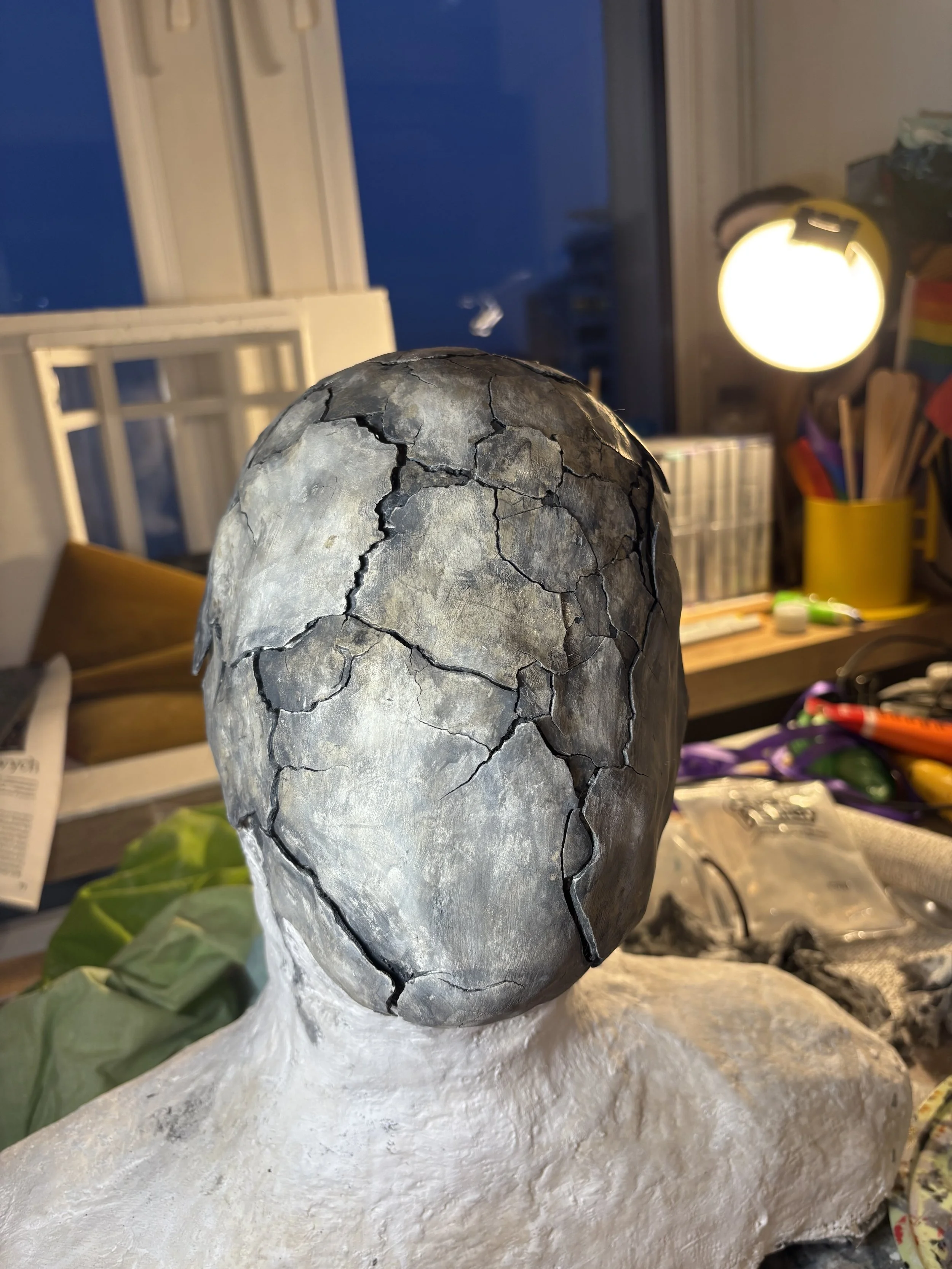
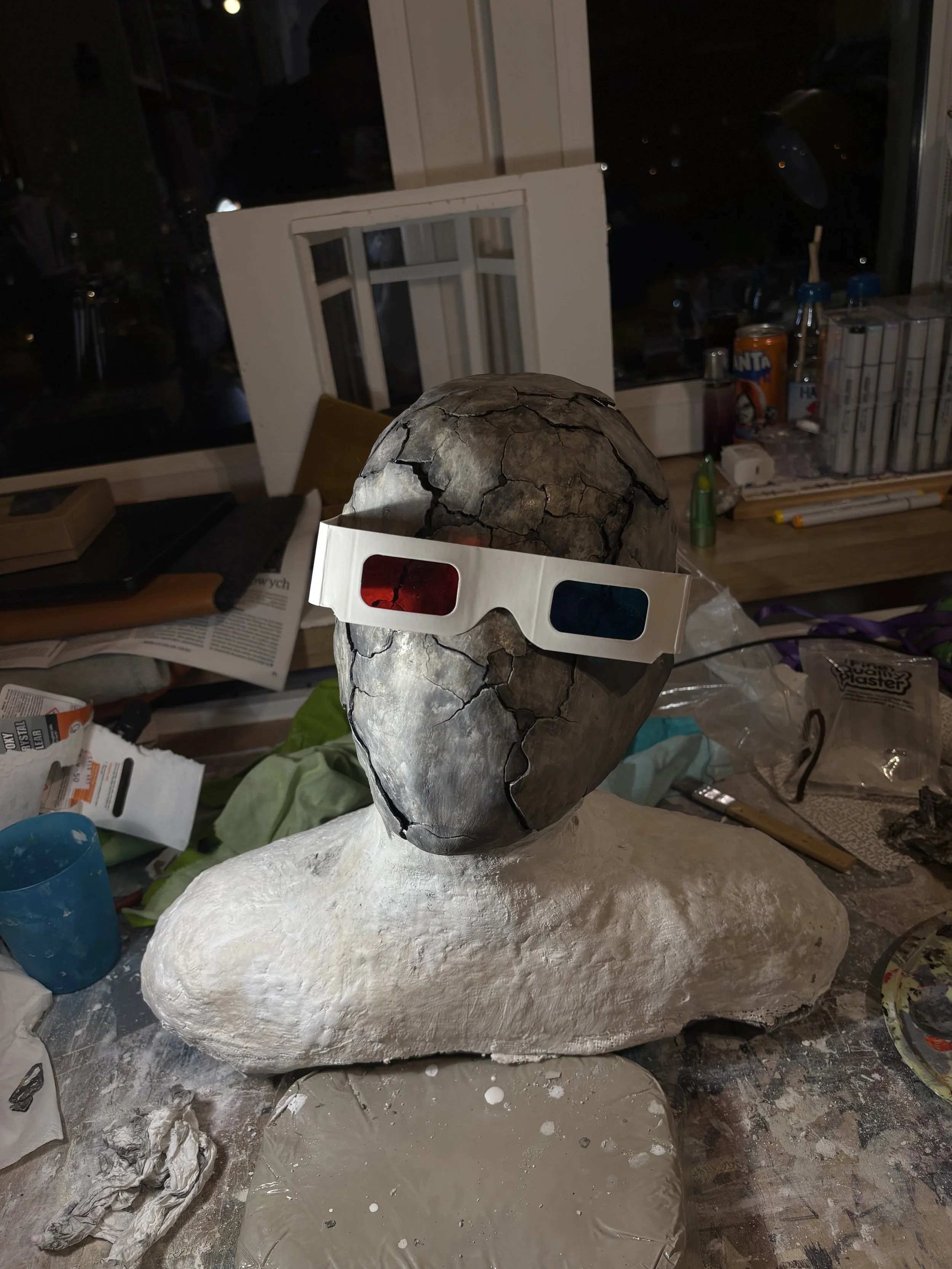
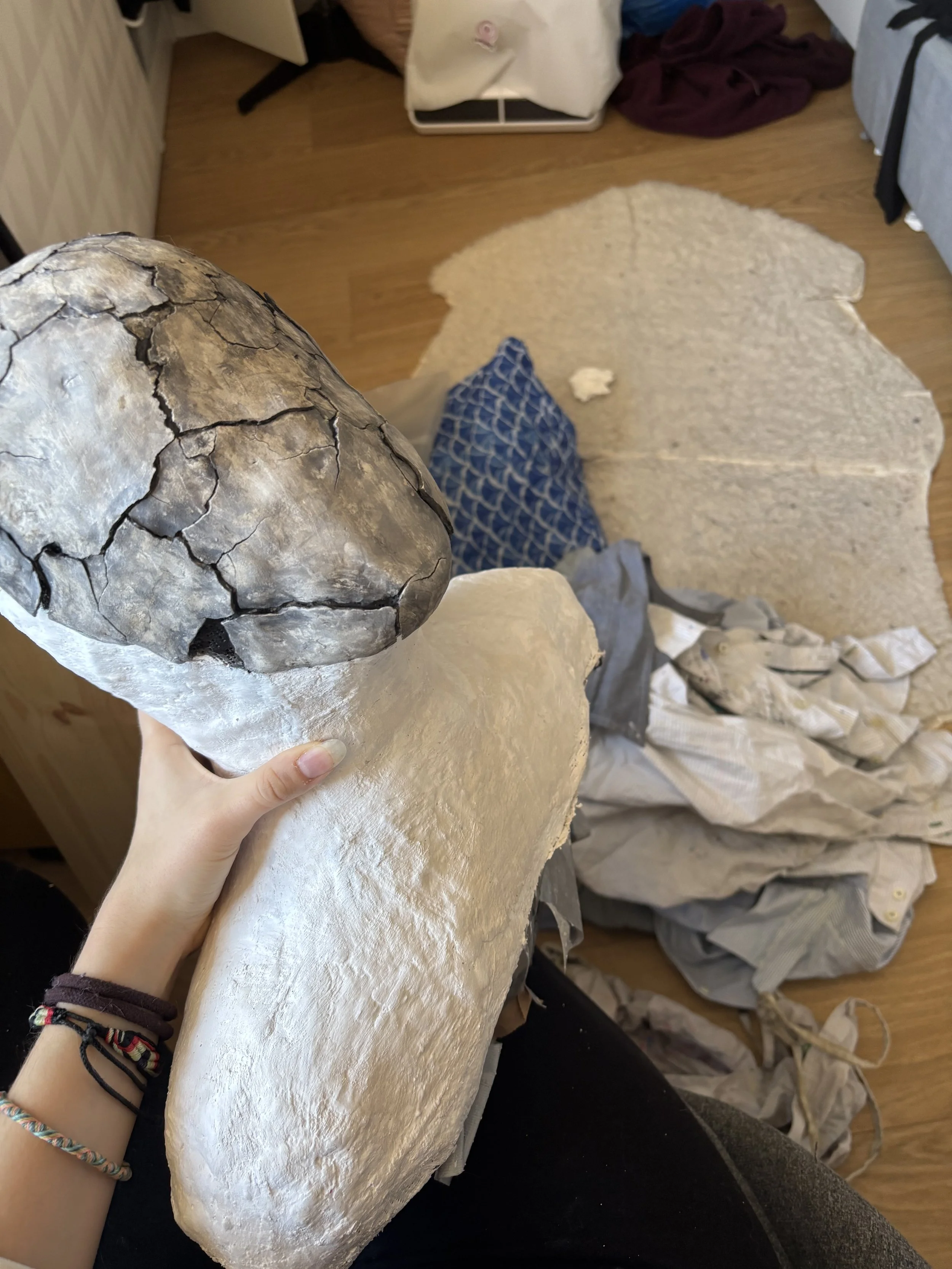
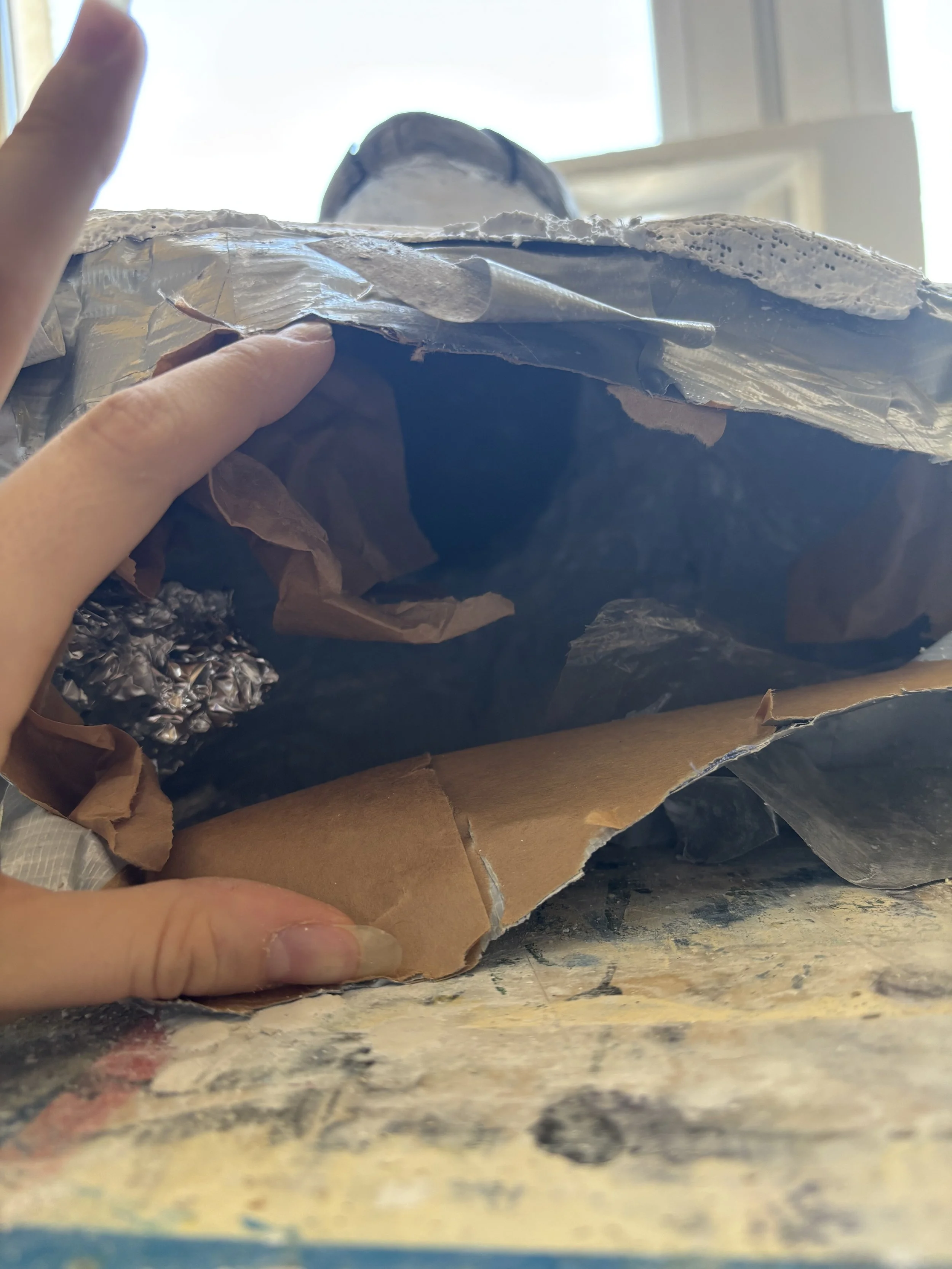
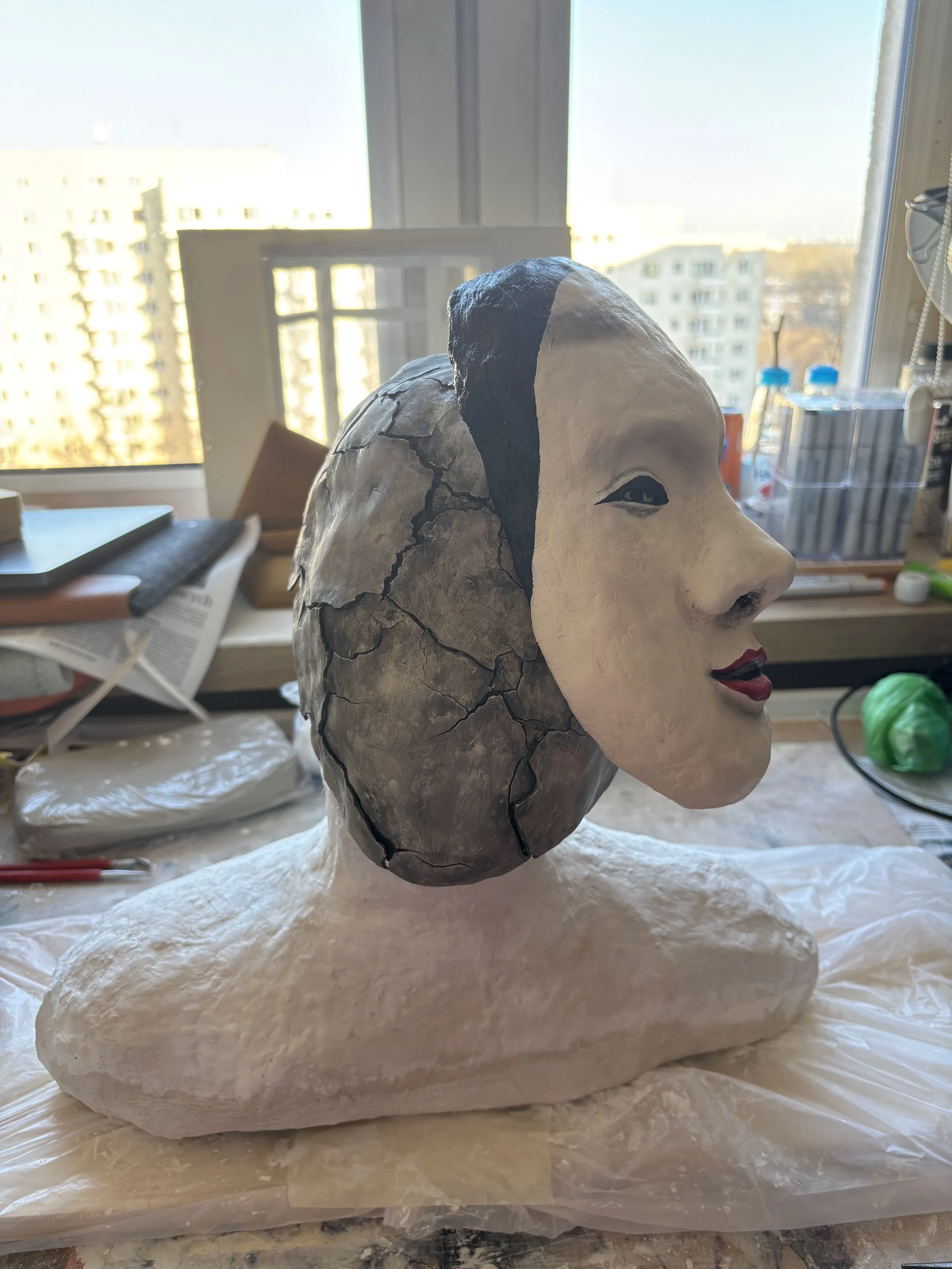
Here are photos of the sculpture, below I’m attaching some from the process
Historical Background
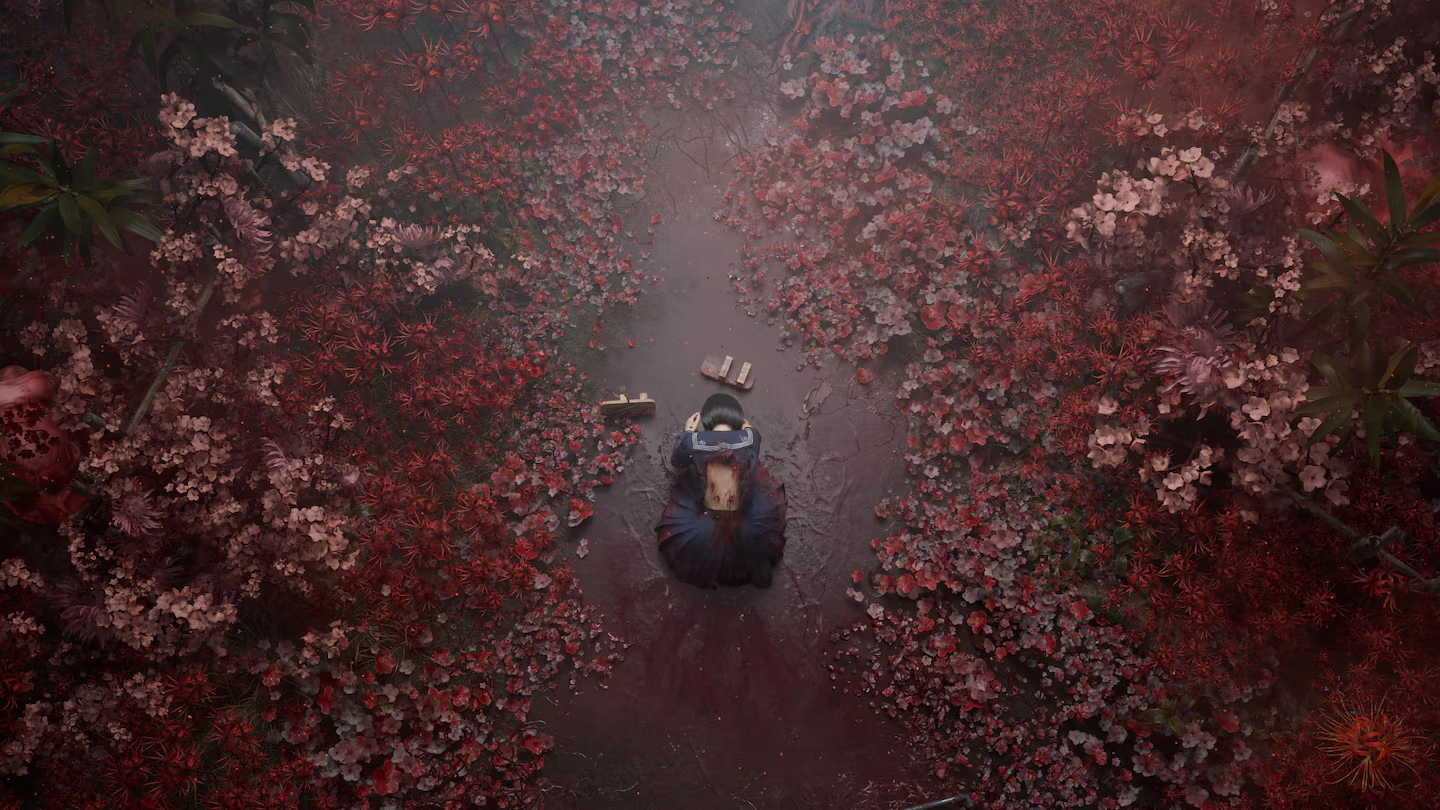
I finally got Silent Hill f for my birthday and at the time I’m writing this I’ve already finished it 6 times and can speed run the whole game basically from memory (yeah I’m obsessed). But the reason I like it so much is not only because of the combination of two aesthetics I adore - horror and Japan. I love it because It is able to connect elements of Japanese folklore with very important social issues.
For those who don’t know the game is set in the 60s’ in a Japanese town called Ebigausoka. It tells a story of a girl, Hinako, who is being married off to a rich family and her journey of becoming the “perfect bride”. It sheds light on the patriarchal structures that were the foundation of Japanese society for centuries and unfortunately still remain today. The idea of women becoming perfect wives for their husbands is nothing new in the Asian cultures and reading about some of their practices from a European perspective might seem unusual. But in order to understand how certain things were possible or what shaped the contemporary mindset when it comes to marriage it is important to look through a different lens.
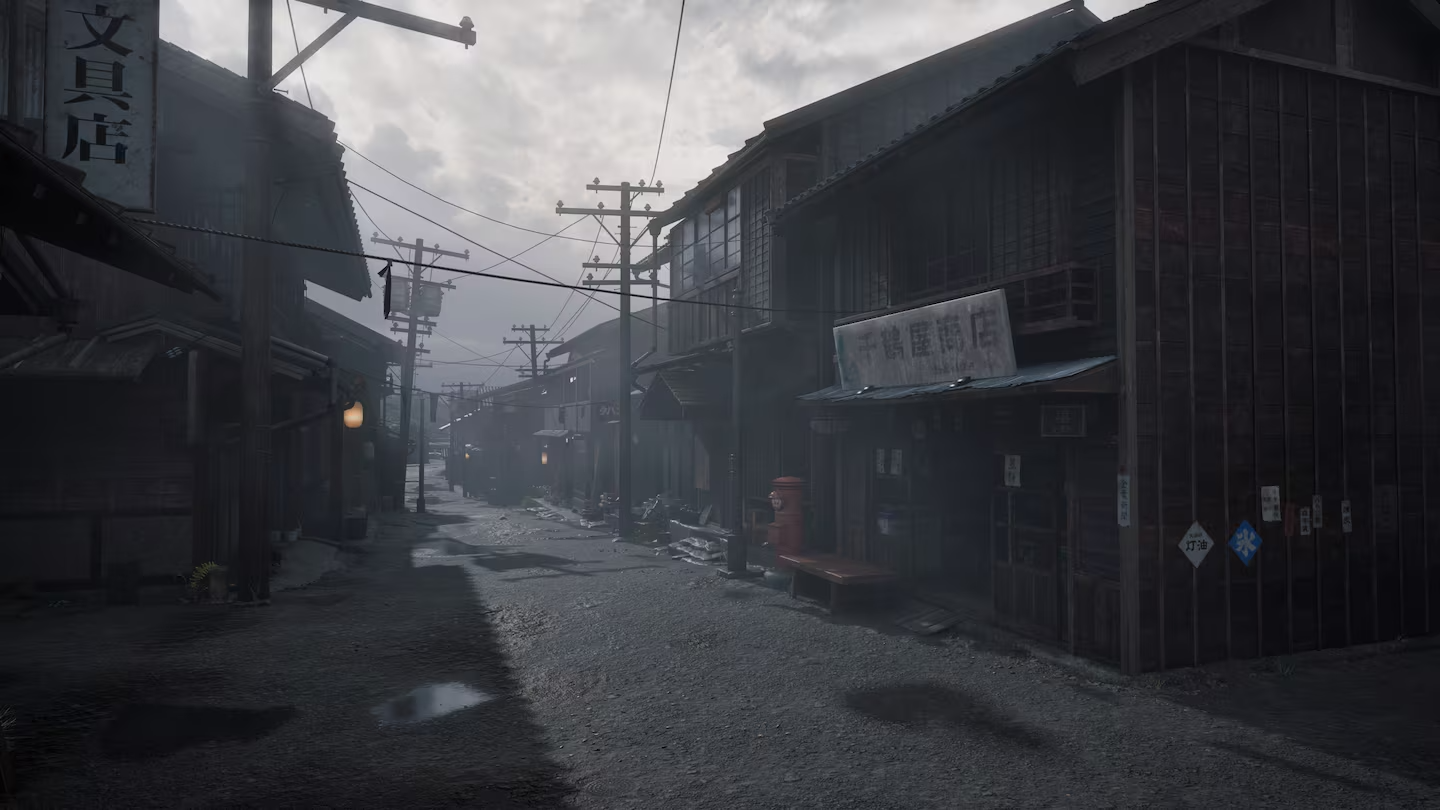
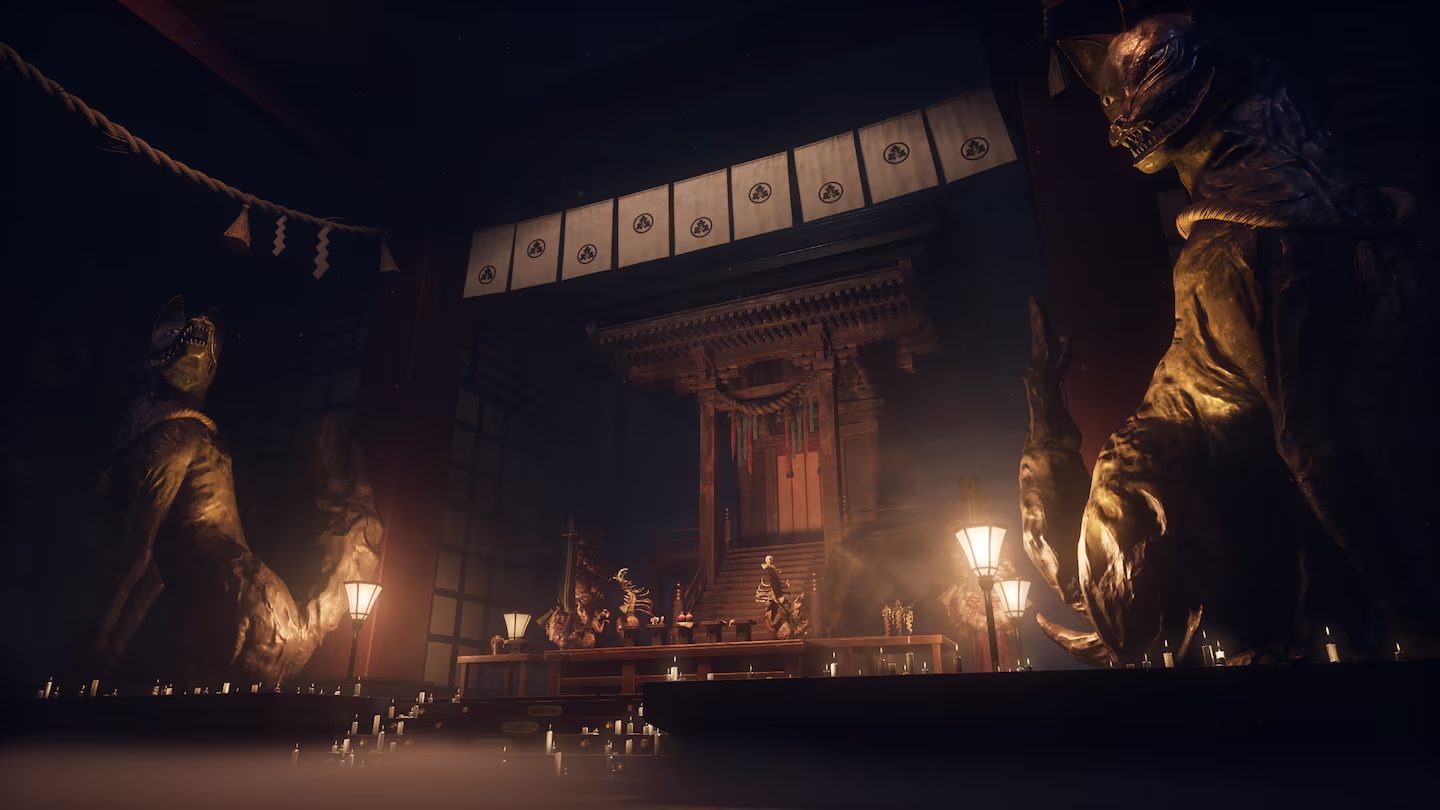
Up until 1947 a head of the house (obviously male) had to agree before any woman from the family got married meaning that until that time arranged marriages were legal and normal. As a contrast in Europe the idea started to be abandoned around the 18th century. Additionally, up to the present day “arranged” marriages are practiced and consist of around of 15% of all marriages in Japan. However, it’s not really arranged anymore because both sides have to agree before officially getting married so it’s more like employing a profesional matchmaker to find your other half.
Going back a little, wedding customs varied depending on the time period or region but it was common for a married couple to move in with the bride’s parents, their own house if it was possible or not live together at all. For a European it might seem strange that a married couple wasn’t living together but at that time it proved with some benefits for the wives. First of all they were living with their parents which meant being close to their family and having help in raising children. The husband would come to visit his wife from time to time, spend the night and leave in the morning. It proved beneficial because the bride’s parents could look out for her so that she wouldn’t be mistreated by her husband. And even though it was probably a lonely life spending most of it away from your spouse wondering if other wives are getting more attention (yes polygamy was legal and practiced) at least it was relatively safe from abuse.
What is present both in the game and as I found out was rather a popular practice in Asian societies was that when getting married women had to cut off their childhood friends in the game it’s represented by killing them, in order to leave their old lives behind and become that perfect wife. The whole idea of a woman existing only to support her husband was very present up to a point where the wives of samurai would swear to kill themselves if that meant upholding the husband’s honor. So it’s definitely a case of deep patriarchy.
Another important subject when discussing marriage which is also touched by silent hill is abuse. Nowadays in Japan around 1 in 4 or some sources even say 1 in 3 Japanese women suffered abuse by their spouses (It’s problem in most of Asia). When looking historically women were of course educated to be quiet and submissive but that’s not all there is to it. In Heian period existed a law that allowed a husband to kill his wife if caught cheating, even though beating a spouse was illegal (and of course man could be unfaithful).
So after this (very) long introduction here are some cultural elements that I incorporated into my sculpture. I really tried to make it short and concise.
Noh Masks
Noh is a type of Japanese theatre that developed in the 14th century. Up until 1900 only men could perform which created the need for masks to be able to portray women, animals, elderly people and divine beings.
There are over 60 types of female masks to represent:
social status
age
background
beauty
character
Examples:
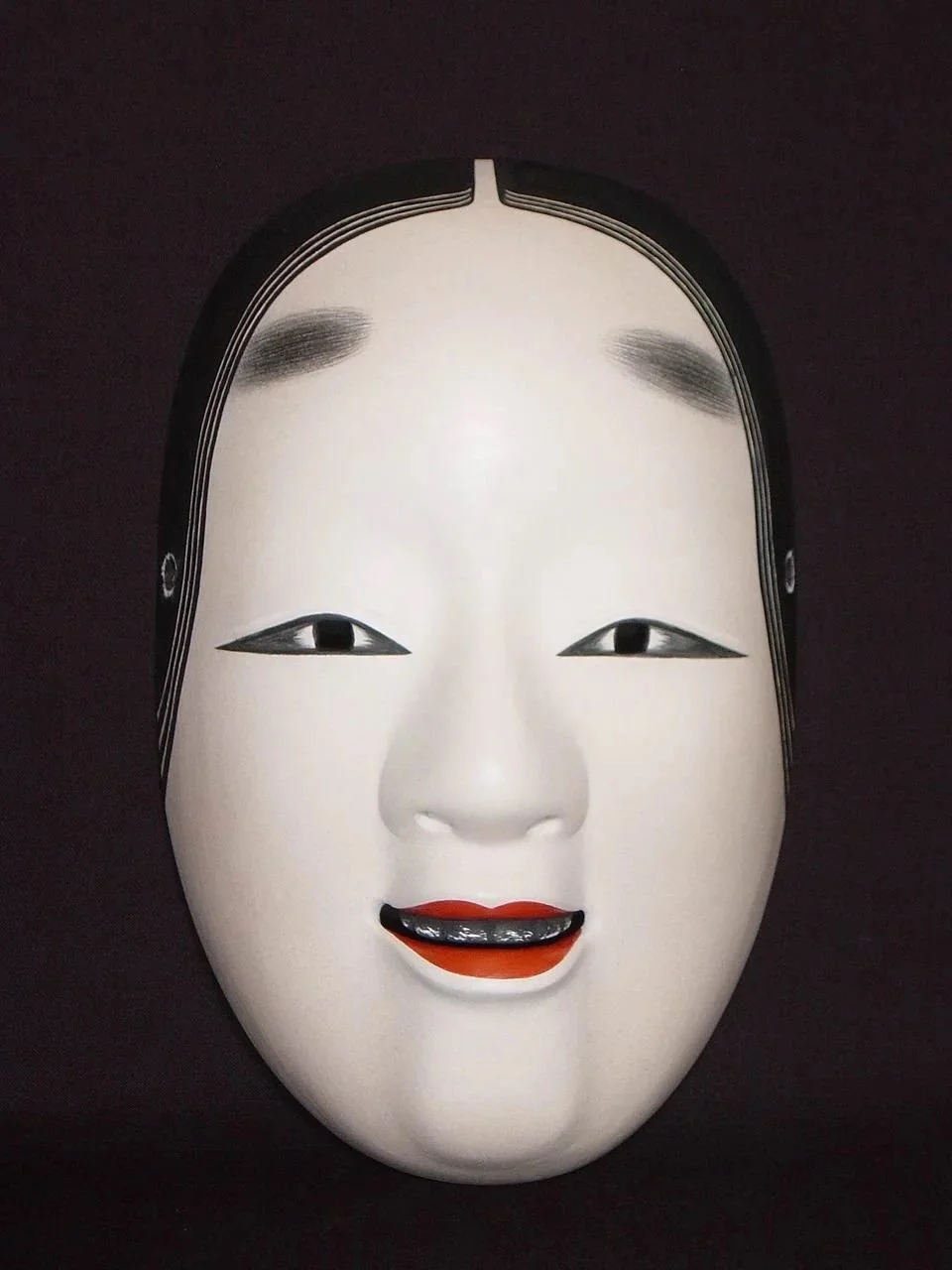
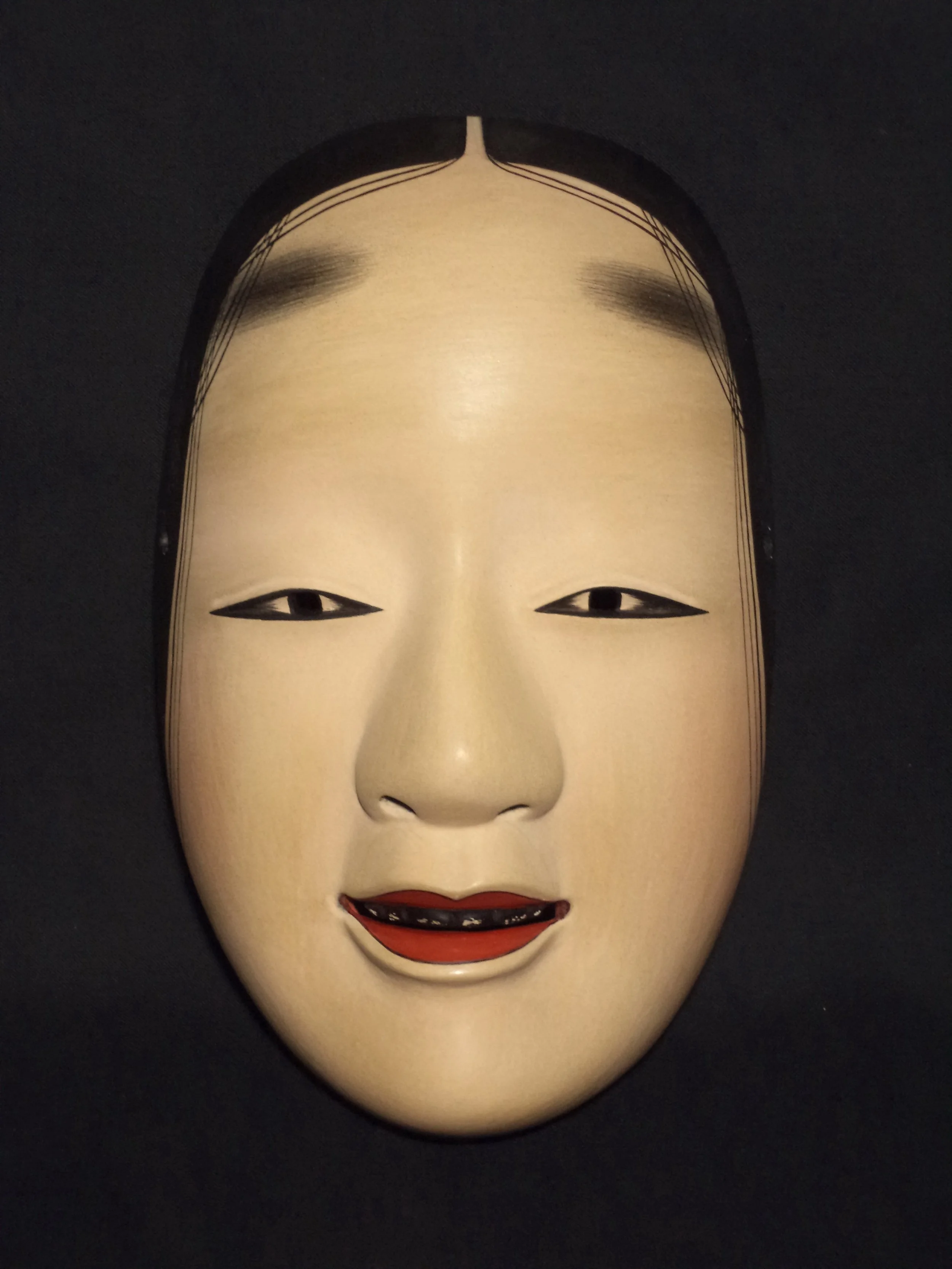
ko-omote - innocent, youthful and beautiful
zo-onna - more mature, refined and calm woman
hakumi - mature, middle-aged woman of elegance and grace, stronger character
uba - elderly woman
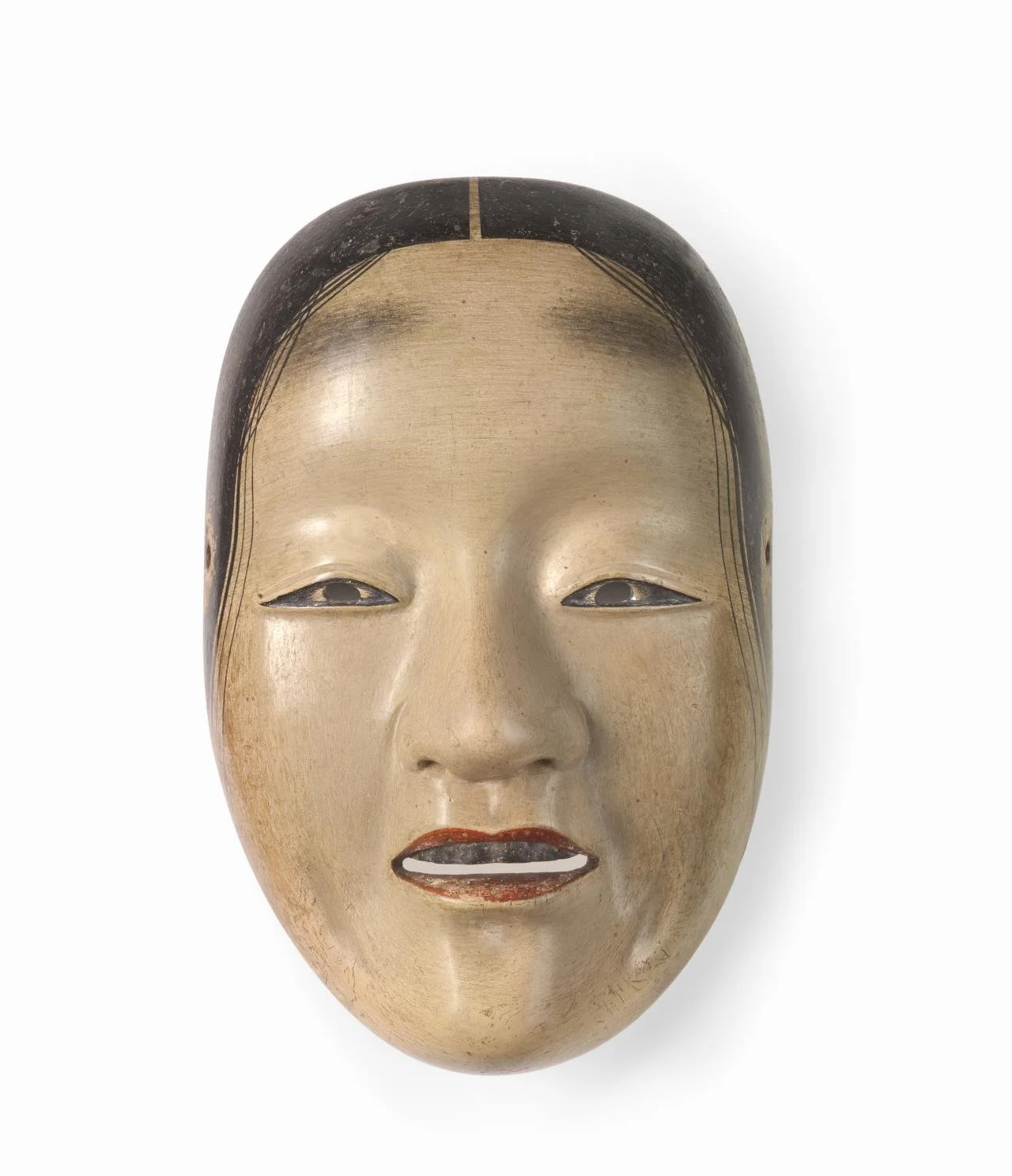
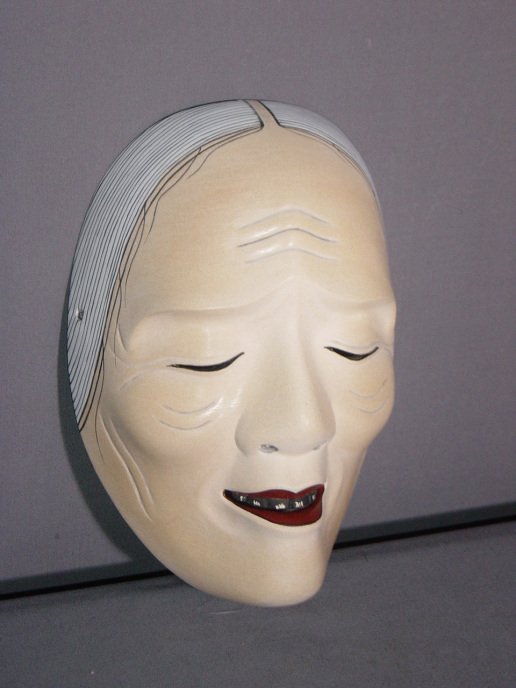
Making of a Noh mask
"Noh masks are carved from Japanese cypress (hinoki) using traditional chisels and templates and finished with the crushed shell powder (gofun), animal glue (nikawa), and mineral pigments (iwa-enogu), the same materials used in traditional Japanese painting (nihonga)." - The Noh Institute (2023)
| Noh Masks | My mask | |
|---|---|---|
| Base material | Japanese Cypress | Plaster Bandage |
| Surface Preparation | Crushed Seashell | Clay & Plaster |
| Coloring | Natural Pigments | Acrylics & Pastels |
| Binding Agent | Traditional Glue | Fixative |
The mask carvers often have patterns for the mask that function through generations, but every carver tries to add something of their own to each mask. Usually the masks have pretty neutral expression, paradoxically, to be able to express more through terasu and kumorasu tilting. Terasu (tilting upwards) the mask appears to be smiling which might convey happiness or other light emotions. However with kumorasu (tilting downwards) the expression becomes more of a frown which can be used to express anger or sadness.
The inside of the mask is sculpted in such a way that the performer's voice is better heard, also there are very tiny eye holes which is why actors have to move slower (the pillars on the stage help to navigate). I decided not to make mine a wearable mask because it would be hard to do with plaster bandage and I just need the appearance anyways.
The mask is a very important piece as it defines the performance of the actor, sometimes it is even referred to as sacred. In Japanese when talking about putting on a mask a verb tsukeru (to attach) is used implying that the actor is "becoming" the mask. Masks are often heirlooms passed down from generation to generation and are the core fundament of Noh.
In Noh plays the roles of women are mostly oriented around loss or chasing of love and the characters are quiet, polite and elegant
Geisha
In Western media often associated with sex work geisha are actually performers skilled in various Japanese arts. Except for a brief moment during the Tokugawa period when such form of entertainment was normal they were never prostitutes so that view is deeply misguided. When hearing the word geisha most people visualize a woman wearing the traditional make-up with tightly … black curls, however originally the profession was done by men and even the word itself is not gendered. As mentioned before geisha are skilled in activities such as tea ceremonies, dance, playing traditional instruments ex. koto, being good conversationalists or used to even encompass martial arts practitioners.
That being said, I included geisha as an inspiration because they represent Japanese beauty standards that I wanted to use in my sculpture. The perfect white skin, small lips, blackened teeth and double eyelids (described in more detail below) are all conventions that defined beauty and remnants of which can still be seen today.
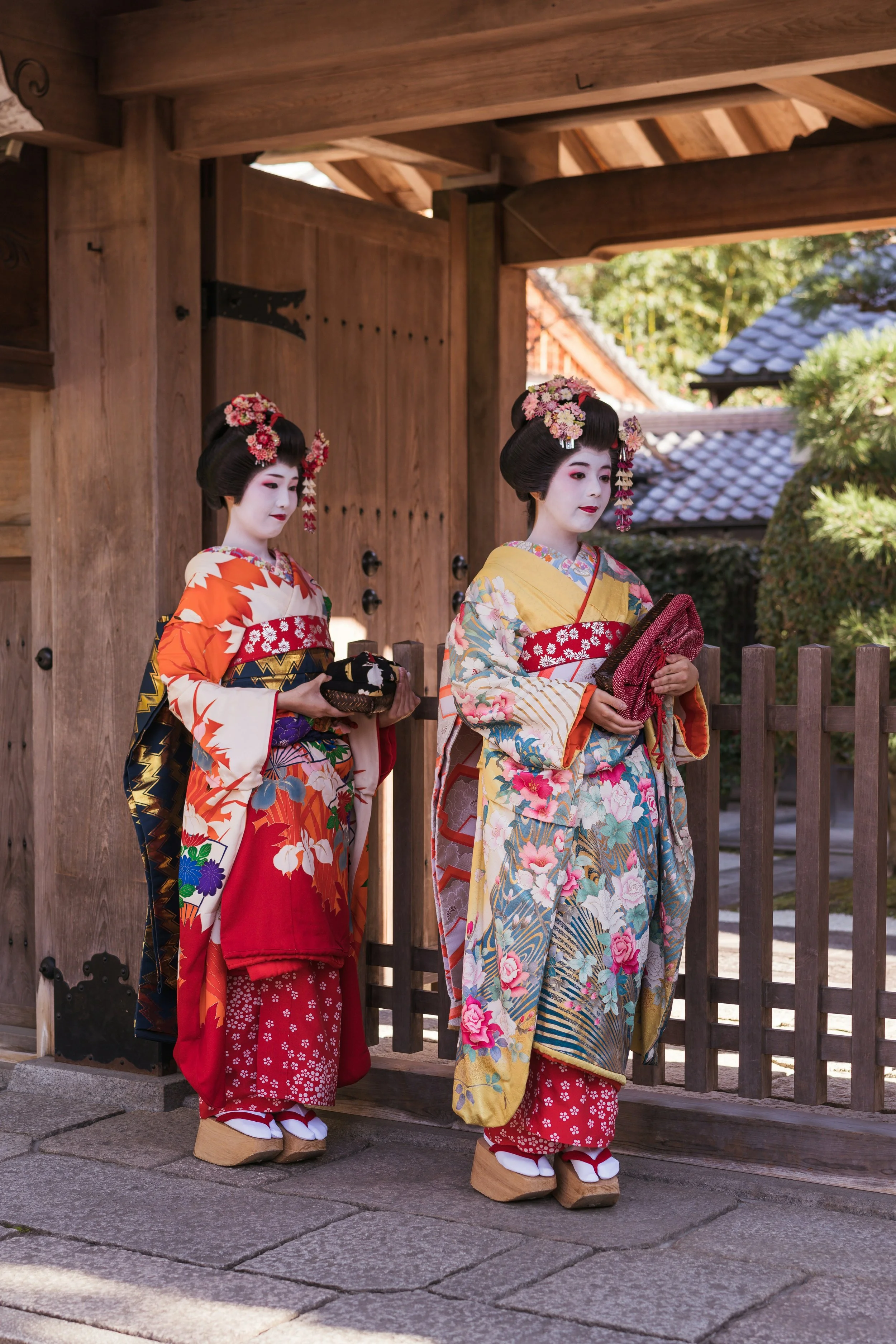

Make up & Beauty Canons
For female masks it was important to create soft features that represented the beauty standards, which I implemented in my mask. I also drew inspiration from geisha as they were the representation of beauty canons.
What was important for female masks was to tell the story of the character and her spiritual journey which meant very subtle differences between them. Obviously women that were supposed to be young and of the upper class followed stricter beauty standards. And those include:
Ohaguro -a technique of teeth blackening used by women (and also samurai but we’re focusing on women here) until late 19th century done to appear beautiful while remaining invisible. It was believed that a woman’s teeth should not be visible because she is supposed to be quiet and stay at home. The dye was iron based and prevented teeth decay but was officially banned in 1870.
Oshiroi - a white powder make-up foundation used by kabuki actors and geisha to achieve the perfect porcelain skin effect. Originally it was lead based and could result in lead poisoning but since have been replaced. Even after regular foundation was adopted in Japan oshiroi was still used as pressed powder for touch-ups.
Double eyelids - painting a thin line on the eye crease, the so called double eyelids became popular in the 19th century when Japan opened up to the West, in order to make the eyes bigger and more expressive. At the end of the 19th century a surgical method was introduced that up to this day is one of the major aesthetic procedures in Japan.
Features - the admired features were: round faces, small lips, thin eyebrows and light porcelain skin to look cute and polite
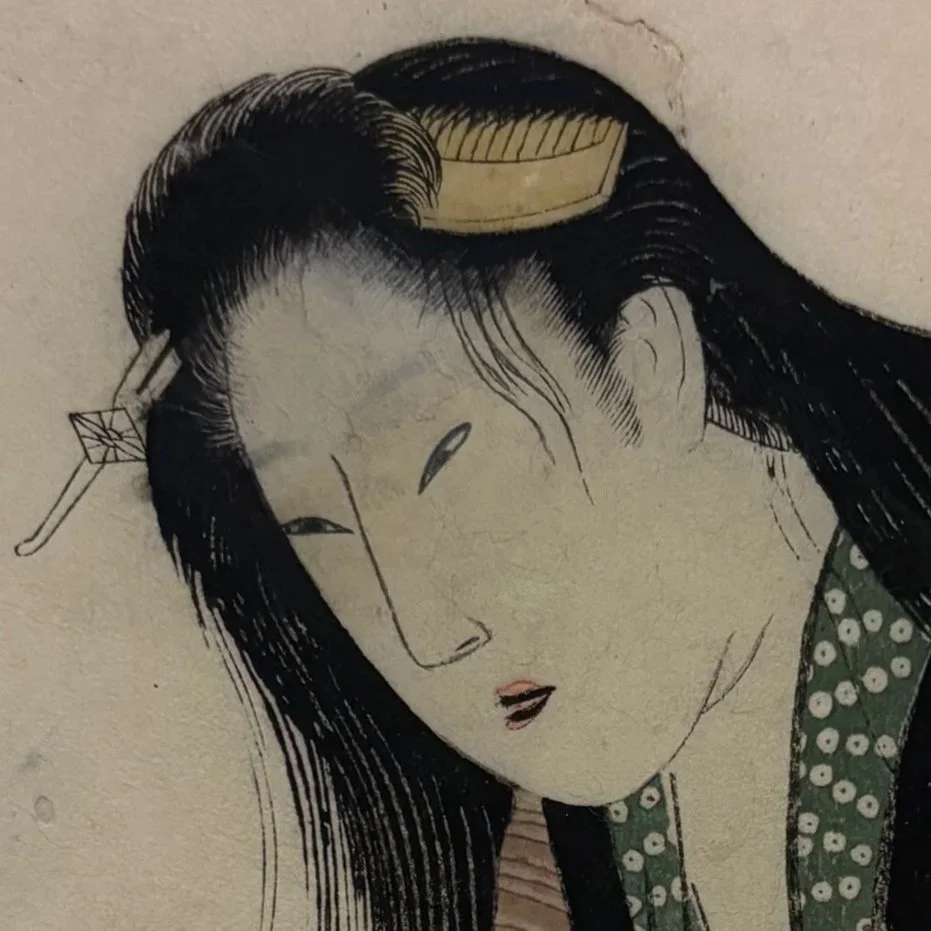
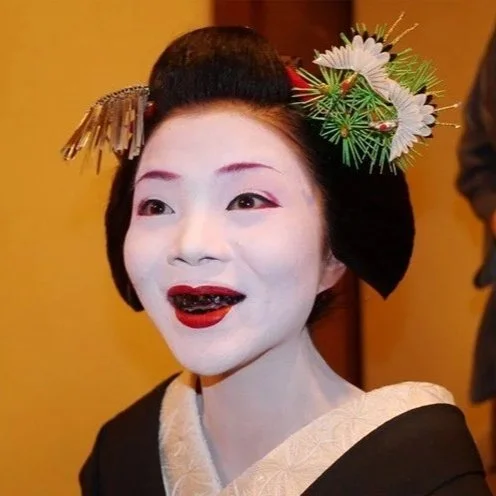
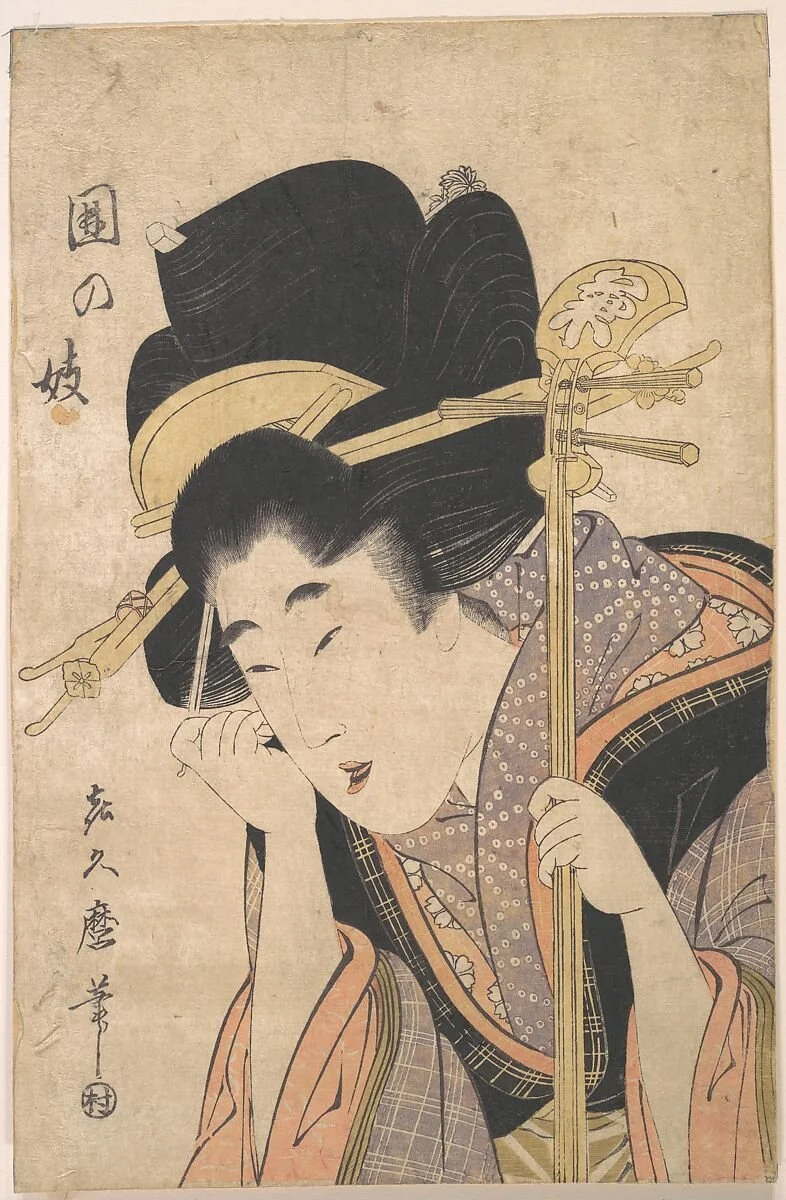
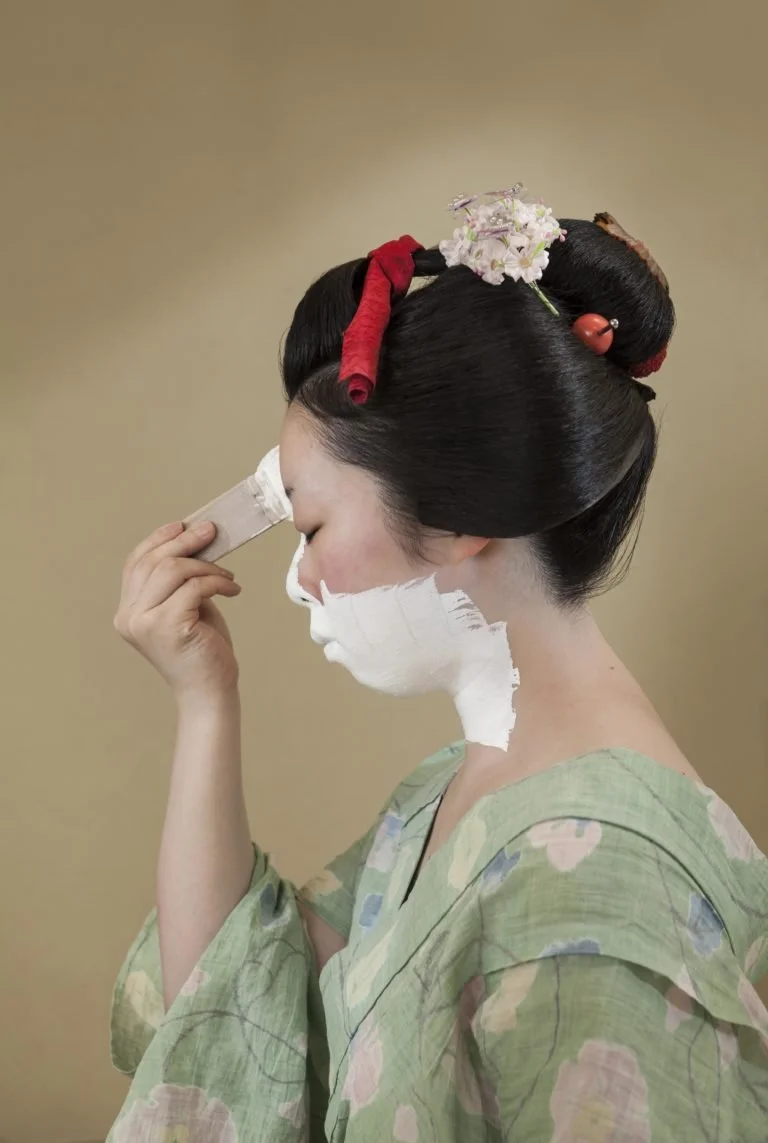
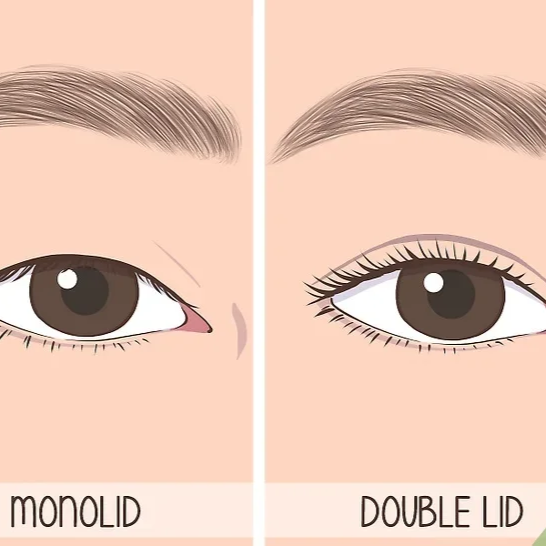
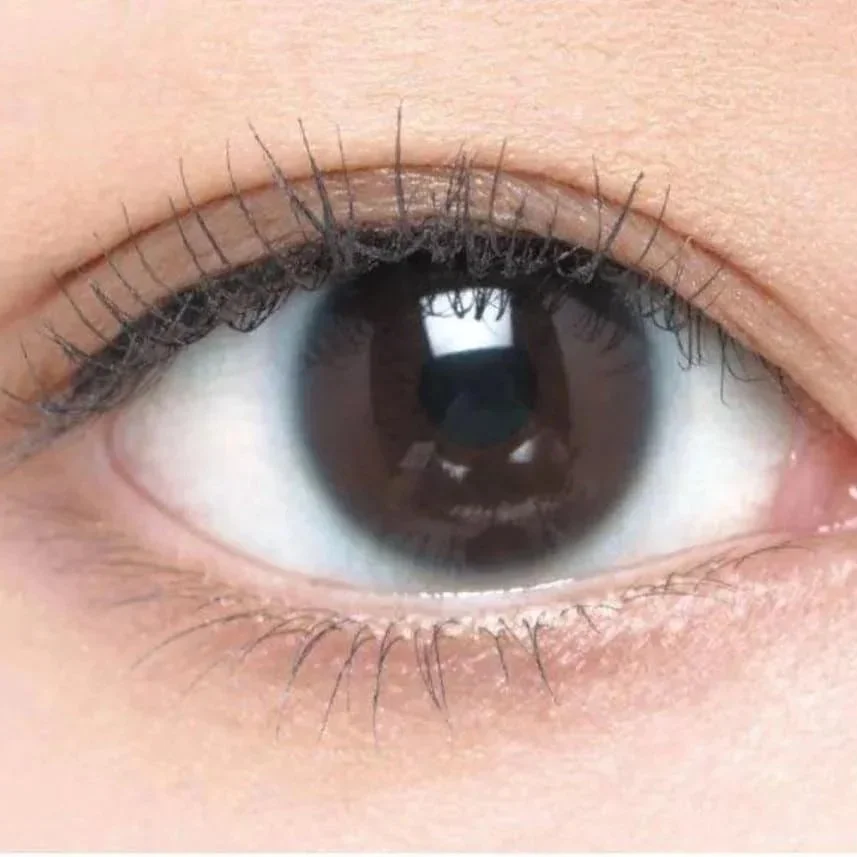
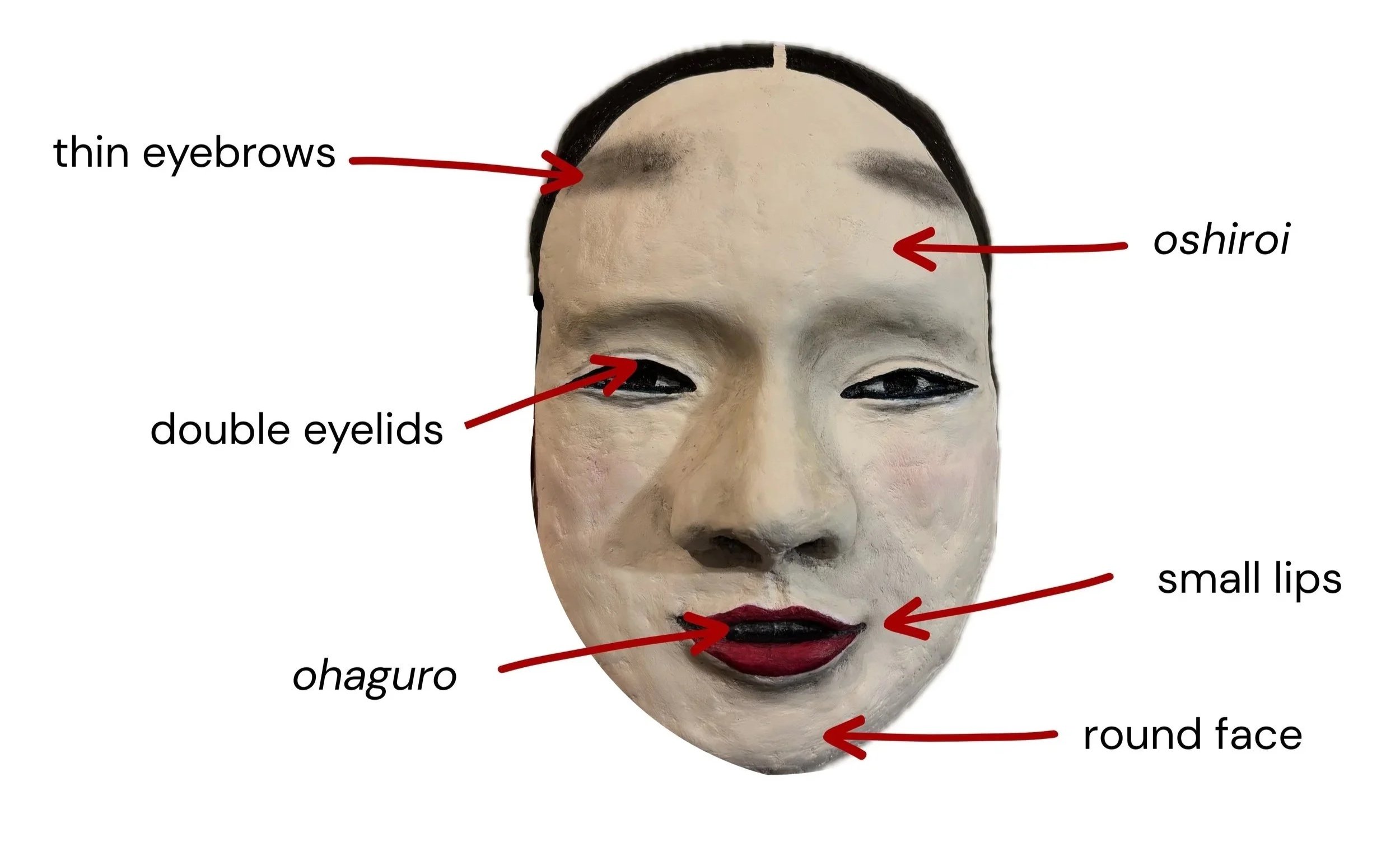
The elements I used when sculpting my mask
Wearing a mask on the side
In a lot of photos/drawings people are portrayed wearing festive masks on the side. And as it’s not something that has a historical root but is rather a purely practical solution, it still served as an inspiration to me. The side wearing originated at summer festivals where spending the whole day in a mask would be unbearable due to the heat. It was an easy way to wear the mask but still be able to quickly put it on while at the same time still maintaining a non-human look.
Summary
So congratulations if you read the whole thing (I really tried to make it concise this time)!
I really enjoy exploring Japanese culture and finding out about all the details of different practices. I hope that you found some value in this post and that it wasn’t too boring
Sources
Japanese Masks: 18 Types & the Story of Every Japanese Mask — japaneseonimasks.com/blogs/magazine/japanese-masks-18-types-story-of-every-japanese-mask
Noh Mask of a Woman — Arts Institute of Minneapolis — collections.artsmia.org/art/122387/noh-mask-of-a-woman-japan
Noh Masks — Tokyo National Museum — tnm.jp/modules/r_free_page/index.php?id=1736&lang=en
Gender Crossings: Women in Noh — onthebridgeway.wordpress.com/2014/04/22/gender-crossings-women-in-noh/
Academic Article — jstor.org/stable/431828
The Stories Behind Noh Theatre Masks — brandonchin.net/blogs/news/the-stories-behind-noh-theatre-masks
Discussion thread — Reddit / r/Japanese
Video — youtu.be/lp3wWpx04Ro
Japan National Fertility Survey — IPSS — ipss.go.jp/ps-doukou/j/doukou16/JNFS16gaiyo.pdf
Custody & Domestic Violence in Cultural Contexts — API-GBV — api-gbv.org/wp-content/uploads/2017/07/Custody-10Tips-DV-Cultural-Contexts-20131.pdf
Video — youtu.be/L3j-cTfLeww

Photo Sources
Ohaguro
wakai.pl/stare-wakai/ohaguro-zwyczaj-czernienia-zebow/

Noh Masks
ngv.vic.gov.au/explore/collection/work/100565/
nohmask21.com/eu/femalestyle.html

Geisha
pexels.com/search/geisha/
unsplash.com/images/stock/non-copyrighted

Oshiroi
metmuseum.org/art/collection/search/55028

Double Eyelids
wikihow.com/Monolid-vs-Double-Lid
gosupps.com/dup-orishiki-eyelid-skin-film-invisible-eyelid-lifter-natural-eye-lid-defining-makeup-stick-double-eyelid-lift-for-droopy-eyes-japanese-instant-natural-eye-makeup-invisible-film-eyelid-maker.html
silent hill f - playstation.com